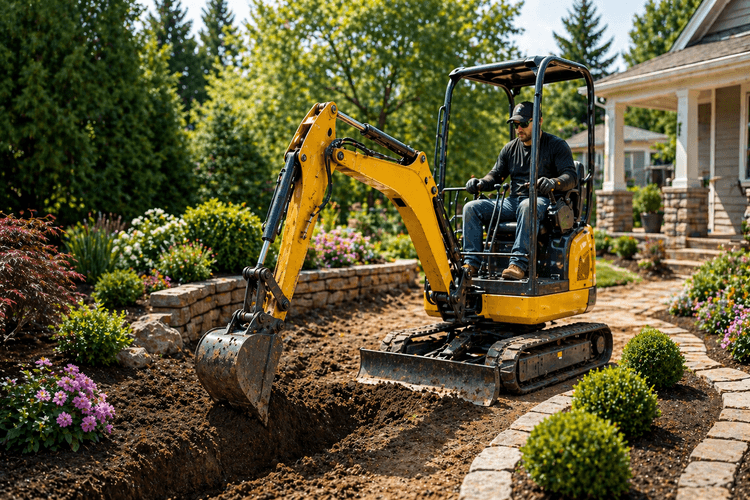
Accelerated Method in Construction: Fast-Tracking Projects Without Compromising Quality
5 Min read
&w=3840&q=75)

May 23, 2025
In today’s fast-paced world, the demand for quicker construction turnarounds is higher than ever. Whether it's a commercial complex, residential tower, or public infrastructure, project owners and stakeholders want speed without sacrificing quality. This is where the accelerated method in construction comes into play. By strategically planning and implementing fast-tracking techniques, construction schedules can be shortened dramatically, leading to faster project delivery and cost savings.
Real-World Accelerated Construction Experience
This guide includes insights from construction contractors, project managers, heavy equipment operators, and infrastructure crews experienced in:
Recent Equipment
Browse all equipment


fast-track construction
modular building projects
utility installation
site preparation
equipment coordination
schedule-driven construction workflows
Experienced contractors understand how proper planning, workforce coordination, and reliable heavy equipment help reduce delays and improve project completion speed.
What Is the Accelerated Method in Construction?
The accelerated method in construction refers to a set of techniques used to compress the construction timeline without compromising on safety, compliance, or structural quality. This approach is particularly valuable in projects where time is of the essence due to economic pressures, legal requirements, or seasonal/weather considerations.
Key objectives of accelerated construction include:
Delivering the project faster than conventional timelines
Minimizing downtime and resource wastage
Maintaining quality and safety standards throughout
Why Is Accelerated Construction Important?
Accelerated construction helps contractors reduce project delays, improve productivity, lower indirect costs, and complete projects faster without compromising safety or quality.
What Equipment Helps Accelerate Construction Projects?
Excavators, loaders, cranes, concrete pumps, graders, and compact equipment help improve construction speed, material handling, and project efficiency on accelerated jobsites.
Accelerated Construction Cost & ROI
Accelerated construction methods help contractors improve:
project timelines
labor efficiency
equipment utilization
revenue generation
overall project ROI
However, accelerated schedules may also increase:
overtime costs
equipment usage
logistics coordination
material delivery demands
Accelerated Construction Comparison Table
%3Aformat(webp)&w=1920&q=75)
How to Accelerate a Construction Programme
%3Aformat(webp)&w=1920&q=75)
How to accelerate a construction programme effectively requires a blend of strategic planning and the right tools. Here are some proven techniques:
Fast-Tracking: Overlapping design and construction phases so that building can begin before all design work is completed.
Crashing: Adding additional resources to shorten the schedule (e.g., more workers or machinery).
Prefabrication & Modular Construction: Building components off-site and assembling them on-site to save time.
Shift Work: Running construction activities in multiple shifts, including nights or weekends.
Just-in-Time Material Delivery: Minimizing on-site storage and delivering materials only when needed.
Streamlined Permits and Inspections: Coordinating with local authorities early to expedite approvals.
Fastest Construction Methods in Use Today
Several construction techniques have proven to be the fastest construction methods currently in use:
Modular and Off-site Fabrication: Pre-built units are delivered and installed on-site.
3D Printing: Quickly creates complex components with minimal waste.
Tilt-Up Construction: Concrete panels are cast on-site and then lifted into position.
Precast Concrete Systems: Similar to tilt-up but manufactured off-site and transported in.
Steel Frame Systems: Quick assembly with high strength-to-weight ratio.
These methods reduce labor costs and increase build speed, especially in large-scale or repetitive projects.
Heavy Equipment Used in Accelerated Construction
Accelerated construction projects often rely on:
cranes
compact track loaders
skid steers
wheel loaders
These machines help improve:
material handling
excavation speed
site preparation
lifting operations
workforce productivity
Reliable equipment plays a major role in maintaining aggressive project schedules and reducing costly downtime.
Modular Construction vs Traditional Construction
Modular construction helps improve:
Recent Equipment
Browse all equipment


project speed
labor efficiency
weather protection
schedule consistency
Traditional construction may offer:
greater design flexibility
easier customization
phased project adjustments
Many contractors combine modular methods with heavy equipment and accelerated scheduling strategies to improve overall construction productivity.
Benefits of Using Accelerated Methods in Construction
Adopting the accelerated method in construction offers numerous benefits:
Faster Project Completion: Speeds up the timeline and reduces interest costs on financed projects.
Lower Indirect Costs: Reduces overheads related to project duration.
Competitive Edge: Firms offering faster delivery stand out in bids and proposals.
Increased Client Satisfaction: Timely delivery boosts reputation and future business opportunities.
Risks and Challenges of Accelerated Construction
While accelerated construction offers many benefits, it also presents unique challenges:
Quality Control: Rushed work can lead to mistakes if not managed properly.
Safety Concerns: Compressed timelines may increase risk of accidents.
Scheduling Conflicts: Overlapping activities can cause bottlenecks if coordination is weak.
Budget Overruns: Adding extra resources may inflate costs.
Best Practices for Implementing Accelerated Construction Methods
Here are essential strategies to ensure success:
Feasibility Assessment: Ensure the project is suitable for acceleration.
Invest in Technology: Use construction management software to coordinate teams and tasks.
Skilled Labor: Hire experienced workers capable of handling intense schedules.
Communication Plan: Keep all stakeholders informed and aligned.
Build Contingency Plans: Be prepared for unexpected delays or cost shifts.
Real-World Examples of Accelerated Construction Projects
Wuhan's Huoshenshan Hospital (2020): Constructed in just 10 days using modular units.
Broad Group’s 15-story Hotel in China: Completed in six days with pre-fabricated steel modules.
LA Metro Projects: Use of 24/7 work shifts and prefabrication to accelerate rail extensions.
Accelerated Construction Depends on Productivity & Reliable Equipment
Fast-track construction projects depend heavily on:
skilled workforce coordination
reliable heavy equipment
preventive maintenance
accurate scheduling
efficient material handling
Contractors increasingly prioritize:
equipment uptime
operator productivity
telematics tracking
fleet management
project coordination software
to improve construction efficiency and reduce costly schedule delays.
Frequently Asked Questions About Accelerated Construction
What is accelerated construction?
Accelerated construction uses fast-track building methods, equipment coordination, and scheduling strategies to reduce project timelines.
What are the benefits of accelerated construction?
Benefits include:
faster project completion
improved productivity
earlier revenue generation
Reduced project delays
What equipment is used in accelerated construction?
Common equipment includes:
excavators
cranes
telehandlers
skid steers
compact loaders
Does modular construction improve project speed?
Yes. Modular construction can significantly reduce labor time and improve schedule efficiency.
Why is equipment reliability important in accelerated construction?
Reliable equipment helps reduce downtime, maintain productivity, and support aggressive construction schedules.
Does accelerated construction improve ROI?
Yes. Faster project completion can improve labor efficiency, reduce delays, and increase overall project profitability.
Conclusion
The accelerated construction method is no longer a niche practice; it's a competitive necessity in today’s industry. From using modular designs to implementing fast-tracking strategies, there are many ways to accelerate construction programmes efficiently. By combining modern tools with smart project management, builders can meet tight deadlines while maintaining high standards of quality and safety.



Samir Shah is the Co-Founder and Chief Product Officer of Boom & Bucket, where he leads the development of innovative solutions for buying and selling heavy equipment. With a background in engineering, product development, and business strategy, Samir has a track record of taking companies from concept to market success. Previously, he was the Head of Cat Digital Labs at Caterpillar, overseeing digital initiatives and product launches. He holds degrees from MIT Sloan and Carnegie Mellon, and he is passionate about tackling big challenges in underserved industries.
Related Articles
More in Insight