10 Reasons to Upgrade Your Forklifts and Improve Productivity
8 Min read


May 30, 2023
Forklifts are essential to warehouses, distribution centers, manufacturing facilities, construction sites, and other material-handling operations. But even a reliable forklift can eventually become a bottleneck when maintenance costs rise, productivity falls, or the machine no longer matches the demands of the job.
So, when should you upgrade your forklift fleet?
Replacing every machine simply because it is old is rarely the answer. Instead, fleet managers should look at operating costs, downtime, safety, utilization, capacity, technology, and the condition of each machine.
For many businesses, upgrading to newer or well-maintained used forklifts can improve material-handling efficiency without requiring the cost of purchasing an entirely new fleet.
Here are 10 reasons to consider upgrading your forklifts.
What Are the Benefits of Upgrading a Forklift?

Related Equipment
Browse all Forklifts

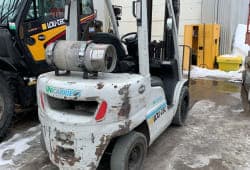

A forklift upgrade can provide more than a newer machine. The right equipment can help your operation move materials more efficiently, reduce unplanned downtime, improve operator conditions, and better match equipment to the work being performed.
The most important benefits include:
Higher productivity
Better workplace safety
Lower operating costs
Improved load capacity
Better operator ergonomics
More useful technology
Easier fleet management
Greater application flexibility
Less downtime
Better long-term equipment value
Let's look at each one.
1. Increase Material-Handling Productivity
Productivity is one of the clearest reasons to upgrade a forklift.
Older machines may take longer to accelerate, lift, maneuver, or travel between loading and storage areas. Mechanical problems can also force operators to work around equipment limitations.
A forklift that matches the required load capacity, lift height, aisle width, and operating environment can help operators complete more material-handling cycles efficiently.
The goal isn't simply to buy the newest forklift. It's to select a machine that fits the actual workflow.
For example, a compact electric forklift may make more sense for a warehouse with narrow aisles and indoor operation, while an internal-combustion forklift may be more appropriate for certain outdoor or heavy-duty applications.
2. Improve Forklift Safety
Safety should be part of every forklift replacement decision.
OSHA requires forklift operators to be properly trained and emphasizes pre-operation inspections, safe load handling, appropriate speeds, pedestrian awareness, and maintaining equipment in safe operating condition. OSHA also renewed its National Emphasis Program for warehouse and distribution-center hazards in 2026, specifically including powered industrial truck operations.
Upgrading equipment can provide access to features such as improved visibility, operator-assistance systems, ergonomic controls, better stability features, lighting, and other safety technologies.
However, a newer forklift does not automatically make an operation safe. Training, inspections, maintenance, traffic management, load handling, and workplace procedures remain essential.
3. Reduce Operating and Maintenance Costs
An older forklift may appear inexpensive because it is already paid for. But purchase price is only one part of equipment cost.
Consider the total cost of ownership:
Fuel or electricity
Preventive maintenance
Repairs
Replacement parts
Tires
Batteries
Labor
Downtime
Lost productivity
If repair invoices are becoming more frequent, the machine may be costing more to keep than its age or purchase price suggests.
A newer or well-maintained used forklift can provide a useful middle ground between keeping an aging machine and purchasing a brand-new unit.
4. Get the Right Load Capacity
Your material-handling requirements can change as your business grows.
A forklift that was adequate several years ago may no longer have the capacity, lift height, or configuration your operation requires.
Before upgrading, determine:
Typical and maximum load weight
Load dimensions
Required lift height
Load center
Travel distance
Aisle width
Indoor or outdoor use
Surface conditions
Required attachments
Never assume that a forklift's advertised maximum capacity applies to every configuration. Capacity can vary according to factors such as lift height, attachment, and load center. Operators should always follow the manufacturer's capacity information and workplace requirements.
5. Improve Operator Comfort and Ergonomics
Forklift operators can spend much of a shift repeatedly entering, exiting, steering, lifting, and maneuvering a machine.
Operator comfort therefore matters.
Newer forklifts may offer improved seating, controls, visibility, suspension, steering, and cab design. Better ergonomics can make repetitive work less physically demanding and help operators maintain control and awareness throughout their shifts.
Ergonomics should not be treated as a luxury. A workplace that is easier to operate can support productivity while reducing unnecessary physical strain.
6. Access Better Forklift Technology
Modern forklifts can provide technology that wasn't available on older machines.
Depending on the model, features may include:
Telematics
Hour and utilization tracking
Maintenance alerts
Operator access controls
Impact monitoring
Battery monitoring
Fleet-management software
Diagnostic information
Automated or assisted functions
These tools can give fleet managers better visibility into how equipment is being used.
Instead of relying entirely on assumptions, managers can use equipment data to identify underused machines, heavily utilized units, recurring maintenance issues, or opportunities to improve fleet allocation.
7. Make Fleet Management Easier
Managing several aging forklifts can become complicated when each machine has a different maintenance history, condition, and operating profile.
A fleet upgrade gives managers an opportunity to standardize equipment where practical.
Related Equipment
Browse all Forklifts


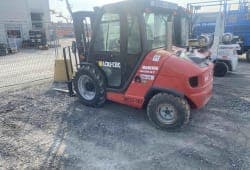
A more consistent fleet can simplify:
Operator training
Preventive maintenance
Parts inventory
Technician familiarity
Equipment tracking
Replacement planning
OSHA also recommends maintaining powered industrial trucks according to manufacturer recommendations and removing unsafe equipment from service.
Good fleet management isn't about having the newest equipment everywhere. It's about knowing which machines are productive, which are costing too much, and where replacement makes financial sense.
8. Adapt to Changing Applications
Your forklift requirements may change as your business changes.
A warehouse may add taller storage racks. A manufacturer may begin handling heavier components. A distribution center may increase throughput. A construction company may need equipment capable of working outdoors.
Instead of forcing an old forklift to perform a job it wasn't designed for, consider whether another configuration would better fit the application.
Depending on the operation, that could mean changing capacity class, power source, mast configuration, tire type, or attachments.
The right upgrade should solve a specific operational problem.
9. Reduce Unplanned Downtime
Few things hurt productivity like a forklift that suddenly stops working during a busy shift.
Older equipment can require more frequent repairs, particularly when major components and systems begin reaching the end of their useful service life.
Downtime can create a chain reaction:
Forklift failure → delayed material movement → production disruption → idle workers → missed deadlines
Upgrading equipment won't eliminate every breakdown, but replacing machines with poor reliability can reduce the risk of recurring interruptions.
When comparing equipment, look beyond the purchase price and investigate maintenance records, operating hours, service history, component condition, and inspection results.
10. Improve Long-Term Fleet Value
A forklift is a business asset, so its value should be considered over the entire ownership period.
A good replacement strategy can help you avoid putting excessive capital into equipment that is becoming increasingly expensive to maintain.
It can also help you build a predictable replacement cycle rather than waiting for a catastrophic failure to force an emergency purchase.
For some businesses, buying quality used forklifts can be particularly attractive. A properly inspected used machine can provide the capacity and functionality needed for the application while potentially requiring less upfront capital than a comparable new machine.
New vs. Used Forklift: What Should You Consider?

Neither option is automatically right for every operation. The decision should be based on utilization, budget, required specifications, expected ownership period, and the condition of available equipment.
How to Know When It's Time to Replace a Forklift
Consider upgrading when several warning signs begin appearing at the same time.
For example, your forklift may be a replacement candidate if:
Repair frequency keeps increasing
Maintenance costs are rising
Downtime is disrupting operations
The machine no longer meets capacity requirements
Operators struggle with visibility or ergonomics
The forklift lacks useful fleet-management technology
Your application has changed
Parts are becoming difficult to source
Fuel or energy costs are becoming excessive
The machine is no longer reliable enough for your workload
A single repair doesn't necessarily mean a forklift should be replaced. Look at the trend over time.
How to Choose the Right Forklift Upgrade

Start with the application—not the brand.
Identify the loads you move, how frequently you move them, where the forklift operates, and what your operators need to accomplish during a typical shift.
Then compare:
Capacity → lift height → power source → dimensions → tires → attachments → operating environment → maintenance history → total cost of ownership
If you're buying used, inspect the machine carefully and review available service records before making a decision.
Also remember that forklift safety depends on more than equipment selection. Operators must be trained for the type of truck and workplace conditions, and equipment should be inspected and maintained properly.
Upgrade Your Forklift Fleet With Boom & Bucket
A forklift upgrade doesn't have to mean replacing every machine in your fleet at once.
Start by identifying the units creating the biggest productivity, maintenance, or reliability problems. Then determine the specifications needed for their replacement.
If a quality used forklift fits your operation, Boom & Bucket can help you find equipment that matches your requirements and budget.
Browse available forklifts, compare machine specifications and conditions, and evaluate your purchasing options before committing to your next piece of equipment.
Need help getting the equipment to your jobsite? Consider transport options as part of the purchasing process, and explore financing when spreading the equipment investment makes sense for your business.
Research your options → Find the right forklift → Review condition and specifications → Explore financing → Arrange transportation → Put your upgraded fleet to work.
Final Thoughts
Upgrading a forklift fleet is about more than replacing old equipment.
The right upgrade can help address productivity bottlenecks, improve operator conditions, reduce unexpected downtime, support better fleet management, and provide equipment that is better suited to today's workload.
Before replacing a forklift, look at its complete operating picture: utilization, maintenance costs, reliability, safety requirements, capacity, and total cost of ownership.
Then compare new and quality used equipment based on what your business actually needs.
For many operations, the smartest fleet strategy isn't having the newest forklift - it is having the right forklift working reliably for the job.

Mike Kennedy is Boom & Bucket's Marketplace Operations Manager, where he leads shipping, warranties, and post-sale operations to create a seamless buyer experience. As one of the company's earliest team members, Mike helped build the foundation of Boom & Bucket's operations and guided its growth through acquisition by RB Global. He is passionate about scaling marketplaces, solving operational challenges, and improving efficiency to deliver industry-leading results.