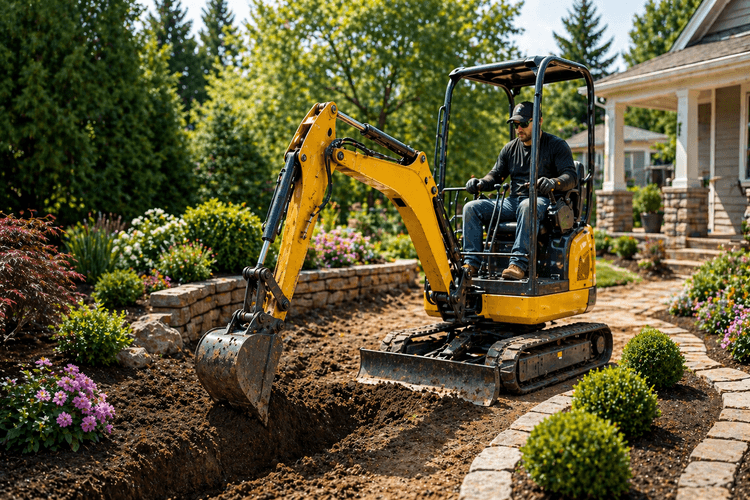
The Future of Construction Robots in 2025: Automation, Innovation, and Efficiency
7 Min read
&w=3840&q=75)

April 2, 2025
What is a Construction Robot?
A construction robot is an automated machine designed to perform specific tasks on a construction site. These robots vary in function and capability, ranging from robot construction workers that lay bricks to construction layout robots that map and mark construction areas with precision. With the integration of AI and machine learning, these robots are becoming smarter and more adaptable, revolutionizing the industry.


The construction industry is undergoing a major transformation with the rise of construction robots. As automation and artificial intelligence (AI) continue to advance, robot construction workers are becoming an integral part of job sites, improving efficiency, accuracy, and safety. From construction layout robots to autonomous demolition machines, robotics is changing the way buildings and infrastructure are developed.
In this blog, we’ll explore the different types of construction robots, their impact on the industry, and how they are shaping the future of construction in 2025 and beyond.
Key Functions of Construction Robots
%3Aformat(webp)&w=1920&q=75)
Automating repetitive tasks to reduce human labor
Enhancing accuracy in measurements and layouts
Improving safety by reducing the risk of accidents
Boosting efficiency to complete projects faster and at a lower cost
Types of Construction Robots
As technology advances, several types of construction robots are being developed to assist in different areas of construction. Here are the most prominent ones:
1. Robot Construction Workers
Bricklaying Robots - Machines like Hadrian X and SAM100 can lay bricks much faster than human workers.
Welding Robots - Used for automated steel welding in large-scale infrastructure projects.
Painting and Plastering Robots - Improve finishing quality while reducing labor-intensive tasks.
2. Construction Layout Robots
These robots, such as Dusty Robotics, are used for precise site planning and marking layouts on floors.
They improve accuracy in blueprint implementation and reduce manual errors.
3. Demolition Robots
Designed to replace human workers in hazardous environments.
Remote-controlled machines that efficiently demolish concrete structures with precision and safety.
4. 3D Printing Robots
Capable of printing entire buildings using advanced concrete extrusion techniques.
Reduce material waste and speed up construction timelines.
5. Autonomous Construction Equipment
Self-driving bulldozers, excavators, and dump trucks powered by AI and GPS technology.
Increase site productivity by optimizing movement and reducing human intervention.
Construction Robots vs Human Labor
%3Aformat(webp)&w=1920&q=75) Key Differences Explained
Key Differences Explained
Robots excel in repetitive tasks with high precision
Human labor provides flexibility and problem-solving
Combining both creates the most efficient workflow
The future of construction is hybrid: robots + skilled workers.
How Are Robots Used in Construction in 2025?
%3Aformat(webp)&w=1920&q=75)
In 2025, the use of construction robots has expanded significantly, with more construction companies adopting automation to streamline operations. Here are some of the key ways robots are shaping the industry:
1. Enhanced Job Site Productivity
Robot construction workers handle repetitive tasks, allowing human workers to focus on skilled labor.
Autonomous construction equipment speeds up excavation, material handling, and transportation.
2. Improved Accuracy with Construction Layout Robots
Construction layout robots ensure millimeter-level precision in marking foundations, reducing costly rework.
3. Increased Safety on Job Sites
Demolition robots take on dangerous tasks, reducing worker injuries.
AI-driven site monitoring robots detect safety hazards in real-time.
4. Addressing Labor Shortages
Robots help fill the gap in skilled labor by performing time-consuming and physically demanding tasks.
5. Cost Savings and Sustainability
3D printing robots and automated material handling reduce waste and optimize resource use.
Advantages of Construction Robots
The adoption of robotics in construction offers numerous benefits:
Increased Efficiency - Robots work faster and more consistently than human labor.
Improved Precision - AI-driven robots minimize human error in complex construction tasks.
Enhanced Safety - Automation reduces worker exposure to dangerous environments.
Lower Costs - Faster project completion leads to reduced labor costs and material savings.
Better Quality Control - Robots ensure uniformity and adherence to building standards.
Challenges and the Future of Construction Robotics
Despite the benefits, challenges remain in the widespread adoption of construction robots:
High Initial Investment - Robotics technology is expensive to implement.
Need for Skilled Operators - Workers need training to operate and maintain robotic systems.
Adaptation to Complex Job Sites - Some construction environments still require human flexibility and decision-making.
Regulatory and Safety Standards - Governments must establish regulations for robotics use in construction.


The Future of Construction Robots
Looking ahead, we can expect:
AI-powered robotic assistants that collaborate seamlessly with human workers.
Advanced automation in high-rise construction with robotic cranes and scaffolding.
Widespread use of drones for real-time site monitoring and surveying.
Greater integration with BIM (Building Information Modeling) for optimized workflows.
Cost of Construction Robots
The cost of construction robots varies widely based on function and automation level. On average, demolition robots cost $50,000-$200,000, layout robots range from $10,000-$50,000, and advanced bricklaying or 3D printing robots can exceed $500,000.
Average Construction Robot Costs by Type
%3Aformat(webp)&w=1920&q=75) Costs depend on automation level, software integration, and project scale.
Costs depend on automation level, software integration, and project scale.
ROI of Construction Automation
Construction robots deliver a strong ROI by improving speed, accuracy, and safety, while reducing long-term labor costs.
Key ROI Drivers:
Faster project completion → More projects per year
Reduced labor costs → Fewer workers needed for repetitive tasks
Higher accuracy → Less rework and material waste
Improved safety → Lower accident-related costs
Example ROI Scenario
Robot cost: $120,000
Labor savings per year: $80,000
Reduced rework savings: $20,000
Total annual benefit: $100,000
Payback period 1.2 years
Automation allows contractors to increase productivity while lowering long-term operational costs, making robots a strategic investment.
Real Project Examples of Construction Robots
Construction robots are already transforming real-world projects across the industry.
Bricklaying Robots in Commercial Projects
Automated masonry systems can lay thousands of bricks per day, significantly reducing construction timelines.
Layout Robots in Large-Scale Builds
Used to mark precise measurements on-site, improving accuracy and reducing human error.
Demolition Robots in Hazardous Environments
Remote-controlled robots are used for safe demolition in high-risk areas, protecting workers.
3D Printing Robots for Rapid Construction
Used to build structures faster with less material waste, especially in innovative housing projects.
These real-world applications demonstrate how robotics improves efficiency, safety, and scalability.
Conclusion
The rise of construction robots is transforming the industry, making projects safer, faster, and more efficient. As we enter 2025, the integration of robot construction workers, construction layout robots, demolition bots, and 3D printing technology will redefine how buildings and infrastructure are developed.
While challenges remain, the future of construction robotics is promising, with continuous innovations improving automation and job site productivity. Companies that embrace this technology will gain a competitive edge in the evolving world of construction.
Are you ready to explore the power of construction robots? Stay ahead by following the latest trends in construction automation!
Frequently Asked Questions About Construction Robots
What are construction robots?
Construction robots are automated or semi-autonomous machines used to perform tasks like bricklaying, demolition, excavation, and site inspection, improving efficiency and safety on job sites.
What are construction robots used for?
Construction robots are used for:
Bricklaying and masonry
Demolition and material removal
Site layout and measurement
3D printing structures
Inspection and monitoring
These applications help reduce labor intensity and increase accuracy.
How much do construction robots cost?
Construction robot costs vary by type:
Layout robots: $10,000 - $50,000
Demolition robots: $50,000 - $200,000
Advanced robots: $100,000 - $500,000+
Prices depend on automation level and capabilities.
Are construction robots replacing human workers?
No, construction robots are designed to assist human workers, not replace them. They handle repetitive or dangerous tasks while humans focus on decision-making and complex work.
What are the benefits of construction robots?
Key benefits include:
Faster project completion
Improved accuracy
Enhanced jobsite safety
Reduced labor costs
What is the ROI of construction robots?
Construction robots can deliver ROI by reducing labor costs, minimizing rework, and increasing productivity, often achieving payback within 1-2 years.
What industries use construction robots?
Construction robots are used in:
Commercial construction
Infrastructure and roadwork
Residential building
Industrial and manufacturing projects
What is the future of robotics in construction?
The future of construction robotics includes AI integration, autonomous equipment, and advanced 3D printing technologies, driving faster and more efficient project delivery.
Are construction robots worth the investment?
Yes, for many contractors, construction robots are worth the investment due to long-term cost savings, improved efficiency, and competitive advantage.


Javier Bocanegra is Boom & Bucket's Technical Resolutions Lead, drawing on 10+ years in automotive and heavy equipment to diagnose issues, resolve complex post-sale cases, and keep machines - and customers - running smoothly. A certified heavy-equipment specialist, he's known for meticulous inspections and hands-on expertise across mechanical, electrical, and hydraulic systems. Based in Sacramento, Javier partners closely with buyers, vendors, and our field teams to deliver reliable outcomes and uphold our standards for safety and trust.