Navigating Type of Lifts and Their Applications in Modern Construction
13 Min read
&w=3840&q=75)

May 7, 2024
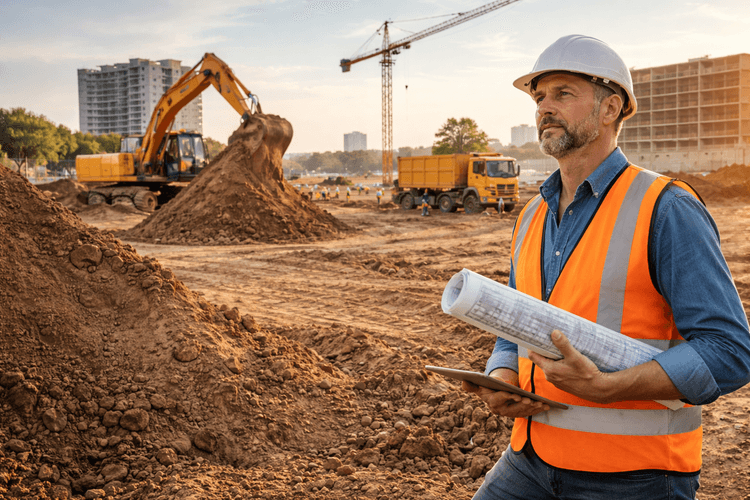
Construction lifts are machines with platforms that go up and down. They are built on top of vehicles. Types include boom lifts, scissor lifts, forklifts, and other lifts that carry people. These machines are very helpful on construction sites. They help move materials when building starts and let workers reach high places for jobs like checking work at the end. These lifts can move to different heights and spots, which makes working in hard-to-get-to areas easier and safer. They also have safety features to keep workers safe while they are up high.
What Is the Best Type of Lift for Construction?
The best construction lift depends on the job. Boom lifts are suited to work requiring reach, scissor lifts to primarily vertical access, and telehandlers to material handling and rough-terrain applications.


How We Evaluate Lifting Equipment
We evaluate lifting equipment based on application, working height, platform height, horizontal outreach, lifting capacity, terrain capability, maneuverability, power source, dimensions, maintenance requirements, and overall operating suitability.
For used equipment, we also consider operating hours, maintenance history, hydraulic and structural condition, tires, controls, safety systems, previous repairs, and overall machine condition.
We prioritize manufacturer specifications and applicable safety guidance when evaluating equipment. Because specifications and configurations vary by model and year, buyers should verify critical specifications with the manufacturer or equipment documentation before making a purchasing decision.
Here are the different types of lifts:
Boom Lifts
Articulating Boom Lifts: Often referred to as knuckle booms, these lifts are equipped with joints that allow the arm to bend and maneuver around obstacles. This capability makes them particularly useful in areas with difficult access, such as congested construction sites or complex industrial environments. Articulating boom lifts are excellent for tasks that require reaching over or around barriers, such as in landscaping or facility maintenance.
Telescopic Boom Lifts: Known for their extended reach, telescopic boom lifts have a straight arm that can be extended to great heights, making them ideal for tasks that require vertical reach such as building maintenance, window cleaning, and construction. Their robust design allows them to operate in various environments, including rough terrain, where stability and reach are critical.
Scissor Lifts
Scissor lifts are highly valued in settings that require a stable platform for workers to perform tasks at various heights. The unique crisscross mechanism allows the lift to move straight up and down, providing a secure working area. This feature makes them ideal for tasks that need a steady hand such as electrical installations, painting, and overhead repairs. Their compact design and ease of maneuverability make them especially useful in indoor environments or on solid, flat surfaces.
Forklifts
Forklifts are pivotal in the movement of heavy materials across short distances. Available in several types to handle different loads and environments, forklifts are essential in logistics, warehousing, and manufacturing. Their ability to lift and transport materials to different heights makes them indispensable in any setting that involves material handling.
Personnel Lifts
Material lifts focus on vertically transporting building materials with precision and control. They are indispensable in construction, particularly for projects like HVAC installations or transporting materials to upper floors. The stability and controlled lifting mechanism make them a safer and more efficient choice for handling heavy loads on construction sites.
Material Lifts
Material lifts are engineered to elevate building materials vertically in a controlled manner. They are crucial for tasks like HVAC installations, moving materials to upper floors of a construction site, and aiding in the building of multi-story structures. Their design focuses on stability and precision lifting.
Bucket Trucks
Bucket trucks, or cherry pickers, combine a mobile truck platform with a hydraulic boom and a bucket. They are used for tasks that require mobility and elevation, such as tree trimming, utility repairs, or exterior painting. The flexibility and reach of the boom make these trucks invaluable for a variety of outdoor activities.
Mast Lifts
Mast lifts offer vertical lifting capabilities using a mast and platform, making them suitable for indoor and outdoor work at moderate heights. They are commonly seen in places like shopping malls or for facade repairs on buildings, providing a secure platform for workers performing maintenance and installation tasks.
Construction Elevators
Used primarily on large construction sites, construction elevators are temporary lifts attached to the exterior of buildings. They significantly enhance efficiency by providing quick transportation of workers and materials between floors, reducing the need for extensive scaffolding and improving safety and productivity on the construction site.
Telehandlers
Telehandlers or telescopic handlers, provide a versatile blend of a crane and forklift features. With a telescopic boom that can extend forwards and upwards, telehandlers can perform a variety of tasks, from lifting heavy loads to higher elevations to handling different types of materials with various attachments. They are particularly valued on construction sites for their flexibility and wide range of capabilities.
Types of Lifts at a Glance
Different lifts are designed for different access and material-handling requirements
%3Aformat(webp)&w=1920&q=75) Choose the lift based on the work it must perform rather than simply its maximum height.
Choose the lift based on the work it must perform rather than simply its maximum height.
What to consider when choosing the right lifting equipment for your project?
Job Requirements:
Begin by assessing the specific requirements of the task. This includes the height the equipment needs to reach, the reach distance from the base, and the load capacity to handle the weight of materials or personnel involved. Accurate assessment ensures the selected equipment can perform the required tasks efficiently and safely.
Work Environment:
Evaluate the environment in which the equipment will be used. This includes determining whether the work will be conducted indoors or outdoors, which impacts the type of equipment suitable due to size and exhaust limitations. Additionally, ground conditions are vital to assess for ensuring stability and safety; for instance, soft ground may require different equipment features than a paved surface.
Power Source:
The choice of power source is influenced by the operational environment and the need for mobility and flexibility. Electric models are preferred for indoor use due to their lack of emissions and lower noise levels, making them suitable for confined spaces. Diesel models offer more power and are suitable for outdoor use where noise is less of a concern. Hybrid models provide versatility, being usable in both environments with reduced environmental impact compared to traditional diesel engines.
Boom Lift vs. Scissor Lift
A boom lift is generally the better choice when the job requires horizontal outreach, positioning around obstacles, or access to difficult locations. A scissor lift is typically better when workers need a larger platform for primarily vertical access.
Choose a boom lift when you need:
Horizontal outreach
Up-and-over access
Greater positioning flexibility
Access around structures or obstacles
Work at varying elevations
Choose a scissor lift when you need:
Primarily vertical access
A larger working platform
Multiple workers or tools on the platform, within rated capacity
Indoor or relatively open work areas
Efficient movement between nearby work locations
Simple rule: If you need reach, consider a boom lift. If you mainly need vertical platform access, a scissor lift may be more efficient.
Articulating vs. Telescopic Boom Lifts
The primary difference is how the boom reaches the work area.
Articulating Boom Lift
An articulating boom uses multiple sections connected by joints, allowing the platform to move up, over, and around obstacles.
Best for:
Building maintenance
Industrial facilities
Construction
Work around structures
Congested jobsites
Telescopic Boom Lift
A telescopic, or straight-boom, lift extends outward in a relatively straight line and is designed for long horizontal reach and high working heights.
Best for:
Large construction sites
Steel erection
Structural work
Outdoor projects
Applications requiring substantial reach
In short: Articulating booms provide positioning flexibility, while telescopic booms prioritize long reach and height.
Personnel Lifts vs. Material Lifts
Personnel lifts are designed to raise workers to elevated work areas. They are commonly used for maintenance, installation, inspection, and other light-duty access tasks.
Material lifts are designed to raise equipment or materials rather than workers.
The distinction is important because equipment should only be used for the purpose and configuration specified by the manufacturer.
Personnel lifts are useful for:
Facility maintenance
Electrical work
Lighting
Installation
Inspection
Material lifts are useful for:
Moving construction materials
Raising tools and equipment
HVAC installation
Electrical installation
Interior construction
Lift Types by Application
The best lift depends on the work being performed.
Construction
Boom lifts, scissor lifts, and telehandlers are commonly used for elevated access and material handling.
Building Maintenance
Scissor lifts, personnel lifts, and articulating boom lifts can provide access for lighting, electrical, HVAC, and facility maintenance.
Warehousing
Personnel lifts and specialized material lifts can be useful where compact dimensions and indoor maneuverability are important.
Utilities
Bucket trucks and boom lifts provide elevated access for utility installation and maintenance.
Landscaping and Tree Care
Bucket trucks and boom lifts can provide access to elevated work areas, depending on the application and equipment configuration.
Lift Types by Indoor vs. Outdoor Use
Indoor Lifts
Indoor applications often favor compact, maneuverable electric equipment with low noise and no tailpipe emissions.
Common choices include:
Electric scissor lifts
Vertical mast lifts
Personnel lifts
Compact material lifts
Consider floor loading, doorway dimensions, turning radius, ceiling height, and emissions requirements before selecting equipment.
Outdoor Lifts
Outdoor projects may require greater mobility, ground clearance, reach, and terrain capability.
Common choices include:
Rough-terrain scissor lifts
Boom lifts
Telescopic boom lifts
Telehandlers
Lift Types by Terrain
Terrain can significantly affect lift selection.
Smooth, Level Surfaces
Slab scissor lifts and compact personnel lifts can work well where surfaces are firm and relatively level.
Uneven Jobsites


Rough-terrain scissor lifts and boom lifts are designed for more challenging outdoor conditions.
Very Rough Terrain
Telehandlers and specialized rough-terrain equipment can provide greater mobility for material-handling applications.
Before operating equipment, evaluate ground conditions, slopes, obstacles, surface stability, and manufacturer requirements.
How to Choose the Right Lift
Use this decision process:
What are you lifting? People, materials, or both?
How high must you work? Determine the required working height.
Do you need horizontal reach? If yes, consider a boom lift.
What is the required capacity? Include workers, tools, and materials.
Where will you operate? Indoor, paved outdoor, or rough terrain?
What power source is appropriate? Consider electric, diesel, or other available options.
How much space is available? Check width, turning radius, and access points.
How frequently will the machine be used? This can influence whether buying or renting makes sense.
Are you buying used? Inspect hours, structure, hydraulics, tires, controls, and maintenance records.
The right lift is the one that safely meets your required height, reach, capacity, terrain, and application without unnecessary machine size or cost.
Lift Specifications Explained
Important specifications include:
Working height
Platform height
Horizontal outreach
Platform capacity
Machine weight
Overall dimensions
Turning radius
Ground clearance
Gradeability
Power source
Platform dimensions
Don't compare machines using maximum height alone. A lift with greater height may not provide the reach, capacity, or maneuverability your job requires.
Platform Height vs. Working Height
Platform height is the maximum height of the platform itself.
Working height generally represents the approximate maximum height a worker can reach from the elevated platform.
For example, a machine may have a platform height substantially lower than its advertised working height.
When comparing lifts, use working height to determine whether the machine can reach your actual work area.
Lift Capacity
Lift capacity is the maximum permitted load under specified operating conditions.
For aerial work platforms, capacity can include:
Workers
Tools
Equipment
Materials
Capacity may vary depending on boom position, platform configuration, machine model, and operating conditions.
Never exceed the manufacturer's rated capacity.
Horizontal Outreach
Horizontal outreach describes how far a boom or platform can extend horizontally from the machine's base or specified reference point.
This specification is particularly important when working:
Around buildings
Over obstacles
Across gaps
Near structures
In congested jobsites
A machine with greater working height isn't necessarily the best choice if the job requires significant horizontal reach.
Electric vs. Diesel Lifts
Electric Lifts
Best suited to many indoor and noise-sensitive applications.
Advantages:
Low operating noise
No tailpipe emissions during operation
Suitable for many indoor environments
Often compact and maneuverable
Diesel Lifts
Often used for demanding outdoor applications where power, range, and rough-terrain capability are priorities.
Advantages:
Well suited to outdoor jobsites
Common on rough-terrain equipment
Suitable for extended heavy-duty applications
The best power source depends on the work environment, duty cycle, terrain, emissions requirements, and available charging or fueling infrastructure.
Rough-Terrain vs. Slab Scissor Lifts
Rough-Terrain Scissor Lift
Designed for outdoor jobsites with uneven surfaces and more demanding terrain conditions.
Typically prioritizes:
Ground clearance
Large tires
Terrain capability
Outdoor mobility
Slab Scissor Lift
Designed primarily for firm, level surfaces, particularly indoor construction and maintenance.
Typically prioritizes:
Compact dimensions
Maneuverability
Indoor operation
Lower surface impact
Choose based on actual ground conditions rather than simply platform height.
Used Lift Buying Guide
A used lift can provide substantial value, but condition matters more than age alone.
Before purchasing, review:
Operating hours
Maintenance records
Service history
Hydraulic condition
Engine or battery condition
Tires
Platform condition
Boom structure
Controls
Safety systems
Signs of leaks
Previous repairs
Overall structural condition
Ask for documentation and inspect the machine under operating conditions whenever possible.
Lift Inspection Checklist
Before purchasing a used lift, inspect:
Structure
Boom sections
Welds
Pins and bushings
Platform
Guardrails
Hydraulics
Cylinders
Hoses
Fittings
Hydraulic leaks
Mechanical
Engine or drive system
Tires
Brakes
Steering
Drivetrain
Controls & Safety
Emergency stop
Platform controls
Ground controls
Alarms
Interlocks
Safety devices
Documentation
Service records
Inspection records
Operating manual
Repair history
A professional inspection can be worthwhile before completing a major used-equipment purchase.
Lift Safety
Lift operation requires proper training and adherence to manufacturer instructions and applicable regulations.
Before operation:
Inspect the machine.
Check the work area.
Identify overhead hazards.
Evaluate ground conditions.
Confirm load limits.
Use required fall protection.
Keep unauthorized people away.
Follow manufacturer operating procedures.
OSHA and NIOSH identify hazards associated with aerial lifts, including falls, tip-overs, electrocution, and crushing hazards. Proper training and inspection are essential. (OSHA, CDC/NIOSH)
Budget and Availability:
Finally, consider the cost-effectiveness of renting versus buying the equipment based on how frequently it will be used and the financial resources available. Renting may be more advantageous for short-term or one-off projects, whereas buying may be more economical for long-term use. Also, consider the availability of the equipment within your region to ensure you can access it when needed without significant delay.
Lift Maintenance
Regular maintenance helps preserve performance, reliability, and safety.
Typical maintenance includes:
Checking hydraulic systems
Inspecting hoses and fittings
Checking fluid levels
Inspecting tires
Lubricating specified components
Checking batteries or engine systems
Inspecting structural components
Testing controls and safety systems
Following manufacturer service intervals
Always follow the specific manufacturer's maintenance requirements.
Frequently Asked Questions
What are the main types of lifts?
The main types include boom lifts, scissor lifts, articulating boom lifts, telescopic boom lifts, personnel lifts, material lifts, bucket trucks, and telehandlers.
What is the difference between a boom lift and a scissor lift?
A boom lift provides vertical and horizontal positioning, while a scissor lift primarily raises a platform vertically.
Which lift is best for indoor use?
Electric scissor lifts, vertical mast lifts, and personnel lifts are commonly suited to indoor applications where compact dimensions, low noise, and zero tailpipe emissions are important.
Which lift is best for rough terrain?
Rough-terrain boom lifts, rough-terrain scissor lifts, and telehandlers can be appropriate depending on whether the job requires personnel access, material handling, or both.
What should I consider when choosing a lift?
Consider working height, horizontal reach, capacity, terrain, indoor or outdoor use, power source, dimensions, mobility, safety requirements, and budget.
Choose the Right Lift for the Job
Choosing the right lift starts with understanding your working height, reach, capacity, terrain, application, and operating environment. Boom lifts provide greater outreach, scissor lifts offer efficient vertical access, and telehandlers are built for material handling and rough-terrain work.
For a used lift, go beyond price and inspect the structure, hydraulics, tires, controls, safety systems, operating hours, and maintenance history. Matching the machine to your actual requirements can improve productivity while avoiding unnecessary operating and ownership costs.
Ready to find the right equipment? Explore Boom & Bucket's selection of used lifts and compare available machines by type, specifications, condition, and budget. Find equipment that fits your job and make your next equipment purchase with confidence.


Post acquisition of Boom & Bucket, the company he founded, Adam now leads Marketplace Growth for Ritchie Bros.