The Transformation of Bucket Trucks: From Cherry Pickers to High-Tech Platforms
9 Min read


January 19, 2024
The journey from basic cherry pickers to the advanced bucket trucks of today illustrates a significant evolution in aerial work technology. Initially designed for fruit harvesting, these machines have been transformed into versatile, high-tech platforms critical for a variety of modern industries.
Origins and Evolution
Cherry pickers emerged in the 1940s, primarily used in agriculture to safely pick fruit from tall trees. These early models featured a simple bucket attached to a hydraulic boom, drastically reducing the risks associated with using ladders. As their potential became evident, cherry pickers evolved into more sophisticated machines. The 1950s saw their adoption in utility work, with enhancements aimed at improving safety and operational efficiency. This period marked the beginning of their transition into what we now call bucket trucks.
Related Equipment
Browse all Bucket trucks
Key Features of Modern Bucket Trucks
The evolution of cherry pickers can be understood through the significant technological advancements in bucket trucks, which include:
Advanced Hydraulics:
Modern bucket trucks incorporate sophisticated hydraulic systems that enhance the precision of the boom's movements. These systems allow for finer control, making it easier to position the bucket exactly where needed, even in complex or congested environments. The smooth operation reduces the risk of abrupt movements, enhancing safety and efficiency during aerial tasks.
Enhanced Safety Features:
Today's bucket trucks are equipped with several key safety features to protect operators and enhance operational integrity. Load management systems monitor and prevent the risk of overloading the bucket, which can lead to mechanical failures. Stability controls automatically adjust the truck's balance when working on uneven surfaces or under variable load conditions. Additionally, insulated booms prevent electrical conduction, crucial for safe operations near live electrical wires.
High-Tech Integration:
GPS Navigation:
This technology is integrated into modern bucket trucks to streamline navigation to and from job sites. GPS helps operators find the quickest and safest routes, reducing travel time and increasing the time spent on productive work. It also plays a crucial role in fleet management by tracking vehicle locations and usage patterns.
Remote Control Capabilities:
Remote control systems in bucket trucks allow operators to control the boom and bucket from a distance, which is particularly important in dangerous or inaccessible areas. This capability ensures that operators can maintain a safe position while still performing precise maneuvers, reducing the risk of accidents and enhancing overall job site safety.
Diverse Applications of Contemporary Bucket Trucks
As bucket trucks have evolved with technological advancements, so have their applications across various industries. Here’s a detailed look at how these vehicles are utilized:
Construction:
Modern bucket trucks provide a safer and more efficient alternative to traditional scaffolding in the construction industry. They are extensively used for tasks such as painting, window installations, and other maintenance work that requires access to high elevations. Their ability to quickly move and adjust to different heights significantly reduces setup time and enhances worker safety.
Tree Care:
In the field of arboriculture, bucket trucks are invaluable. They offer arborists safe and controlled access to high branches, allowing for precise pruning, trimming, or removal without the need for climbing gear. This not only ensures the safety of the workers but also helps protect the tree and surrounding landscape from potential damage caused by falling branches and debris.
Emergency Services:
Bucket trucks are critical in emergency services, particularly for high-angle rescues and firefighting in multi-story buildings. They enable quick and direct access to elevated areas, facilitating faster rescues and allowing firefighters to combat flames from advantageous positions. The reliability and speed of bucket trucks can make a significant difference in emergency response scenarios, potentially saving lives and preventing further property damage.
From simple mechanical lifters to multifunctional technological wonders, bucket trucks have come a long way since their inception as cherry pickers. Today, they are indispensable tools in numerous fields, equipped with sophisticated features that enhance safety, efficiency, and versatility. The evolution of bucket trucks not only reflects advancements in engineering and safety but also demonstrates the expanding scope of their applications in our increasingly complex industrial landscape.
Modern Bucket Truck Technology
Modern bucket trucks can incorporate technology designed to improve productivity, diagnostics, operator awareness, and power management.
Examples include:
Electronic controls
Boom-position sensors
Load monitoring
Hydraulic monitoring
Digital displays
Remote diagnostics
Operator-assistance systems
Hybrid power systems
Battery-electric systems
Technology varies by manufacturer and model, so buyers should verify the actual equipment and features included with a specific truck.
Electric and Hybrid Bucket Trucks
Electric and hybrid bucket trucks are now commercially available rather than being purely future concepts.
For example, Terex currently lists all-electric utility bucket trucks with a 60-foot working height, 700-pound platform capacity, 2,000-pound material-handling capacity, and battery-electric hydraulic systems. Its International model uses a 210-kWh battery, while its Mack model uses a 240-kWh battery.
When evaluating electric or hybrid equipment, consider:
Daily operating hours
Working-height requirements
Battery capacity
Charging infrastructure
Payload
Hydraulic power requirements
Climate and operating conditions
Total cost of ownership
Bucket Truck Telematics
Telematics systems collect and transmit equipment or vehicle data to help fleet managers monitor operations and maintenance.
Depending on the system, data may include:
Vehicle location
Mileage
Engine hours
Utilization
Diagnostic information
Maintenance events
Battery information on electric equipment
Equipment alerts
Telematics is most useful when the data supports specific fleet decisions, such as scheduling maintenance, tracking utilization, or identifying equipment that is spending too much time idle.
Collision Avoidance and Operator-Assistance Technology
Some modern bucket trucks can incorporate cameras, proximity sensors, detection systems, alarms, and other operator-assistance technologies.
These systems can improve situational awareness by helping operators identify nearby objects or potential hazards. They should not be treated as a replacement for trained operators, jobsite assessment, safe operating procedures, or required controls.
When buying used, verify which operator-assistance features are actually installed because availability varies by manufacturer, model, and year.
Bucket Truck Maintenance
Bucket truck maintenance should cover both the truck chassis and the aerial device.
Key areas include:
Engine and transmission
Brakes and tires
Hydraulic hoses and fittings
Hydraulic cylinders
Boom sections
Pins and bushings
Platform
Upper and lower controls
Outriggers
PTO and hydraulic pump
Electrical system
Safety devices
Follow the manufacturer's maintenance and inspection requirements. ANSI/SAIA A92.2-2021 specifically includes maintenance, inspection, and operation within its scope.
How to Choose the Right Bucket Truck
Choose a bucket truck based on the work requirements first.
Determine the required working height.
Calculate the required side reach.
Determine personnel, tool, and material weight.
Choose telescopic or articulating configuration.
Determine whether overcenter capability is needed.
Check platform and material-handling capacity.
Confirm chassis GVWR and payload.
Consider terrain and jobsite access.
Compare new and used equipment.
Inspect used equipment before purchase.
Related Equipment
Browse all Bucket trucks
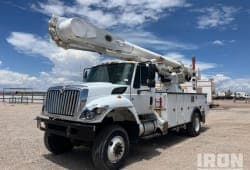
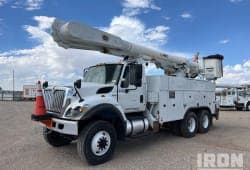
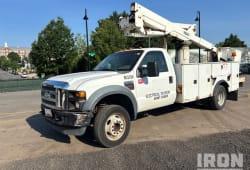
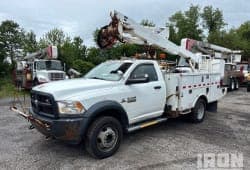
The right truck should provide sufficient reach and capacity without paying for capabilities that your work does not require.
How Much Does a Bucket Truck Cost?
Bucket truck prices vary significantly based on age, manufacturer, working height, chassis, mileage, aerial configuration, condition, and included equipment.
Used-market prices should therefore be treated as individual asking prices rather than a universal average. When comparing equipment, evaluate the complete configuration and condition alongside the advertised price.
For a more accurate purchase decision, compare:
Asking price
Year
Mileage
Working height
Platform capacity
Boom configuration
Maintenance history
Inspection results
Expected repair costs
Resale value
How to Buy a Used Bucket Truck
Evaluate a used bucket truck as two connected pieces of equipment: the truck chassis and the aerial device.
Review:
Year and manufacturer
Mileage
Engine hours
Aerial-device hours, if available
Working height
Side reach
Platform capacity
Chassis GVWR
Service records
Inspection records
Repair history
Previous application
Damage or accident history
Operate the aerial device through its intended range and look for hydraulic leaks, abnormal movement, excessive play, unusual noise, and control problems.
For insulated equipment, also verify applicable inspection, testing, and documentation before purchase.
Used Bucket Truck Inspection Checklist
Before buying, inspect the following:
Truck chassis
Engine and transmission
Brakes
Steering
Tires
Frame
Suspension
Electrical system
PTO
Aerial device
Boom sections
Pins and bushings
Hydraulic cylinders
Hydraulic hoses
Platform
Upper and lower controls
Emergency controls
Outriggers
Interlocks
Boom-rest system
Documentation
Service history
Repair records
Inspection records
Manufacturer manuals
Aerial-device documentation
Applicable electrical testing records
A professional inspection is particularly valuable for expensive used equipment because visible condition does not always reveal hydraulic, structural, or control-system problems.
Common Bucket Truck Problems
Potential bucket truck problems include:
Hydraulic leaks
Worn boom pins and bushings
Hydraulic-cylinder wear
Damaged hoses
PTO or hydraulic-pump problems
Faulty controls or sensors
Outrigger problems
Electrical faults
Worn tires and brakes
Corrosion
Frame damage
Excessive boom movement
On older machines, deferred maintenance can increase repair costs and downtime. Service records and a complete inspection can help identify problems before purchase.
Used Bucket Trucks for Sale
Used bucket trucks are available in different working heights, chassis configurations, boom designs, manufacturers, ages, and price ranges.
When comparing listings, look beyond the asking price. Compare:
Working height
Side reach
Platform capacity
Boom configuration
Manufacturer
Year
Mileage
Engine hours
Chassis
4x4 or 4x2 configuration
Condition
Service history
Browse used bucket trucks for sale on Boom & Bucket to compare available equipment by specifications, condition, and price.
Bucket Truck FAQs
What is a bucket truck?
A bucket truck is a truck-mounted aerial device used to position workers at elevated work areas. It is commonly used for utility, telecommunications, forestry, construction, and maintenance work.
What are the main types of bucket trucks?
The main configurations include telescopic, articulating, overcenter, and non-overcenter bucket trucks. Specialized models are also designed for utility, forestry, telecommunications, and transmission work.
How high can a bucket truck reach?
Working height varies by model. Current Terex distribution examples include 55-, 60-, and 65-foot working heights, while specialized transmission equipment can provide substantially greater reach.
How much weight can a bucket truck hold?
Platform capacity is model-specific. Several current Terex Optima models have a 700-pound platform capacity, while material-handling capacity can be higher. Always follow the manufacturer's load chart.
What is the difference between telescopic and articulating bucket trucks?
Telescopic bucket trucks extend the boom in sections, while articulating models use hinged boom sections. Telescopic designs can provide direct reach, while articulating designs offer greater positioning flexibility around obstacles.
Are bucket trucks insulated?
Some aerial devices are designed and rated as insulated for applicable electrical work. Insulation does not eliminate electrical hazards, and operators must follow equipment ratings and applicable safety requirements.
Are electric bucket trucks available?
Yes. Battery-electric bucket trucks are commercially available. Terex currently lists electric utility bucket trucks with 60-foot working heights and 2,000-pound material-handling capacities.
What should I inspect when buying a used bucket truck?
Inspect the chassis, boom, hydraulics, platform, controls, outriggers, PTO, safety systems, tires, frame, service records, and applicable inspection or testing documentation.
How much does a used bucket truck cost?
Used prices vary considerably according to age, working height, chassis, aerial configuration, condition, mileage, and market demand. Compare individual listings rather than relying on a single average price.
Find the Right Bucket Truck for Your Work
Bucket trucks have evolved from simple elevated-access equipment into specialized machines for utilities, forestry, telecommunications, construction, and maintenance. The right choice depends on working height, side reach, platform capacity, boom configuration, chassis, and job requirements.
If you're ready to buy, compare used bucket trucks for sale on Boom & Bucket by price, working height, manufacturer, mileage, configuration, and condition. Review the specifications and inspect the equipment carefully before making your decision.


Rex Walz is Boom & Bucket's Manager of Supplier Relations, bringing over a decade of experience in B2B sales and heavy equipment solutions. With a background spanning government, construction, industrial, and commercial sectors, he has a proven track record of driving growth and building trusted customer relationships. At Boom & Bucket, Rex is passionate about helping partners succeed while advancing the company's mission to create the most trusted marketplace for heavy equipment.
Related Articles
More in Insight