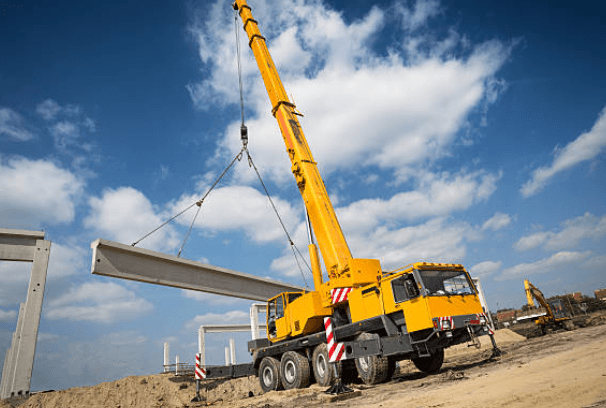
Discover The Different Type of Cranes

11 Min read

Josh MacDonald

Josh MacDonald

Team Player, Boom & Bucket

May 7, 2024

Cranes are essential for lifting and positioning heavy materials across construction, industrial, infrastructure, and specialized projects. With many types and configurations available, choosing the right crane requires understanding capacity, reach, mobility, terrain, and application. This guide covers the major crane types, key differences, selection factors, and used-crane buying considerations.

What are the different types of cranes?

Common crane types include mobile, tower, crawler, rough-terrain, all-terrain, truck-mounted, overhead, gantry, jib, floating, and railroad cranes.

Crane Expertise & Trust

This guide covers crane types, specifications, applications, and selection using practical heavy-equipment knowledge and manufacturer guidance.

For used cranes, we focus on condition, maintenance history, structural components, hydraulics, safety systems, and inspection records.

Technical Review: Crane safety, capacity, and inspection information should be reviewed by a qualified crane or heavy-equipment professional.

Cranes are essential machines used in construction, manufacturing, and transportation. They come in various types, each suited for specific tasks and environments. Here's a rundown of the main types of cranes:

1. Tower Cranes:

Tower cranes are a common sight at urban construction sites where vertical building is intensive. These cranes consist of a vertical mast and a horizontal jib, and they are particularly favored for constructing high-rise buildings such as skyscrapers because of their ability to reach exceptional heights and lift substantial loads. Their structural stability and lifting capacity make them indispensable in the skyline development of metropolitan areas.

2. Mobile Cranes:

Mobile cranes are celebrated for their versatility and mobility. These cranes, which may be truck-mounted, rough-terrain, or all-terrain, are equipped with hydraulic booms that enhance their flexibility and ease of movement. Ideal for projects requiring multiple lifting locations, mobile cranes can quickly move between sites and are essential for projects ranging from construction to emergency response.

3. Crawler Cranes:

Equipped with tracks instead of wheels, crawler cranes offer superior stability on soft or uneven ground, making them perfect for large-scale construction projects that require movement across less stable terrain. The tracks help distribute the crane’s weight evenly, which allows for the lifting of exceptionally heavy loads without compromising the crane's stability.

4. Telescopic Cranes:

These cranes feature an extendable boom composed of nested tubes that slide in and out like a telescope, providing adjustable lengths. This capability allows telescopic cranes to perform in various construction scenarios, ranging from simple tasks to complex lifts, by adjusting to the required heights swiftly, thereby enhancing their utility on projects with time constraints and diverse lifting needs.

5. Loader Cranes:

Typically mounted on the back of a truck, loader cranes facilitate the loading and unloading of heavy materials. These cranes are highly efficient in logistics operations, allowing for the rapid transfer of goods with minimal manpower. When not in use, the crane can be compactly folded, maximizing space efficiency on the vehicle.

6. Overhead Cranes:

Also known as bridge cranes, these are typically found in industrial environments like factories and warehouses, overhead cranes, or bridge cranes, operate along a horizontal beam that runs along two widely separated rails. Known for their strength and efficiency in moving heavy loads across short distances, overhead cranes are integral to assembly lines and other industrial applications where precision and safety are critical.

7. Floating Cranes:

Often used in bridge construction and port cargo operations, floating cranes are mounted on pontoons or specialized vessels, making them suitable for maritime projects. These cranes play a crucial role in constructing offshore structures, handling heavy loads at sea, and performing salvage operations in waterborne environments.

8. Gantry Cranes:

Similar to overhead cranes but operating at ground level, gantry cranes run on tracks and are predominantly used outdoors. They are vital in heavy industries and container ports where large and heavy objects like shipping containers and heavy machinery need to be moved efficiently over relatively short distances.

9. Jib Cranes:

Jib cranes consist of a horizontal jib or boom that supports a movable hoist, anchored to a wall or a floor-mounted pillar. Commonly utilized in industrial and military applications, they are designed for operations where space is limited, providing rotational and vertical movement capabilities that enhance maneuverability and precision.

10. Railroad Cranes:

Specifically designed for railway work, railroad cranes operate on railway tracks and are indispensable for maintenance work and track construction. These cranes are equipped to handle heavy materials such as rails and assembly parts, playing a key role in the maintenance and expansion of railway infrastructure.

Each type of crane has specific features that make it suitable for particular tasks and environments, ensuring efficiency and safety in lifting operations. To know how cranes are built, click here.

Mobile Crane Types

Mobile cranes are cranes mounted on mobile carriers that can be repositioned between lifting locations.

Common configurations include:

Truck-Mounted Cranes

Mounted on commercial truck chassis and designed for road transportation between job sites.

Rough-Terrain Cranes

Designed for construction sites with uneven or undeveloped ground. Outriggers provide stability during lifting.

All-Terrain Cranes

Combine road-going mobility with capabilities for working on challenging job sites.

Crawler Cranes

Mounted on tracked undercarriages and capable of traveling on many job sites without relying on conventional tires.

Telescopic Cranes

Use telescoping boom sections to adjust boom length for different lifting requirements.

Mobile crane selection depends on load, radius, terrain, transportation, and setup requirements.

Tower Crane Types

Tower cranes provide height and horizontal reach for construction projects, particularly where materials must be lifted repeatedly across a large work area.

Hammerhead Tower Cranes

Use a horizontal jib extending from the tower and are common on building sites.

Luffing Jib Tower Cranes

Allow the jib angle to change, making them useful where space is restricted or multiple cranes operate near each other.

Self-Erecting Tower Cranes

Designed for faster setup and are often used on smaller or shorter-duration construction projects.

Tower crane selection depends on building height, required radius, lifting capacity, site constraints, and available foundation or anchoring arrangements.

Crawler vs. Mobile Cranes

Crawler Cranes

Crawler cranes use tracks and typically provide excellent stability and low ground-pressure options for heavy lifting.

Advantages:

  1. Strong stability

  2. Can travel with certain loads depending on configuration

  3. Suitable for many challenging ground conditions

  4. Available in large lifting capacities

Wheeled Mobile Cranes

  1. Wheeled cranes generally offer faster road transportation and easier relocation between sites.

Advantages:

  1. Greater road mobility

  2. Faster relocation

  3. Flexible deployment

  4. Suitable for many construction and infrastructure projects

Choose a crawler crane when on-site stability and heavy lifting are priorities; choose a wheeled mobile crane when transportation and rapid repositioning are more important.

Rough-Terrain vs. All-Terrain Cranes

Rough-Terrain Cranes

Rough-terrain cranes are designed primarily for off-road construction environments. Their compact design and large tires allow them to maneuver around many uneven job sites.

All-Terrain Cranes

All-terrain cranes are designed to combine road mobility with off-road capability, making them useful when a crane must travel between sites and then operate on varied terrain.

Choose rough terrain for predominantly off-road work; choose all terrain when road travel and job-site versatility are both important.

Crane Types by Application

The application should determine the crane type.

Building Construction

Tower, mobile, and crawler cranes can support structural-material lifting depending on project requirements.

High-Rise Construction

Tower cranes are commonly selected for their height and working radius.

Infrastructure

Mobile, crawler, and all-terrain cranes can provide flexibility for bridges, roads, utilities, and other infrastructure projects.

Industrial Facilities

Overhead, gantry, mobile, and crawler cranes can serve different lifting requirements.

Ports & Marine Work

Floating and specialized heavy-lift cranes can handle certain marine and offshore operations.

Railroad Construction

Railroad cranes are specifically designed to operate along railway infrastructure.

Forestry & Remote Sites

Crane selection depends heavily on access, terrain, lifting requirements, and machine mobility.

Telescopic vs. Lattice Boom Cranes

The boom design affects reach, setup, transport, and lifting capability.

Telescopic Boom

A telescopic boom uses sections that extend and retract.

Advantages:

  1. Faster setup

  2. Compact transportation

  3. Flexible boom length

  4. Useful for many general lifting applications

Lattice Boom

  1. A lattice boom uses a structural framework assembled from sections.

Advantages:

  1. Can provide long boom configurations

  2. Suitable for demanding heavy-lift applications

  3. Offers configuration flexibility for specialized lifts

Choose telescopic boom cranes for flexibility and faster setup; choose lattice boom cranes when the project requires specialized long-reach or heavy-lift configurations.

Crane Types by Terrain

Paved or Urban Sites

Truck-mounted and all-terrain cranes can be useful where road mobility and compact setup are important.

Uneven Construction Sites

Rough-terrain cranes are designed for construction environments where ground conditions can be challenging.

Soft or Sensitive Ground

Crawler cranes may provide advantages through tracked undercarriages and distributed ground contact, but ground-bearing capacity must still be evaluated.

Indoor Facilities

Overhead and gantry cranes are commonly suited to controlled industrial environments.

Always evaluate ground-bearing capacity, slope, access, crane setup area, and required outrigger or crawler support before lifting.

Crane Capacity, Reach & Working Height

Three specifications are particularly important:

Lifting Capacity

The maximum permissible load depends on the crane's configuration and operating conditions. Capacity is not a single number across all lifting radii.

Working Radius

The radius is the horizontal distance between the crane's center of rotation and the load.

As working radius increases, allowable lifting capacity generally changes according to the crane's load chart.

Working Height

Working height describes how high the crane can position the load. Boom length, jib configuration, and site conditions affect achievable height.

Always use the crane manufacturer's load chart for the exact configuration, radius, boom length, counterweight, and setup.

How to Choose the Right Crane

Use this practical process:

1. Define the load

Determine the maximum weight, dimensions, and center of gravity of the load.

2. Determine required height

Establish how high the load must be lifted and where it must be placed.

3. Calculate working radius

Determine the horizontal distance from the crane's center of rotation to the load.

4. Assess the terrain

Consider ground-bearing capacity, slopes, obstacles, and available setup space.

5. Choose mobility

Decide whether the crane needs to travel between locations or remain positioned for an extended period.

6. Select the boom

Compare telescopic and lattice configurations based on the lift plan.

7. Review transportation

Consider road restrictions, permits, setup requirements, and component transport.

8. Verify the load chart

Confirm the crane can safely perform the planned lift in the exact configuration.

The correct crane is the one that safely meets the project's lift requirements-not necessarily the largest machine available.

Used Crane Buying Guide

A used crane can reduce upfront equipment costs, but condition is critical.

Before buying, review:

  1. Operating hours

  2. Maintenance history

  3. Previous inspection records

  4. Load-test documentation where applicable

  5. Manufacturer service records

  6. Boom condition

  7. Hydraulic system

  8. Wire rope condition

  9. Controls

  10. Tires or tracks

  11. Outriggers

  12. Counterweights

  13. Electrical systems

  14. Safety devices

A professional inspection is strongly recommended before purchasing a used crane.

Used Crane Inspection Checklist

Structural Components

  1. Inspect boom sections for cracks, deformation, and corrosion.

  2. Check welds and structural connections.

  3. Inspect the frame and carrier.

Boom & Jib

  1. Check pins and bushings.

  2. Inspect sheaves.

  3. Examine boom sections.

  4. Verify extension or assembly functions.

Wire Rope & Hook

  1. Inspect wire rope for damage and excessive wear.

  2. Check hook condition and safety latch.

  3. Inspect sheaves and reeving.

Hydraulics

  1. Check cylinders and hoses.

  2. Look for leaks.

  3. Test controls and functions.

Outriggers

  1. Inspect beams, pads, cylinders, and hydraulic lines.

  2. Test extension and retraction.

Undercarriage or Carrier

  1. Inspect tires, brakes, steering, tracks, rollers, and sprockets as applicable.

Documentation

  1. Verify serial numbers.

  2. Review maintenance records.

  3. Check inspection documentation.

  4. Confirm load charts and manuals are available.

Never rely solely on a visual inspection when evaluating a used lifting machine.

Crane Costs & Total Ownership

Crane ownership costs extend beyond the purchase price.

Consider:

  1. Purchase or financing

  2. Transportation

  3. Fuel

  4. Maintenance

  5. Tires or undercarriage

  6. Hydraulic repairs

  7. Wire rope and wear components

  8. Inspections

  9. Insurance

  10. Operator costs

  11. Permits

  12. Setup and dismantling

  13. Storage

  14. Downtime

  15. Resale value

For used cranes, remaining component life and inspection history can have a major effect on total ownership cost.

Crane Safety

Crane lifting requires careful planning and trained personnel.

Key safety practices include:

  1. Follow the manufacturer's load charts.

  2. Never exceed rated capacity.

  3. Inspect the crane before operation.

  4. Verify ground conditions.

  5. Properly position outriggers where required.

  6. Maintain required clearances from power lines and other hazards.

  7. Keep personnel outside dangerous swing and load areas.

  8. Use qualified operators and appropriate signal systems.

  9. Secure loads correctly.

  10. Follow applicable workplace regulations and site-specific lift plans.

A crane's rated capacity does not guarantee a safe lift under every condition. Configuration, radius, ground conditions, wind, rigging, and load characteristics all matter.

Frequently Asked Questions

What are the main types of cranes?

Common crane types include mobile, tower, crawler, rough-terrain, all-terrain, truck-mounted, overhead, gantry, jib, floating, and railroad cranes.

What is the most common type of crane?

There is no single most common crane across every industry. Mobile cranes are widely used because they can be repositioned, while tower cranes are common on projects requiring substantial height and reach.

What is the difference between a crawler and mobile crane?

Crawler cranes use tracks and emphasize on-site stability and mobility, while wheeled mobile cranes generally provide faster road transportation and relocation.

What crane is best for rough terrain?

Rough-terrain cranes are specifically designed for off-road construction environments. Crawler cranes may also be suitable for challenging ground depending on the lift and ground conditions.

What determines crane capacity?

Crane capacity depends on factors such as configuration, boom length, working radius, counterweight, ground conditions, and the manufacturer's load chart.

What should I inspect on a used crane?

Inspect the structure, boom, wire rope, hook, hydraulics, controls, outriggers, carrier or undercarriage, safety devices, maintenance history, and inspection records.

Conclusion

Choosing the right crane starts with understanding the load, working radius, required height, terrain, and site conditions. Whether you're selecting a mobile, tower, crawler, or specialized crane, always verify the machine's specifications and load chart. For used equipment, a thorough inspection and maintenance-history review can help you make a safer, more informed investment.

Josh MacDonald

Josh MacDonald is one of the first hires at Boom & Bucket.

Join our inventory mailing list to get early access to our best deals

By clicking, I am providing my electronic signature expressly authorizing Boom & Bucket to contact me by email, phone or text (including an automatic dialing system or artificial/pre-recorded voice) at the home or cell phone number above. I understand I am not required to sign/agree to this as a condition to purchase.