Best Aggregate Equipment for Quarries: Complete Guide
7 Min read
&w=3840&q=75)

June 15, 2026
Aggregate production is the foundation of modern construction. From highways and bridges to commercial developments and residential projects, aggregates such as crushed stone, gravel, sand, and recycled materials are essential building components. Choosing the best aggregate equipment for quarries directly impacts production efficiency, operating costs, material quality, and overall profitability.
This guide explores the most important quarry machines, how they work together, and how quarry operators can select the right equipment to maximize productivity and return on investment.
What Is Aggregate Equipment?
Aggregate equipment refers to the machinery used to extract, crush, screen, transport, wash, and stockpile aggregates in quarrying and mining operations. These machines transform raw material from the quarry face into market-ready products that meet construction specifications.
Common aggregate products include:
Crushed stone
Gravel
Sand
Riprap
Recycled concrete aggregate
Asphalt millings
Base course materials
Modern aggregate operations rely on integrated equipment systems to maintain production targets while minimizing downtime.
Real-World Aggregate Equipment Experience
Selecting the best aggregate equipment for quarries requires more than comparing machine specifications. This guide incorporates insights from quarry operators, aggregate producers, equipment managers, crushing specialists, and heavy equipment professionals who work with aggregate processing systems daily.
In real-world quarry operations, equipment performance depends on material characteristics, production goals, site conditions, maintenance practices, and plant design. Successful aggregate producers focus on maximizing throughput, minimizing downtime, and reducing cost per ton while maintaining consistent product quality. Choosing the right combination of crushers, screens, conveyors, and material handling equipment can significantly improve operational efficiency and long-term profitability.
Why Choosing the Right Aggregate Equipment Matters
%3Aformat(webp)&w=1920&q=75)
Investing in the right quarry equipment offers several advantages:
Increased production capacity
Lower operating costs
Improved material quality
Reduced equipment downtime
Enhanced workplace safety
Better fuel efficiency
Higher profitability
The wrong equipment configuration can create bottlenecks that reduce throughput and increase maintenance expenses.
Essential Aggregate Equipment for Quarries
1. Jaw Crushers
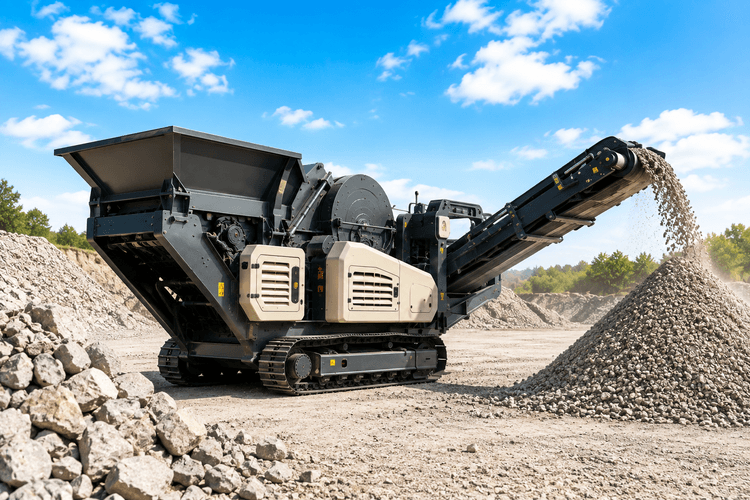
Jaw crushers are often the first stage of aggregate processing. They break large rocks into smaller, manageable pieces through compressive force.
Best Applications
Primary crushing
Hard rock processing
Granite
Limestone
Basalt
Key Benefits
High durability
Reliable performance
Simple maintenance
Excellent for large feed material
Jaw crushers form the backbone of many quarry operations because they efficiently handle oversized material directly from blasting operations.
2. Cone Crushers
Cone crushers perform secondary and tertiary crushing, producing more uniform aggregate sizes.
Best Applications
Secondary crushing
Tertiary crushing
High-volume production
Aggregate shaping
Key Benefits
Consistent product sizing
High production rates
Reduced operating costs
Excellent material quality
Many modern quarries use cone crushers to achieve precise aggregate specifications required for construction projects.
3. Impact Crushers
Impact crushers use high-speed impact forces to reduce material size.
Best Applications
Recycled concrete
Asphalt recycling
Soft to medium-hard rock
Material shaping
Key Benefits
Superior product shape
High reduction ratios
Flexible applications
Fast throughput
Impact crushers are especially valuable when producing premium aggregates for asphalt and concrete applications.
4. Vibrating Screens
After crushing, aggregates must be sorted into specific sizes. Vibrating screens separate materials efficiently.
Common Screen Products
Fine sand
Gravel
Base material
Riprap
Oversized rock
Benefits
Improved product quality
Consistent sizing
Higher production efficiency
Reduced waste
Screening equipment is critical for producing multiple saleable products from a single material stream.
5. Scalping Screens
Scalping screens remove oversized materials before crushing.
Benefits
Reduced crusher wear
Improved throughput
Lower operating costs
Better material flow
Many successful quarries install scalping screens before primary crushers to improve overall plant performance.
6. Conveyors
Conveyors move material efficiently throughout the quarry.
Common Uses
Material transport
Stockpiling
Plant feeding
Loadout operations
Benefits
Reduced fuel costs
Lower labor requirements
Continuous material flow
Improved safety
Conveyors often provide one of the highest returns on investment in aggregate operations.
7. Wheel Loaders
Wheel loaders are among the most important machines in any quarry.
Primary Functions
Loading crushers
Feeding hoppers
Stockpile management
Truck loading
Benefits
Versatility
High production rates
Material handling efficiency
Choosing the right wheel loader size can significantly impact overall quarry productivity.
8. Excavators
Excavators perform extraction and material handling tasks throughout the quarry.
Applications
Quarry face excavation
Material loading
Overburden removal
Rock handling
Benefits
Powerful digging capability
Precision operation
Versatile attachments
Large excavators often serve as the primary production machine at many aggregate sites.
9. Articulated Dump Trucks
Articulated dump trucks transport material from extraction areas to processing plants.
Advantages
Excellent off-road performance
High payload capacity
Improved productivity
Reduced haul cycle times
These trucks excel in rough terrain and challenging quarry conditions.
10. Aggregate Wash Plants
Wash plants remove clay, silt, and contaminants from aggregate products.
Benefits
Higher-quality materials
Improved product value
Compliance with specifications
Increased marketability
Many premium aggregate producers rely on wash plants to meet strict construction standards.
Aggregate Equipment Comparison Table
%3Aformat(webp)&w=1920&q=75) This combination of equipment creates an efficient aggregate processing system capable of meeting production goals while maintaining product consistency.
This combination of equipment creates an efficient aggregate processing system capable of meeting production goals while maintaining product consistency.
Aggregate Equipment Process Flow
A typical aggregate production process includes:
Step 1: Extraction
Excavators and loaders remove raw material from the quarry.
Step 2: Primary Crushing
Jaw crushers reduce large rock into smaller sizes.
Step 3: Secondary Crushing
Cone or impact crushers further process material.
Step 4: Screening
Vibrating screens separate aggregates into desired sizes.
Step 5: Washing
Wash plants remove impurities when required.
Step 6: Stockpiling
Conveyors and loaders move finished products to storage areas.
Step 7: Loadout
Wheel loaders load customer trucks for delivery.
How to Choose the Best Aggregate Equipment
Evaluate Material Type
Different rock types require different crushing equipment.
Hard Rock
Granite
Basalt
Quartzite
Recommended equipment:
Jaw crushers
Cone crushers
Softer Materials
Limestone
Sandstone
Recommended equipment:
Impact crushers
Cone crushers
Consider Production Goals
Ask:
How many tons per hour are required?
How many finished products will be produced?
What are peak seasonal demands?
Equipment capacity should support both current and future production requirements.
Analyze Maintenance Requirements
Maintenance significantly affects profitability.
Look for:
Easy access to wear parts
Strong dealer support
Readily available replacement components
Proven reliability
Reducing downtime often provides greater value than simply choosing the lowest purchase price.
Aggregate Equipment Cost & ROI
Several factors influence quarry equipment ROI:
Capital Costs
Equipment purchase
Transportation
Installation
Site preparation
Operating Costs
Fuel consumption
Labor
Maintenance
Wear parts
Productivity Benefits
Higher throughput
Reduced downtime
Improved product quality
Lower cost per ton
The most profitable quarry operations focus on total cost of ownership rather than upfront purchase price alone.
Common Quarry Equipment Mistakes
Avoid these costly mistakes:
Undersizing Equipment
Equipment that cannot meet production goals creates bottlenecks.
Ignoring Material Characteristics
Different rock types require specific crushing and screening solutions.
Delaying Maintenance
Small issues often become expensive repairs.
Poor Plant Layout
Inefficient material flow reduces productivity.
Focusing Only on Purchase Price
Long-term operating costs usually have a greater impact on profitability.
Future Trends in Aggregate Equipment
The aggregate industry continues to evolve through:
Automated plant controls
Remote equipment monitoring
GPS fleet management
Fuel-efficient engines
Electrification technologies
Predictive maintenance systems
AI-powered production optimization
These innovations help quarry operators improve productivity while reducing operating costs.
Frequently Asked Questions
What is aggregate equipment?
Aggregate equipment includes crushers, screens, conveyors, loaders, excavators, wash plants, and other machines used to produce construction aggregates.
What is the most important machine in a quarry?
There is no single most important machine, but jaw crushers, wheel loaders, and excavators are often considered essential to aggregate production.
What equipment is used to crush rock in quarries?
Jaw crushers, cone crushers, and impact crushers are commonly used to crush rock into usable aggregate products.
Why are vibrating screens important?
Vibrating screens separate aggregate into specific sizes, ensuring product quality and meeting customer specifications.
What equipment is used to move aggregate materials?
Conveyors, wheel loaders, excavators, and articulated dump trucks are commonly used to transport aggregate throughout quarry operations.
How do aggregate wash plants work?
Wash plants use water and screening systems to remove contaminants such as clay, silt, and dust from aggregate products.
What factors affect aggregate equipment selection?
Material type, production goals, site conditions, maintenance requirements, budget, and future expansion plans all influence equipment selection.
Is the used aggregate equipment worth buying?
Yes. High-quality used aggregate equipment can provide substantial cost savings while delivering reliable performance when properly inspected and maintained.
Final Thoughts
The best aggregate equipment for quarries combines efficient crushing, screening, material handling, and processing systems that work together to maximize production and profitability. By selecting the right mix of crushers, screens, conveyors, loaders, excavators, and wash plants, quarry operators can improve product quality, reduce operating costs, and position their operations for long-term success.
For companies looking to expand production or upgrade existing equipment, investing in reliable aggregate machinery remains one of the most effective ways to increase efficiency and generate stronger returns on investment.
Ethan Rooney is an Account Manager at Boom & Bucket, helping clients buy and sell heavy equipment with confidence through a transparent, tech-driven marketplace. A U.S. Army Military Police veteran, Ethan brings over a decade of customer-facing experience across automotive sales and finance, known for building strong relationships and delivering results through trust and service.