Aggregate Equipment: Types, Uses, Applications & Buying Guide
8 Min read
&w=3840&q=75)

May 26, 2023
Aggregate materials are the foundation of many construction projects. Crushed stone, gravel, sand, and recycled concrete aggregate are used to build roads, bridges, foundations, drainage systems, asphalt, and concrete.
Producing those materials efficiently requires the right aggregate equipment. Depending on the operation, that can include excavators, wheel loaders, crushers, screens, conveyors, feeders, and washing equipment.
The challenge is choosing machines that work together efficiently. The right equipment can increase production, maintain consistent material quality, reduce downtime, and lower the cost per ton.
This guide explains the main types of aggregate equipment, how they work together, and what to consider when buying new or used machines.
What Is Aggregate Equipment?
%3Aformat(webp)&w=1920&q=75)
Aggregate equipment is heavy machinery used to extract, crush, screen, wash, transport, and stockpile materials such as rock, gravel, and sand.
Aggregate production typically involves several stages. Raw material is extracted from a quarry or pit, reduced to the required size, separated into different grades, cleaned when necessary, and transported or stockpiled for use.
A typical aggregate operation may use:
Excavators for extraction and loading
Wheel loaders for material handling
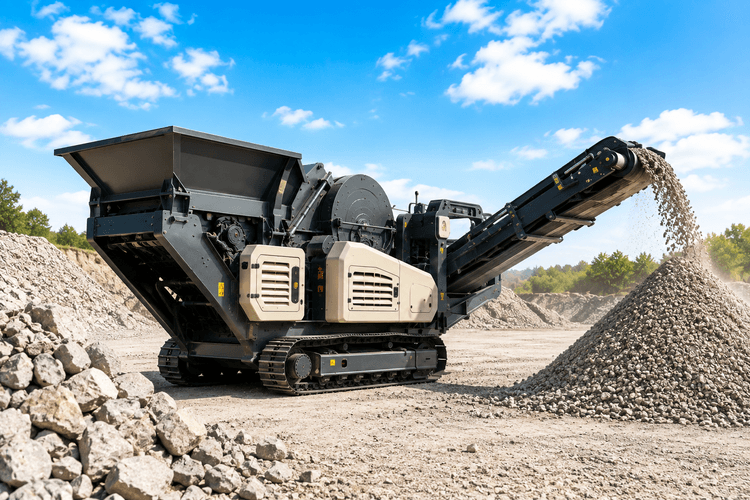
Jaw, cone, and impact crushers for size reduction
Vibrating screens for separating material
Feeders for controlling material flow
Conveyors for continuous transportation
Wash plants for removing unwanted material
Stackers for building stockpiles
Because each machine performs a different job, productivity depends on how well the entire system works together.
How Does Aggregate Processing Work?
Although every quarry and processing operation is different, the basic workflow is relatively straightforward.
1. Extraction
Excavators or other heavy equipment remove rock, gravel, or other raw material from the source.
The material may be loaded directly into haul trucks or fed into a processing system.
2. Primary Crushing
Large rocks are reduced to a manageable size during primary crushing.
Jaw crushers are commonly used for primary crushing because they can handle large feed material and produce a consistent output for additional processing.
3. Secondary and Tertiary Crushing
After primary crushing, the material may go through additional crushers.
Cone crushers are commonly used when an operation needs to produce smaller, more consistently shaped aggregate. Impact crushers can also be used for applications where material shape and reduction characteristics are important.
The number of crushing stages depends on the feed material and the required finished product.
4. Screening
Crushed material is passed over screens that separate it according to size.
For example, one operation may need several finished products ranging from fine material to larger aggregate.
Proper screening helps maintain consistent gradation and prevents material from going into the wrong product pile.
5. Washing
Some aggregate requires washing to remove clay, dirt, dust, or other unwanted material.
Washing equipment can be particularly useful when the final product needs to meet specific cleanliness or quality requirements.
6. Conveying and Stockpiling
Conveyors move material between processing stages and into stockpiles.
This continuous movement can reduce the need for trucks or loaders to repeatedly move material around the processing site.
Aggregate conveyor systems can be used in construction, mining, and material-handling operations to move bulk materials efficiently.
Types of Aggregate Equipment
Different machines solve different problems. The best equipment combination depends on the material, required production rate, finished product specifications, and site conditions.
%3Aformat(webp)&w=1920&q=75)
Why Is Aggregate Equipment Important in Construction?
The quality and consistency of aggregate can directly affect downstream construction work.
Road base, asphalt, concrete, drainage materials, and other applications require aggregate with appropriate size and characteristics. If the processing system produces inconsistent material, contractors may experience additional handling, reprocessing, or material waste.
Efficient equipment also helps producers increase throughput.
For example, a properly matched loader can keep a crusher supplied with material without excessive waiting. Likewise, a properly sized conveyor can continuously move material without forcing loaders or trucks to perform unnecessary transport work.
The goal is not simply to have the biggest machine. The goal is to create a balanced production system.
How to Choose the Right Aggregate Equipment
Before buying an aggregate machine, start with the material and the finished product.
Consider the Material
Different materials place different demands on equipment.
Hard rock such as granite can require substantial crushing power and durable wear components. Softer materials may require a different crushing configuration.
Also consider:
Material hardness
Moisture content
Abrasiveness
Maximum feed size
Clay or contamination
Desired final product
Determine Your Production Target
How many tons per hour does the operation need to produce?
A machine that is too small can create a bottleneck. An oversized machine may cost more to purchase, transport, operate, and maintain than the application justifies.
Look at the capacity of the entire processing system rather than one machine in isolation.
Match the Equipment
Aggregate production is a connected process.
If a crusher can process material faster than the screen can handle it, the screen becomes the bottleneck. If the loader cannot keep the crusher fed, production drops regardless of the crusher's rated capacity.
Think about the entire flow:
Extraction → Feeding → Crushing → Screening → Washing → Conveying → Stockpiling
Matching capacity across these stages can have a significant impact on productivity.
Buying Used Aggregate Equipment
Buying used aggregate equipment can be an attractive option for contractors, quarry operators, and producers who want to control upfront costs.
However, aggregate machines can experience substantial wear because they routinely handle abrasive material.
Before buying used equipment, inspect the components that directly affect production.
For crushers, examine wear parts, liners, bearings, belts, hydraulics, and structural components.
For screens, check the screen media, decks, bearings, frame, and vibration system.
For conveyors, inspect belts, rollers, pulleys, drives, and structural supports.
For loaders and excavators, check the engine, hydraulic system, undercarriage or tires, attachments, and maintenance history.
Also ask for service records and operating hours whenever available.
A lower purchase price does not necessarily mean a lower total cost. A machine requiring immediate major repairs can quickly become more expensive than a better-maintained alternative.
How to Improve Aggregate Equipment Productivity
%3Aformat(webp)&w=1920&q=75)
Once the equipment is operating, productivity depends heavily on maintenance and machine coordination.
Keep Wear Parts Under Control
Crushers, screens, and conveyors all contain components that wear over time.
Ignoring wear can reduce production, increase fuel consumption, affect product quality, and potentially lead to larger failures.
Minimize Equipment Downtime
Planned maintenance is generally easier to manage than unexpected breakdowns during production.
Track operating hours and inspect critical components regularly. Keeping commonly needed wear parts available can also reduce downtime.
Optimize Material Flow
Look for unnecessary loader movements, excessive stockpile handling, and bottlenecks between machines.
Small changes in material flow can make a significant difference when equipment runs for hundreds or thousands of hours each year.
Consider Fuel and Operating Costs
Fuel is only one part of operating cost, but it can become significant in high-production operations.
Compare fuel consumption, maintenance requirements, parts availability, operator requirements, and expected production when evaluating equipment.
Aggregate Equipment for Construction, Quarrying, and Recycling
Aggregate equipment is used across a wide range of applications.
Construction: Producing road base, fill, concrete aggregate, and other materials.
Quarrying: Extracting and processing large quantities of stone and rock.
Mining: Moving and processing mineral-bearing material.
Recycling: Processing materials such as demolished concrete and asphalt into reusable products.
Road building: Producing aggregate used for base layers, drainage, and asphalt applications.
The right machine depends on the material and production requirements rather than simply the industry name.
Frequently Asked Questions
What equipment is used for aggregate production?
Common aggregate production equipment includes excavators, loaders, feeders, crushers, screens, conveyors, washing systems, and stackers.
What is the most important aggregate equipment?
There is no single machine that is most important for every operation. The crusher, screen, loader, conveyor, and other equipment must be matched to create an efficient processing system.
What does an aggregate crusher do?
An aggregate crusher reduces large rocks or other materials into smaller sizes that can be screened and processed into usable construction products.
What is aggregate screening equipment?
Aggregate screening equipment separates processed material into different sizes or grades. Vibrating screens are commonly used for this purpose.
Is used aggregate equipment worth buying?
Used aggregate equipment can provide significant value when the machine is properly inspected and its condition, maintenance history, wear components, and expected repair costs are understood.
Final Thoughts: Build the Right Aggregate Equipment Setup
Aggregate production is more than simply crushing rocks. Successful operations depend on a coordinated system that extracts, processes, sizes, cleans, transports, and stockpiles material efficiently.
The right combination of aggregate equipment can improve throughput, reduce unnecessary handling, maintain consistent product quality, and support a better return on equipment investment.
Whether you're expanding a quarry, processing recycled material, producing road base, or preparing aggregate for construction, start by identifying your material, production target, finished product, and site conditions.
Then compare machines based on their capabilities, operating costs, maintenance requirements, and overall condition.
Your Boom & Bucket Buying Guide
Looking for used equipment for aggregate production or construction?
1. Define your application. Determine the material you're processing, required production rate, and finished product.
2. Match the machine. Compare capacity, operating specifications, wear components, and compatibility with your existing equipment.
3. Inspect before buying. Review service history and inspect critical mechanical, hydraulic, structural, and wear components.
4. Calculate the total cost. Consider purchase price, transportation, financing, fuel, maintenance, and expected downtime.
5. Put the equipment to work. Find used heavy equipment that fits your operation and supports your production goals.
Explore used equipment through Boom & Bucket to compare machines and find equipment that makes sense for your next project.
Sarah Kreps is a Program Manager at RB Global, leading the Power Listings program at Ritchie Bros. to help rental companies and equipment dealers maximize retail returns through automated marketplace integrations. With a background in strategic partnerships and account management, she specializes in building data-driven workflows and strong partner relationships across the heavy equipment ecosystem.