How to Choose the Right Bulldozer Bucket: Types, Benefits & Buying Guide
8 Min read


June 11, 2023
Choosing the right attachment can make a major difference in bulldozer productivity, fuel efficiency, operating costs, and jobsite performance. But there is an important distinction to understand first: bulldozers typically use blades rather than buckets. Terms such as “bulldozer bucket” are sometimes used in searches, but the correct equipment terminology is generally dozer blade or bulldozer blade.
The right blade depends on what you are moving, how far you are pushing it, the terrain, and the level of precision your job requires. Common configurations include straight (S) blades, universal (U) blades, semi-U blades, angle blades, and power-angle-tilt (PAT) blades.
Whether you are moving soil on a construction site, clearing land, grading roads, or pushing material in mining, selecting the right dozer blade can help you get more work done with every pass.
What Is a Bulldozer Blade?

Related Equipment
Browse all Bulldozers
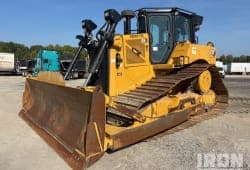
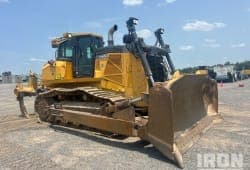
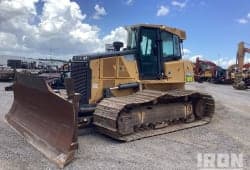
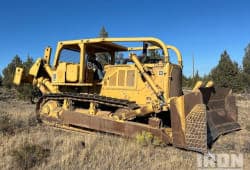
A bulldozer blade is the heavy-duty attachment mounted to the front of a crawler dozer. It is designed to cut, push, spread, level, and move material across a jobsite.
Unlike an excavator bucket, a dozer blade does not scoop material and lift it into a bucket. Instead, the blade cuts into or pushes material forward or to the side.
The blade configuration determines how much material the machine can carry, how well it penetrates the ground, and how precisely an operator can shape the surface.
Manufacturers such as Caterpillar and John Deere offer several blade configurations, including S, U, semi-U, angle, and PAT blades.
Bulldozer Blade Types
There is no single best bulldozer blade for every application. The right choice depends on the material, jobsite, pushing distance, and desired finish.
1. Straight Blade (S-Blade)
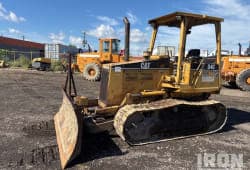
A straight blade, commonly called an S-blade, has a relatively straight profile and limited side wings.
Its design favors penetration and control rather than maximum material capacity. That makes it useful for applications involving harder material, grading, cutting, backfilling, and work where precise blade control matters.
Best for:
Fine grading
Backfilling
Cutting and shaping
Hard-packed soil
Short-distance pushing
Precision earthmoving
An S-blade is usually a better choice when penetration and maneuverability matter more than carrying the largest possible load.
2. Universal Blade (U-Blade)
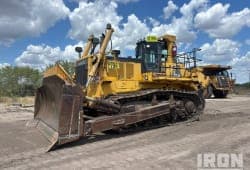
A U-blade has a deeper curve and large side wings that help contain material. It is designed primarily for moving large volumes over longer pushes.
The curved profile helps keep loose material rolling toward the center of the blade instead of spilling around the sides.
Best for:
Large earthmoving projects
Stockpiling
Reclamation
Overburden removal
Loose soil and other easy-to-doze materials
U-blades can offer high carrying capacity, but their larger profile is not always the best option for precise grading or hard, rocky ground. Caterpillar describes U-blades as particularly suited to large loads and longer-distance pushes.
3. Semi-U Blade
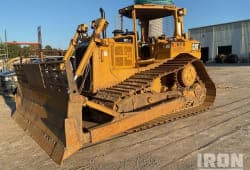
The semi-U blade combines characteristics of an S-blade and U-blade.
It has more side containment and carrying capacity than a straight blade while maintaining stronger penetration and versatility than a full U-blade.
That makes the semi-U a popular option for mixed applications where a dozer needs to push substantial quantities of material but still encounter varying ground conditions.
Best for:
General earthmoving
Construction
Site development
Mixed soil conditions
Medium-to-heavy pushing
Applications requiring both penetration and material retention
If your operation involves several different types of dozing rather than one highly specialized task, a semi-U blade can provide a useful balance.
4. Angle Blade
An angle blade can be positioned at an angle to the machine, allowing material to move toward one side rather than directly forward.
This is particularly useful when creating ditches, shaping slopes, backfilling, windrowing material, or working along roads.
Best for:
Road construction
Ditching
Side casting
Backfilling
Shaping slopes
Clearing and site preparation
Angle blades can give operators greater flexibility when material needs to be moved laterally.
5. Power-Angle-Tilt (PAT) Blade
A power-angle-tilt blade, or PAT blade, provides additional hydraulic control over blade positioning. Depending on the machine, the operator can adjust the blade's angle and tilt to handle changing grades and contours.
This versatility makes PAT blades especially useful for finish grading and jobs requiring frequent blade adjustments.
Best for:
Finish grading
Landscaping
Slopes
Ditches
Site preparation
Backfilling
Tight or complex jobsites
PAT blades are particularly valuable when precision and maneuverability are more important than maximum bulk-dozing capacity.
Bulldozer Blade Types Compared

How to Choose the Right Bulldozer Blade
Before buying a dozer or changing its blade configuration, start with the work rather than the attachment.
1. Identify the Material
Material density and ground conditions have a major effect on blade selection.
Loose soil, sand, and fill may favor a higher-capacity U or semi-U blade. Hard-packed soil, rock, or material requiring more penetration may favor an S or semi-U blade.
Caterpillar recommends considering material type, push distance, and application when selecting a dozer blade.
2. Consider the Push Distance
Related Equipment
Browse all Bulldozers
How far will the dozer typically move material?
For long, steady pushes, a high-capacity U blade can help carry more material. For shorter pushes or work requiring frequent changes in direction, a smaller or more maneuverable configuration may be more practical.
Don't automatically choose the largest blade available. More capacity only helps when the machine has enough power, traction, and stability to use it effectively.
3. Match the Blade to the Dozer
Blade compatibility is critical.
The blade must be appropriate for the bulldozer's:
Operating weight
Horsepower
Hydraulic system
Mounting configuration
Undercarriage
Intended application
Always verify the manufacturer's specifications before purchasing an attachment. A blade that is physically compatible is not necessarily the correct configuration for the machine's operating limits.
4. Think About Productivity, Not Just Capacity
A larger blade does not automatically mean higher production.
An oversized blade can increase resistance, reduce maneuverability, and place additional demands on the machine. The best setup is the one that allows the dozer to maintain productive cycles without excessive wheel or track slip, engine loading, or unnecessary wear.
The goal is to move the right amount of material efficiently - not simply the maximum amount possible in one pass.
5. Consider Wear and Maintenance
Blade cutting edges, end bits, pins, bushings, hydraulic components, and other wear parts can affect operating costs.
For used equipment, inspect the blade carefully for excessive wear, cracks, repairs, bent components, and hydraulic leaks. Also check the machine's undercarriage, since dozer productivity depends heavily on the condition of both the attachment and the carrier.
Boom & Bucket's used-equipment buying resources recommend evaluating major components such as the engine, hydraulics, transmission, blade, ripper, cab, and undercarriage when inspecting a used bulldozer.
Benefits of Choosing the Right Dozer Blade

Better Productivity
A properly matched blade can move material more efficiently and reduce unnecessary passes.
Lower Operating Costs
Using an attachment suited to the material and machine can help reduce unnecessary fuel consumption and component stress.
Improved Operator Control
The right blade configuration gives operators better control over cutting, carrying, spreading, and grading.
Greater Versatility
A versatile configuration can allow one dozer to handle multiple applications instead of requiring a separate machine for every task.
Longer Equipment Life
Matching the blade to the machine helps avoid excessive loading and unnecessary wear on the drivetrain, hydraulics, undercarriage, and attachment.
Common Bulldozer Blade Selection Mistakes
Choosing based only on blade size: Bigger is not always better. Match capacity to the machine and material.
Ignoring the material: A blade that works well in loose soil may perform poorly in hard, rocky ground.
Overlooking the jobsite: Tight areas, slopes, roads, and large open sites can require very different configurations.
Buying without checking compatibility: Always verify the exact dozer model, blade configuration, mounting system, and manufacturer specifications.
Ignoring used-blade wear: A heavily worn cutting edge or damaged blade can reduce productivity and increase repair costs.
Dozer Blade vs. Bulldozer Bucket: What's the Difference?
If you searched for a “bulldozer bucket,” you may actually be looking for a dozer blade.
Buckets are commonly associated with excavators, wheel loaders, skid steers, and compact track loaders. Bulldozers primarily use front blades for pushing, cutting, grading, and spreading material.
For example, an excavator bucket digs into material and lifts it, while a bulldozer blade pushes material across the ground.
Understanding this distinction can make it easier to find the correct attachment, compare equipment, and avoid buying a component that does not match your machine.
Frequently Asked Questions
What is the best blade for a bulldozer?
There is no universal best blade. S-blades favor penetration and control, U-blades favor high-volume pushing, semi-U blades provide a balance, angle blades are useful for side casting and ditching, and PAT blades offer strong versatility for grading and shaping.
Is a U-blade better than an S-blade?
It depends on the application. A U-blade generally offers greater material-carrying capacity, while an S-blade provides better penetration and control. Choose based on material, push distance, and production requirements.
What is a semi-U blade used for?
A semi-U blade is designed to balance material retention and carrying capacity with penetration. It is a versatile choice for many construction and earthmoving applications.
Do bulldozers use buckets?
Most crawler bulldozers do not use buckets as their primary front attachment. They use blades. The term “bulldozer bucket” is sometimes used in online searches, but “dozer blade” or “bulldozer blade” is generally more accurate.
Can you put different blades on a bulldozer?
Many bulldozers are available with multiple blade configurations, but compatibility depends on the specific machine model and configuration. Always verify fitment and operating specifications before changing attachments.
Find the Right Used Bulldozer for Your Job
The right blade starts with understanding the work. Whether you need a straight blade for precision grading, a U-blade for bulk earthmoving, a semi-U blade for versatility, or a PAT blade for detailed site work, the attachment should match the machine and the job.
If you're also looking for a used bulldozer, don't stop at horsepower and operating hours. Compare the blade configuration, undercarriage condition, hydraulic performance, service history, operating weight, and overall machine condition.
At Boom & Bucket, you can browse used bulldozers from leading manufacturers and compare equipment based on your application and budget.
Ready to put your next dozer to work? Browse available used bulldozers, explore financing options, and arrange transportation for your equipment. When you're ready to upgrade your fleet, Boom & Bucket can help you find equipment built for the work ahead.

Rex Walz is Boom & Bucket's Manager of Supplier Relations, bringing over a decade of experience in B2B sales and heavy equipment solutions. With a background spanning government, construction, industrial, and commercial sectors, he has a proven track record of driving growth and building trusted customer relationships. At Boom & Bucket, Rex is passionate about helping partners succeed while advancing the company's mission to create the most trusted marketplace for heavy equipment.


