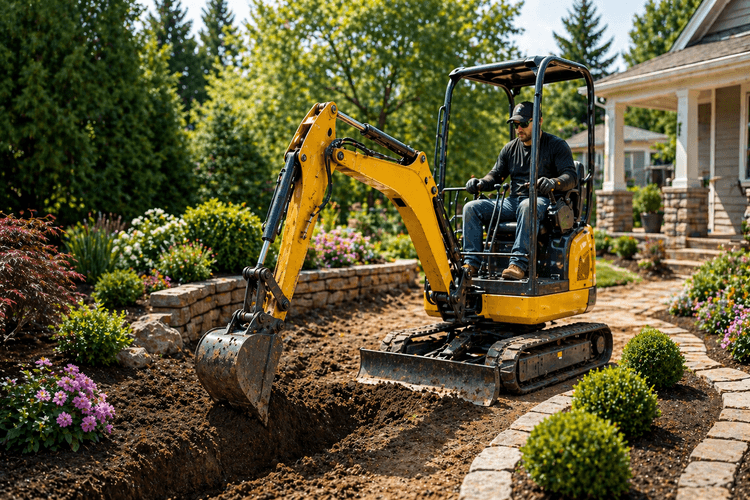
How to Choose the Right Forklift: Types, Capacity & Buying Guide
8 Lectura mínima
&w=3840&q=75)

marzo 27, 2023
Choosing the right forklift starts with understanding what you need to lift, where you will operate, how high you need to lift, and how often the machine will work. Electric, LPG, diesel, rough-terrain, reach, and heavy-duty forklifts all serve different applications.
The best forklift for a warehouse may not be the right choice for a construction site or lumber yard. This guide explains forklift types, lifting capacity, operating environments, power sources, maneuverability, and total cost of ownership so you can choose the right machine for your business.
Key Takeaways
Choose forklift capacity based on your heaviest loads, load center, and required lift height.
Electric forklifts are often well suited to indoor warehouses and facilities where low emissions and quiet operation matter.
LPG and internal-combustion forklifts can provide flexibility for demanding applications.
Rough-terrain forklifts are designed for uneven outdoor surfaces and construction environments.
Aisle width, turning radius, mast height, and tire type can be just as important as lifting capacity.
When buying used, evaluate hours, maintenance history, condition, attachments, and total cost of ownership—not just purchase price.
Equipo reciente
Examinar todas las equipo


How Do You Choose the Right Forklift?
%3Aformat(webp)&w=1920&q=75)
The right forklift is the one that safely matches your load requirements, operating environment, lift height, available space, duty cycle, and budget. Start by identifying your heaviest load and its dimensions, then consider how high it must be lifted and where the forklift will operate.
Before purchasing, answer these questions:
What is the heaviest load?
What is the load's size and center of gravity?
How high must the forklift lift?
How wide are the narrowest aisles and doorways?
Will the machine operate indoors, outdoors, or both?
What type of surface will it travel on?
How many hours or shifts will it operate?
Will you need specialized attachments?
These answers can quickly narrow down the appropriate forklift type.
Forklift Types Explained
Different forklift configurations are designed for different jobs. Understanding the differences can help you avoid buying a machine that is too small, too large, or poorly suited to your operating environment.
Electric Forklifts
Electric forklifts are commonly used in warehouses, distribution centers, manufacturing facilities, and other indoor environments.
They offer quiet operation and no tailpipe emissions, making them useful where indoor air quality and noise are important considerations. Battery charging infrastructure, operating hours, and duty cycle should be evaluated before choosing an electric model.
Best for: Indoor warehouses, manufacturing, distribution, and smooth surfaces.
LPG Forklifts
LPG or propane forklifts offer a versatile option for businesses that need a machine capable of working in multiple environments.
They can be useful for applications where operators move between indoor and outdoor areas, although ventilation and site requirements should always be considered.
Best for: Mixed indoor/outdoor applications and general material handling.
Diesel Forklifts
Diesel forklifts are commonly associated with demanding outdoor and industrial applications where high capacity and durability are priorities.
They can be particularly useful for handling heavy materials in yards, manufacturing environments, and other demanding applications.
Best for: Heavy-duty outdoor and industrial material handling.
Rough-Terrain Forklifts
Rough-terrain forklifts are built for outdoor environments where conventional warehouse forklifts may not be appropriate. Their design, tires, ground clearance, and stability characteristics make them suitable for uneven or unprepared surfaces.
Best for: Construction sites, lumber yards, agriculture, and outdoor material handling.
Reach Trucks
Reach trucks are designed for warehouse applications where operators need to place loads into high storage racks while working in relatively narrow aisles.
Best for: High-density warehouses and high-rack storage.
Telehandlers
%3Aformat(webp)&w=1920&q=75)
Telehandlers combine lifting capability with a telescopic boom, allowing operators to move materials to locations that may be difficult to reach with a conventional forklift.
Best for: Construction, agriculture, and applications requiring extended reach.
Which Forklift Is Best for Your Application?
%3Aformat(webp)&w=1920&q=75)
The right choice ultimately depends on the machine's specifications and your actual operating conditions.
How Much Forklift Capacity Do You Need?
Forklift capacity refers to how much weight a machine can safely lift under specified conditions. Capacity is not simply the maximum weight printed on a forklift brochure.
The rating is tied to factors such as the load center and lift height, and the forklift's data plate provides critical information about its rated capacity.
For example, a load that is heavier, taller, or positioned farther from the fork face can change the machine's effective lifting capacity.
Before choosing a forklift, determine:
Load dimensions
Load center
Maximum lift height
Attachment requirements
Frequency of lifting
Required operating margin
Never assume a forklift can safely lift a load simply because the load weighs less than the machine's advertised capacity. Verify the manufacturer's rated capacity for the actual configuration and application.
Consider Lift Height and Aisle Width
Capacity isn't the only specification that matters.
A forklift must physically fit your facility and be able to reach your highest storage position.
Measure:
Narrowest aisle
Doorway width
Rack height
Ceiling clearance
Turning areas
Loading dock dimensions
A forklift that has enough lifting capacity but cannot maneuver through your facility efficiently may reduce productivity.
Equipo reciente
Examinar todas las equipo


For warehouse operations, aisle width, rack height, floor surface, and operating environment are key factors in selecting the appropriate forklift.
Indoor vs. Outdoor Forklifts
Your operating environment should influence both forklift type and power source.
Indoor Applications
Prioritize:
Maneuverability
Aisle width
Emissions
Noise
Floor conditions
Lift height
Battery or fuel requirements
Electric forklifts are often a strong option for indoor operations where low emissions and quiet operation are priorities.
Outdoor Applications
Consider:
Terrain
Ground clearance
Tire type
Weather exposure
Load size
Gradeability
Required capacity
For construction sites and uneven outdoor surfaces, a rough-terrain or appropriately configured internal-combustion forklift may be more suitable than a standard warehouse machine.
Don't Choose a Forklift Based on Price Alone
The cheapest forklift isn't necessarily the least expensive machine to own.
Your total cost of ownership (TCO) can include:
Purchase price
Financing
Fuel or electricity
Battery replacement
Preventive maintenance
Repairs
Tires
Attachments
Operator training
Downtime
Resale value
A forklift with a lower purchase price but frequent downtime can cost more over its working life than a higher-priced machine with better utilization and reliability.
That's why buyers should compare expected operating costs alongside the initial purchase price.
Should You Buy a New or Used Forklift?
A used forklift can be an attractive option for businesses looking to control upfront equipment costs, particularly when the machine's condition and maintenance history can be verified.
When evaluating a used forklift, check:
Hour meter
Service records
Mast condition
Fork wear
Tires
Hydraulic cylinders
Hydraulic hoses
Engine or battery condition
Transmission
Brakes and steering
Attachments
Safety equipment
The goal isn't simply to find the cheapest used forklift. It's to find a machine whose condition, specifications, and operating history match your requirements.
For businesses that don't need a brand-new machine, a properly inspected used forklift can provide a practical way to expand material-handling capacity while managing capital expenses.
Common Forklift Buying Mistakes
Avoid these mistakes when selecting a forklift:
Choosing Capacity Based Only on Average Loads
Size the machine around your actual operating requirements, including your heaviest and most demanding loads.
Ignoring Load Center
A forklift's capacity depends on the load center, not weight alone.
Forgetting Aisle Width
A machine that can't maneuver efficiently through your facility can create bottlenecks.
Buying for One Current Job
Consider future workload, additional attachments, changing storage requirements, and fleet expansion.
Focusing Only on Purchase Price
Fuel, maintenance, downtime, and resale value all affect the long-term cost.
Frequently Asked Questions
What type of forklift is best for a warehouse?
Electric forklifts are often a good choice for indoor warehouses because of their quiet operation and lack of tailpipe emissions. However, aisle width, capacity, lift height, duty cycle, and storage configuration should determine the final selection.
What type of forklift is best for construction?
Rough-terrain forklifts and appropriately configured internal-combustion forklifts are common choices for demanding outdoor construction applications. The correct machine depends on terrain, load requirements, lift height, and jobsite conditions.
What size forklift do I need?
Choose a forklift based on your heaviest load, load dimensions, load center, required lift height, and operating environment. Always verify the manufacturer's rated capacity for your specific configuration.
Is an electric forklift better than a diesel forklift?
Neither is universally better. Electric forklifts can be advantageous for indoor applications where quiet, low-emission operation matters, while diesel forklifts can be better suited to demanding outdoor and industrial applications.
Is buying a used forklift worth it?
A used forklift can be worthwhile when its condition, maintenance history, operating hours, specifications, and expected ownership costs make sense for your application.
Final Thoughts: Choose the Forklift That Fits the Job
Choosing the right forklift isn't about finding the biggest, newest, or cheapest machine. It's about matching the equipment to the load, lift height, environment, available space, workload, and total cost of ownership.
Start by defining your heaviest load and required lift height. Then evaluate forklift type, power source, maneuverability, terrain, maintenance requirements, and long-term operating costs.
For businesses considering used equipment, a thorough inspection and review of maintenance history can help identify a forklift that delivers the right combination of capacity, reliability, productivity, and value.
Ready to compare equipment? Explore Boom & Bucket's available used equipment and find a forklift that matches your business requirements, operating environment, and budget.


Ethan Rooney is an Account Manager at Boom & Bucket, helping clients buy and sell heavy equipment with confidence through a transparent, tech-driven marketplace. A U.S. Army Military Police veteran, Ethan brings over a decade of customer-facing experience across automotive sales and finance, known for building strong relationships and delivering results through trust and service.
Artículos relacionados
Más en Insight