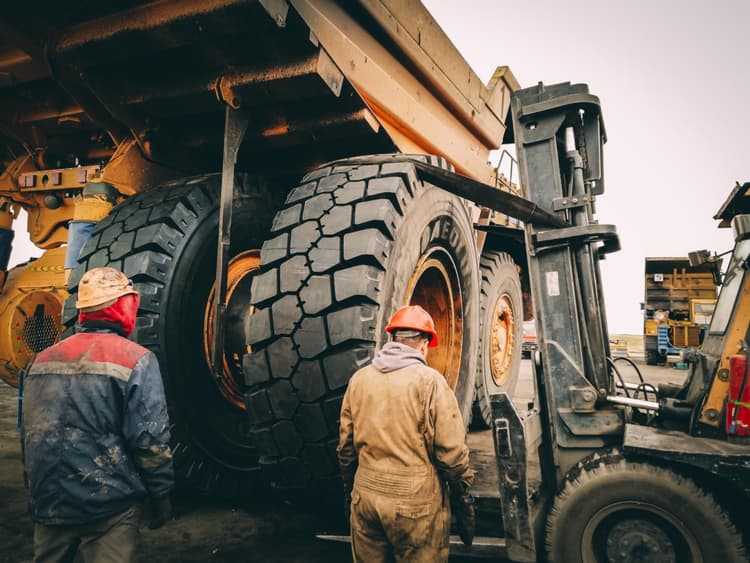
Wheel Loader Attachments: How to Choose the Right Attachment for Your Job
9 Lectura mínima
&w=3840&q=75)

abril 29, 2023
A wheel loader can do far more than load and move material. With the right attachment, a single machine can handle applications ranging from aggregate loading and pallet handling to snow removal, landscaping, waste handling, and material sorting.
But choosing the right wheel loader attachment isn't as simple as finding a tool that physically connects to the machine.
The attachment needs to match your wheel loader's size and capacity, the material you're handling, hydraulic requirements, coupler, jobsite conditions, and workload. An attachment that is too heavy, too large, or poorly matched to the machine can reduce productivity and increase wear.
This guide explains the most common wheel loader attachments, how to choose the right one, and what to check before buying a new or used attachment.
What Is a Wheel Loader Attachment?
%3Aformat(webp)&w=1920&q=75)

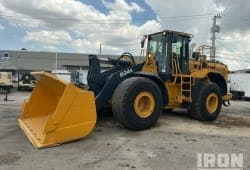
A wheel loader attachment is a tool mounted to the front of a wheel loader to perform a specific task. Common attachments include buckets, pallet forks, grapples, snow tools, and specialized material-handling equipment.
The right attachment can expand a wheel loader's capabilities without requiring an entirely different machine for every job.
For example, a contractor might use a bucket for aggregate, switch to forks for palletized materials, and use a grapple for logs or debris.
That's where the real value of attachments comes in: one wheel loader can become a versatile multi-purpose machine when its attachments are properly matched to the work.
Common Wheel Loader Attachments
Different attachments are designed around different materials and applications. The most useful choice depends on what you need to move, lift, load, or process.
1. General-Purpose Buckets
A general-purpose bucket is one of the most versatile wheel loader attachments.
It's commonly used for:
Dirt
Sand
Gravel
Aggregate
Stockpiling
General loading
Excavation and rehandling
General-purpose buckets are often a good starting point for contractors and businesses that need one attachment for a variety of everyday material-moving tasks.
For heavier or more abrasive applications, specialized or reinforced bucket designs may be more appropriate.
2. Light-Material Buckets
Light-material buckets are designed for materials that have relatively low density.
Typical applications include:
Snow
Mulch
Wood chips
Sawdust
Grain
Other lightweight bulk materials
These buckets can provide greater volume, allowing the loader to move more material per cycle while remaining within its operating limits.
3. Rock and Heavy-Duty Buckets
Rock and heavy-duty buckets are designed for more demanding applications involving abrasive or dense materials.
They can be appropriate for:
Quarry material
Rock
Gravel
Broken concrete
Other abrasive materials
When selecting a bucket for this type of work, durability and wear protection are especially important.
Caterpillar, for example, offers different bucket designs for applications ranging from general-purpose loading to rock, quarry, waste, coal, and light-material handling.
4. Pallet Forks
Pallet forks turn a wheel loader into a useful material-handling machine.
They're commonly used to move:
Pallets
Bagged materials
Lumber
Construction supplies
Landscaping products
Other packaged loads
Forks should always be selected based on the expected load weight, load center, fork dimensions, and machine capacity.
For construction and landscaping applications, manufacturers offer wheel-loader fork configurations specifically designed for palletized material handling.
5. Grapples and Grapple Forks
%3Aformat(webp)&w=1920&q=75)
Grapples are useful when the material is irregular, bulky, or difficult to contain with a conventional bucket.
Potential applications include:
Logs
Brush
Demolition debris
Scrap
Timber
Large irregular materials
Grapple designs vary considerably, so buyers should consider the material being handled and the attachment's hydraulic requirements.
6. Snow Attachments
Wheel loaders can also be configured for snow removal.
Depending on the operation, options can include:
Snow buckets
Snow blades
Snow pushers
Snow blowers
For contractors handling seasonal snow work, a dedicated snow attachment can make an existing wheel loader considerably more versatile.
How Do You Choose the Right Wheel Loader Attachment?
The best attachment isn't necessarily the largest or most expensive option.
Start with these six questions.
1. What Material Are You Handling?
This is one of the most important considerations.
Different materials have different densities and handling characteristics.
For example:
Dirt and aggregate: A general-purpose bucket may be appropriate.
Rock: A heavy-duty or rock bucket may provide better durability.
Snow or mulch: A larger-capacity light-material bucket may make more sense.
Pallets: Forks are generally more appropriate than a bucket.
Logs or brush: A grapple may provide better control.
The material should determine the attachment before the attachment determines the machine.
2. What Is Your Wheel Loader's Capacity?
Never select an attachment based only on whether it physically fits your loader.
Consider:
Operating weight
Rated load capacity
Lift capacity
Breakout force
Attachment weight
Payload
Stability
Hydraulic capability
An oversized attachment can reduce usable payload and affect machine performance.
Caterpillar recommends considering the machine's loading capacity and required production when selecting bucket size, rather than simply choosing the largest available bucket.
How do you choose the right bucket size?
Choose a bucket based on material density, desired production, machine capacity, and the loading cycle—not simply maximum bucket volume.
A larger bucket may be useful for lightweight materials, while dense or abrasive materials may require a smaller or reinforced bucket.
The goal is to maximize productive payload without exceeding the machine's rated limits.
3. Check the Coupler and Mounting System
Before buying an attachment, verify exactly how it connects to your loader.
Common configurations include:
Pin-on attachments
Hydraulic quick couplers
Mechanical quick couplers
Manufacturer-specific coupler systems
A quick coupler can be especially valuable for operations that switch between buckets, forks, grapples, and other tools frequently.
Modern quick-coupler systems are designed to make attachment changes faster and reduce the need for manually removing and installing pins.
However, a quick coupler does not automatically make every attachment compatible.
Always verify the loader model, coupler specification, attachment interface, and manufacturer compatibility information.
4. Check Hydraulic Requirements
Some attachments are passive, while others require auxiliary hydraulic power.
Hydraulic attachments may require specific:
Hydraulic flow
Hydraulic pressure
Hydraulic connections
Electrical connections
Control systems
Before purchasing a hydraulic grapple or other powered attachment, confirm that your wheel loader can supply the required hydraulic performance.
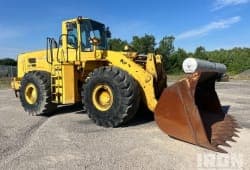


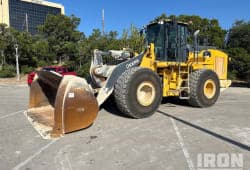
An attachment can physically connect to a machine and still be the wrong attachment if the loader cannot power it correctly.
This is particularly important when buying used equipment because the machine and attachment may have originally been configured for different applications.
5. Consider Your Jobsite
Think about where you'll use the attachment.
A quarry, construction site, farm, warehouse, landscaping operation, and snow-removal route can all require different configurations.
Consider:
Ground conditions
Available working space
Loading height
Haul distance
Material density
Weather
Required production
Visibility
Frequency of attachment changes
An attachment that works extremely well in an open quarry may be less useful in a confined construction site.
6. Consider How Often You'll Change Attachments
If your wheel loader performs multiple tasks every day, attachment-change speed becomes an important productivity factor.
A quick coupler can make it easier to move between tools such as buckets and forks.
For example, a contractor might use:
Morning: General-purpose bucket for aggregate
Midday: Pallet forks for construction materials
Afternoon: Grapple for debris cleanup
That flexibility can make one wheel loader useful across several phases of a project.
Wheel Loader Attachment Comparison
%3Aformat(webp)&w=1920&q=75)
Pin-On vs. Quick Coupler Attachments
Both attachment systems can work effectively, but they serve different operational needs.
Pin-On Attachments
Pin-on attachments connect directly to the loader's linkage.
They can make sense when:
The machine primarily uses one attachment
Attachment changes are infrequent
A dedicated configuration is preferred
The drawback is that changing attachments generally takes more time.
Quick Couplers
Quick couplers are designed to make attachment changes faster.
They can be especially useful for contractors and fleet operators who frequently switch between tools.
The tradeoff is that coupler weight, compatibility, cost, and maintenance all need to be considered.
If your operation uses several attachments regularly, a compatible quick-coupler system can provide significant flexibility. Manufacturer systems demonstrate how wheel loaders can switch between buckets, forks, and other tools using dedicated coupler interfaces.
Inspect a Used Wheel Loader Attachment Before Buying
If you're purchasing a used attachment, don't evaluate it based only on appearance.
Inspect:
Attachment frame
Welds
Cracks
Pins
Bushings
Hydraulic cylinders
Hydraulic hoses
Coupler interface
Cutting edges
Bucket teeth
Grapple components
Corrosion
Bent or damaged components
Pay particular attention to wear areas.
For buckets, inspect the cutting edge and teeth. For grapples, check the jaws, pivot points, cylinders, and hoses. For forks, inspect the tines, carriage, locking mechanisms, and mounting points.
Also ask about the attachment's previous application.
An attachment used occasionally for light material may have a very different wear history from one used every day in a quarry.
Should You Buy or Rent a Wheel Loader Attachment?
The right choice depends on how frequently you'll use the attachment.
Buying may make sense when:
You use it frequently
The attachment is central to your operation
You expect long-term demand
You want to expand your machine's capabilities
Renting may make sense when:
You need it for a single project
The attachment is highly specialized
Demand is seasonal
You want to test it before buying
For businesses that regularly perform multiple types of work, purchasing several well-matched attachments can potentially provide more value than maintaining separate machines for every application.
Frequently Asked Questions
What is the most common wheel loader attachment?
The general-purpose bucket is one of the most common wheel loader attachments because it can handle a broad range of bulk-material loading, stockpiling, and rehandling tasks.
Are wheel loader attachments universal?
No. Wheel loader attachments are not universally interchangeable. Compatibility depends on factors such as the loader model, mounting system, coupler, attachment weight, hydraulic requirements, and rated machine capacity.
How do I choose a wheel loader bucket?
Choose a bucket based on the material you're handling, material density, desired production, bucket capacity, machine lift capacity, and operating limits. The largest bucket isn't automatically the most productive option.
What attachment is best for pallets?
Pallet forks are generally the appropriate attachment for moving palletized materials, provided the forks and wheel loader are properly rated for the load.
What attachment is best for logs and brush?
Grapples or grapple forks are commonly used for logs, brush, timber, and irregular debris because they can secure material that may be difficult to contain with a conventional bucket.
What should I check before buying a used attachment?
Inspect the frame, welds, pins, bushings, cylinders, hoses, coupler interface, wear components, and evidence of structural damage. Also verify that the attachment is compatible with your specific wheel loader.
Choose the Right Wheel Loader Attachment for the Job
The right wheel loader attachment can significantly expand what one machine can accomplish.
But the best attachment isn't necessarily the biggest, newest, or most expensive option.
Start with the job. Identify the material, determine the required capacity, verify machine and hydraulic compatibility, evaluate the mounting system, and consider how frequently you'll change attachments.
For used attachments, go one step further and inspect wear components, structural condition, hydraulic systems, and mounting points before purchasing.
When the attachment and machine are properly matched, you can get more versatility and productivity from the equipment you already own.
Find the Right Wheel Loader
Not sure which wheel loader configuration fits your work?
Explore available wheel loaders and compare machine types, capacities, attachments, and applications before making your decision.
→ Browse Used Wheel Loaders
Evaluate Your Options
Already know which attachment you need?
Find a wheel loader that can handle the attachment's weight, capacity, hydraulic requirements, and intended application.
→ Compare Used Wheel Loaders
Ready to Buy?
Find Your Next Used Wheel Loader
Ready to put the right attachment to work?
Browse Boom & Bucket's selection of used wheel loaders and find equipment that matches your application and budget.
Need more equipment for the job? Explore used excavators, skid steers, backhoes, dozers, loaders, and other heavy equipment.



David Baca is an Inside Sales Lead at Boom & Bucket, where he helps modernize how heavy equipment is bought and sold. Based in Austin, he blends over a decade of sales experience with a strong technical background, bringing a sharp, customer-first mindset to every deal. With experience spanning software engineering, finance, and real estate, David is known for removing friction, building trust fast, and finishing strong. He's fluent in English and Spanish, detail-obsessed, and a big believer that good work should still leave room for laughter.