Skid Steer vs Compact Track Loader: What’s the Real Difference?
7 Lectura mínima
&w=3840&q=75)
abril 3, 2024
Skid steers and compact track loaders are both versatile pieces of equipment widely used across various industries, but they serve slightly different purposes and operate best under different conditions.
What Is the Difference Between a Skid Steer and a CTL?
A skid steer uses four tires, while a compact track loader uses rubber tracks. Skid steers generally suit firm surfaces, while CTLs provide lower ground pressure and better flotation on soft or uneven terrain.


How We Compare Skid Steers and CTLs
We evaluate these machines based on application, terrain, operating capacity, ground pressure, hydraulic performance, attachment compatibility, maintenance requirements, transportability, and total operating considerations.
For used equipment, we also consider operating hours, maintenance history, tires or tracks, undercarriage condition, hydraulics, structural components, and overall machine condition.
Technical specifications can vary by model and configuration. Buyers should verify specifications and maintenance requirements using the manufacturer's documentation for the specific machine. Manufacturer guidance also recommends regular inspections of tires or tracks, fluid levels, leaks, couplers, and other critical components
%3Aformat(webp)&w=1920&q=75) Skid Steers: These are equipped with wheels and are best used on hard surfaces like concrete or asphalt. They are ideal for projects requiring high maneuverability and speed. The wheel system allows for a tighter turn radius, making them suitable for environments where space is a premium. However, they can struggle on soft, muddy, or sandy ground.
Skid Steers: These are equipped with wheels and are best used on hard surfaces like concrete or asphalt. They are ideal for projects requiring high maneuverability and speed. The wheel system allows for a tighter turn radius, making them suitable for environments where space is a premium. However, they can struggle on soft, muddy, or sandy ground.
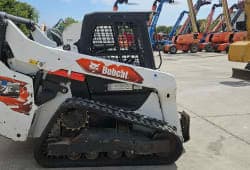
%3Aformat(webp)&w=1920&q=75) Compact Track Loaders: These have tracks instead of wheels, providing a larger surface area that distributes the machine's weight more evenly. This makes them better suited for soft, uneven, or muddy terrain, where they minimize ground disturbance and improve traction. The trade-off is typically a higher purchase and maintenance cost compared to skid steers, and they may not move as quickly on hard surfaces.
Compact Track Loaders: These have tracks instead of wheels, providing a larger surface area that distributes the machine's weight more evenly. This makes them better suited for soft, uneven, or muddy terrain, where they minimize ground disturbance and improve traction. The trade-off is typically a higher purchase and maintenance cost compared to skid steers, and they may not move as quickly on hard surfaces.
%3Aformat(webp)&w=1920&q=75) The Choice Depends on Your Needs:
The Choice Depends on Your Needs:
Terrain: Choose a skid steer for hard, smooth surfaces and a compact track loader for soft or rough terrain.
Maneuverability vs. Stability: Skid steers offer better maneuverability in tight spaces, while compact track loaders provide more stability on uneven ground.
Cost: Skid steers generally have lower initial and maintenance costs.
In summary, your choice between a skid steer and a compact track loader should be based on the specific conditions of your work environment and the type of work you're undertaking.
Cost & Maintenance Comparison
A skid steer generally has a simpler undercarriage and can be less expensive to maintain than a CTL. CTLs have additional wear components, including tracks, rollers, idlers, and sprockets, that require regular inspection and maintenance.
Consider the total cost of ownership, including:
Purchase price
Fuel
Tires or tracks
Undercarriage components
Hydraulic maintenance
Scheduled servicing
Attachments
Transportation
Downtime
Important: Actual costs vary substantially by machine, application, operating surface, maintenance practices, and local parts and labor prices. Avoid using a single universal hourly or replacement-cost figure.
Specifications: ROC, Horsepower & Ground Pressure
Rated Operating Capacity (ROC)
ROC indicates the machine's rated lifting and carrying capacity under a specified rating system. Do not compare ROC numbers without checking how they were calculated. Bobcat notes that ROC is calculated differently for skid steers and CTLs under commonly used standards.
Horsepower
Horsepower is important for demanding applications, but it should be evaluated alongside hydraulic performance, operating weight, lift capacity, and attachment requirements.
Ground Pressure
Ground pressure is especially important when working on soft or sensitive surfaces.
CTLs generally have substantially lower ground pressure than comparable skid steers, which improves flotation and reduces soil disturbance.
Always verify specifications for the exact make, model, configuration, and attachment.
Attachments & Hydraulic Flow
Both skid steers and CTLs can use a wide range of attachments, making them versatile machines.
Common attachments include:
Buckets
Pallet forks
Augers
Grapples
Trenchers
Brush cutters
Snow blades
Hydraulic breakers
Planers
Forestry mulchers
Before purchasing, verify:
Attachment weight
Coupler compatibility
Hydraulic flow requirements
Hydraulic pressure
Machine operating capacity
Electrical requirements
High-flow attachments require a machine with a compatible high-flow hydraulic system. Attachment compatibility should always be confirmed for the specific machine and attachment.
How to Choose the Right Machine
Ask these questions before buying:
What jobs will the machine perform most often?
What type of terrain will it operate on?
Do you need low ground pressure?
Which attachments will you use?
What hydraulic flow do those attachments require?
What ROC and lift height do you need?
How often will the machine travel between jobsites?
What are your maintenance resources and budget?
What trailer capacity do you have?
Are you buying new or used?
Quick decision
Choose a skid steer when firm surfaces, faster travel, maneuverability, and simpler undercarriage maintenance are priorities.
Choose a CTL when flotation, traction, low ground pressure, and soft or uneven terrain are more important.


Used Skid Steer vs. Used CTL
Condition can matter more than age when buying used equipment.
Inspect a used skid steer for:
Tire wear and damage
Hydraulic leaks
Lift-arm condition
Pins and bushings
Frame cracks
Engine performance
Coupler condition
Operating hours
Maintenance records
Inspect a used CTL for:
Track condition
Track tension
Rollers
Idlers
Sprockets
Undercarriage wear
Hydraulic leaks
Lift arms
Frame
Maintenance history
For either machine, look for excessive wear, leaks, unusual noises, structural damage, and evidence of poor maintenance.
For a higher-value purchase, a professional inspection can help identify problems that aren't obvious during a basic walk-around.
Skid Steer vs. CTL for Landscaping
A CTL is often preferred for landscaping on soft soil, lawns, and uneven terrain because its tracks provide lower ground pressure and good flotation.
A skid steer can be a better option for:
Driveways
Gravel
Compacted soil
Paving
Hard surfaces
Jobs requiring frequent travel
For finished landscapes, consider not only machine type but also track or tire design, operating technique, attachment, soil conditions, and weather.
Skid Steer vs. CTL for Construction
Both machines are widely used in construction.
Skid steer applications
Demolition
Material handling
Paving
Snow removal
Site work on firm ground
CTL applications
Site preparation
Grading
Excavation support
Rough-terrain work
Wet or soft jobsites
Landscaping-related construction
For contractors, the best choice often comes down to terrain, attachment requirements, utilization, and total operating cost, rather than horsepower alone.
Transport & Operating Considerations
Before purchasing, check:
Operating weight
Overall dimensions
Trailer capacity
Attachment weight
Loading requirements
Towing capacity
Applicable transport regulations
The machine's operating weight affects both transportation and jobsite suitability.
Also consider where the machine will be stored and whether it needs to move frequently between jobsites.
Frequently Asked Questions
Is a CTL better than a skid steer?
Neither is universally better. CTLs generally excel on soft or uneven terrain, while skid steers are often better suited to firm surfaces and applications requiring faster travel.
Which is better in mud?
A CTL is generally better in mud because its tracks provide lower ground pressure and better flotation.
Which is better on concrete?
A skid steer is generally better suited to frequent operation on hard surfaces such as concrete and asphalt. CTL tracks can also operate on hard surfaces, but abrasive surfaces can increase track and undercarriage wear.
Which is cheaper to maintain?
Skid steers generally have simpler undercarriage maintenance, while CTLs require additional attention to tracks and undercarriage components.
Can a CTL use skid steer attachments?
Many attachments can work with both machine types, but compatibility must be verified based on the coupler, hydraulic flow, pressure, attachment weight, and machine capacity.
Which has better traction?
A CTL generally provides better traction and flotation on soft or uneven terrain, while a skid steer performs effectively on firm surfaces.
Conclusion
Choosing between a skid steer and a compact track loader (CTL) comes down to your jobsite, terrain, attachments, and operating priorities. Skid steers are often a practical choice for firm surfaces, frequent travel, and simpler undercarriage maintenance, while CTLs excel on soft, uneven, or sensitive ground where traction and low ground pressure matter.
Before buying, compare operating capacity, hydraulic flow, ground pressure, attachment compatibility, maintenance requirements, transport needs, and total ownership costs. For used equipment, inspect the tires or tracks, hydraulics, undercarriage, structural components, operating hours, and maintenance history.
Ready to find the right machine for your operation? Explore Boom & Bucket's selection of used skid steers and compact track loaders, compare available equipment by specifications and condition, and find a machine that fits your work and budget.
Compare your options today and take the next step toward finding the right loader for the job.