Versatile Forklifts That Will Make Your Work Easier
12 Lectura mínima

septiembre 9, 2023
Are you ready to revolutionize your workflow and elevate your business operations to new heights? Look no further than the extraordinary world of forklifts! These versatile machines have redefined industrial efficiency, transforming the way we handle tasks and transport materials while enhancing productivity. In this comprehensive guide, we'll delve deep into the fascinating realm of forklifts, exploring their types, features, benefits, and much more. Get ready to discover how these game-changing devices can make your work smoother, faster, and more effective than ever before.
How Does a Forklift Work?
A forklift is a powered industrial truck designed to lift, transport, and position materials using forks or approved attachments. It combines a power source, hydraulic system, mast, lifting mechanism, counterweight, and steering system to handle loads safely.
Equipo relacionado
Examinar todas las Carretillas elevadoras


How a Forklift Lifts a Load
The operator positions the forklift in front of the load.
The forks are aligned and inserted under the load.
The operator confirms the load weight and load center.
Hydraulic cylinders raise the mast or forks.
The load is kept stable within the forklift's rated capacity.
The forklift transports the load to its destination.
The load is lowered and placed according to the manufacturer's operating procedures.
A forklift's capacity depends on more than the load's weight. Load center, load distribution, lift height, attachment, and machine configuration can affect stability and allowable capacity. OSHA specifically requires operators to understand truck capacity and stability and prohibits overloading.
Discover the Forklifts Revolutionizing Your Workflow
The content is talking about how forklifts are making a big difference in the way businesses get things done more efficiently.
Imagine you have a lot of heavy things to move around in a factory or a warehouse. It can be really hard and time-consuming to do it all by hand. That's where forklifts come in - they're like super strong machines that can easily pick up and move heavy objects. They're like the workhorses of the industrial world, always ready to help out.
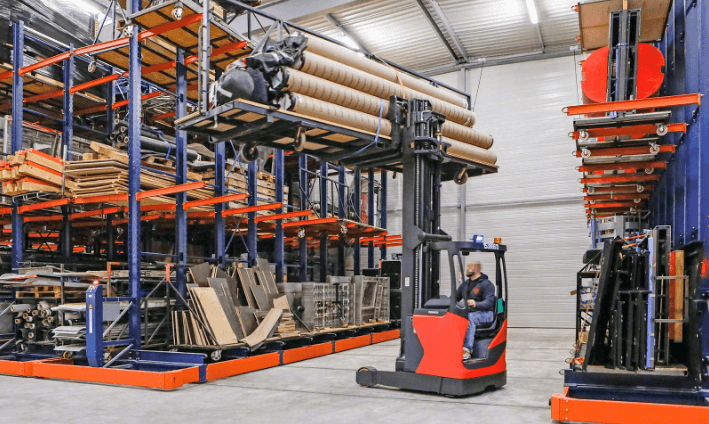
These forklift trucks are designed to do this tough job without any trouble. They can lift heavy stuff and carry it from one place to another. This is super useful in places like construction sites and warehouses where there are very narrow aisles and lots of heavy things to move around.
Because of how efficient and powerful industrial forklifts are, they have become really important tools in different kinds of industries. They help make things happen faster and smoother, which means businesses can get more done in less time. So, the content highlights how these forklifts are changing the game and making work easier in various workplaces.
Unveiling Forklifts for Effortless Productivity

Imagine this scenario: Picture yourself in a situation where you have a massive quantity of materials that urgently need to be relocated within your facility. This could be raw materials, finished products, or any other heavy items. Now, if you didn't have a forklift, accomplishing this task would be quite challenging and time-consuming. You might have to involve numerous workers, utilize various tools, and spend a significant amount of time moving these items from one place to another.
However, the introduction of a forklift truck transforms this entire situation. A forklift is a powerful and specialized machine designed to lift and carry heavy loads with relative ease. It's like having a super-strong and highly maneuverable assistant. With a forklift, you can effortlessly lift heavy objects off the ground, move them around your facility, and accurately place them wherever you need them to be.
This transformation in the process has several benefits. Firstly, it saves a tremendous amount of time. What might have taken hours or even days to accomplish without a forklift can now be done in a fraction of that time. Secondly, it reduces the physical effort required. Instead of relying on the brute strength of multiple workers to lift trucks, you can rely on the mechanical capabilities of the forklift. This not only has maintenance costs and makes the task less demanding but also lowers the risk of physical strain and injuries to the workers.
Meet the Game-Changing Forklifts for Your Business
In the diverse realm of forklifts, a plethora of options and industry solutions await. Whether you're seeking a compact and nimble electric model for indoor operations or a rugged diesel-powered giant for outdoor tasks, the market offers a tailored solution for every need. Renowned brands such as Toyota and Hyster have pioneered forklift models that excel in different environments, ensuring optimal performance and efficiency.
The Ultimate Forklifts to Streamline Your Work
This opening statement suggests that forklifts are not just basic lifting machines; they are valuable assets that can significantly improve your business operations. By choosing the right forklift manufacturer, you can achieve significant advantages, such as increased productivity, lowered labor costs, and a safer working environment.
The Latest Forklifts Designed to Simplify Your Tasks
In today's rapidly changing industrial landscape, forklift operations must stay up-to-date with the latest technological advancements. Modern forklifts are now equipped with innovative features like ergonomic controls (designed for user comfort and efficiency), advanced stability systems (to prevent accidents and ensure stability during lifting), and precise load management (for accurate and safe handling of loads). These enhancements contribute to smoother and more efficient operations, ultimately leading to improved business profits.
Transforming Work with Cutting-Edge Forklift Technology
This part introduces the idea of how advanced technology is reshaping the way forklifts operate. The content envisions a forklift that not only lifts heavy objects but also works in harmony with the forklift operator, training its movements. This is made possible through cutting-edge technology integrated into forklift design. Automated forklifts, which are equipped with sensors and advanced control systems, play a transformative role in optimizing workflow. By minimizing human error and enhancing precision, these forklifts are capable of lifting heavier loads and significantly improving overall efficiency.
To summarize, the paragraph emphasizes the evolving role of forklifts beyond simple lifting machines. They are now seen as strategic tools that can enhance business operations through advanced features and technology. By using forklift training and material handling equipment, and selecting the right forklift with modern features, businesses can achieve smoother operations, improved safety, and increased profitability. This reflects the ongoing progress in the field of forklift design and technology.
How Forklifts Are Redefining Workplace Efficiency
This statement highlights the significant impact that forklift pump trucks have had on transforming how work is done in various industries. It refers to the shift from relying solely on manual labor to incorporating automated and efficient processes, largely facilitated by the use of forklift trucks. These machines have played a crucial role in changing the way tasks are approached and carried out in industrial settings.
The Transition from Manual Labor to Automated Efficiency
This part talks about forklift trucks and the change from traditional manual work, where human labor was directly involved, to a more automated and streamlined approach. Forklifts and industrial trucks have been instrumental in driving this transition by automating tasks that involve lifting and moving heavy objects, which were previously done manually.
These Mechanical Marvels Have Redefined the Way Tasks Are Approached and Executed
This sentence emphasizes the transformative impact of forklifts. They are referred to as "mechanical marvels" because of their impressive capabilities. Forklifts have fundamentally changed how tasks are planned and carried out in workplaces by introducing automation and efficiency.
The Forklifts That Guarantee a Seamless Work Experience
Here, the focus is on the benefits that forklifts bring to the workplace. Forklifts are portrayed as tools that ensure a smooth and efficient work process. Their advanced features and capabilities make tasks easier and more streamlined, ultimately contributing to a better overall work experience.
It's a Necessity in Today's Competitive Landscape
This sentence underscores the importance of efficiency in today's business environment. Being efficient is not just a desirable objective; it's a critical requirement to stay competitive. Businesses need to optimize their processes and operations to succeed, reach trucks and forklifts play a key role in achieving that goal.
Forklifts, with Their Unparalleled Lifting Capabilities
This part elaborates on the reasons behind forklifts' ability to enhance work experiences. Forklifts are praised for their exceptional lifting power and ergonomic design, which together contribute to making work smoother and more efficient. Whether it's lift loads, navigating tight spaces, or loading goods onto vehicles, forklifts enable workers to achieve more in less time.
Equipo relacionado
Examinar todas las Carretillas elevadoras


The Forklifts Reshaping Modern Industrial Work
In precision-demanding industries, such as manufacturing and logistics, the precision and power of forklifts are unparalleled. These machines offer a level of accuracy that is unattainable through manual labor alone.
Exploring Forklifts That Promise a New Era of Ease
As industries continue to evolve, both forklift operators and forklift manufacturers themselves are pushing the boundaries of innovation. Electric forklifts have emerged as eco-friendly alternatives, offering quiet and emission-free operation, making them ideal for indoor environments. Additionally, hybrid models are gaining traction, providing a harmonious balance between power and sustainability.
How to Choose the Right Forklift
Choosing the right forklift starts with the load, workplace, lift height, and operating environment.
Consider:
Load weight: Identify the heaviest load the forklift must handle.
Load dimensions: Consider length, width, height, and weight distribution.
Load center: Verify the rated capacity at the required load center.
Lift height: Determine the highest rack, trailer, or storage location.
Aisle width: Choose a machine that can maneuver safely within the available space.
Surface conditions: Consider smooth floors, ramps, outdoor surfaces, or uneven terrain.
Power source: Compare electric and internal-combustion options based on the work environment.
Operating environment: Consider ventilation, emissions, noise, temperature, and available charging or fueling areas.
Attachments: Confirm attachment compatibility and its effect on rated capacity.
Total ownership cost: Include energy or fuel, maintenance, tires, repairs, and downtime.
The right forklift should provide sufficient capacity for the actual working conditions without being unnecessarily oversized for the application.
Forklift Safety
Forklift safety depends on proper equipment selection, operator training, workplace controls, inspections, and following the manufacturer's instructions.
Important safety practices include:
Complete required operator training and evaluation.
Conduct a pre-operation inspection.
Check the forklift's data plate and rated capacity.
Confirm the load weight and load center.
Keep loads stable and properly positioned.
Maintain adequate visibility.
Control speed according to workplace conditions.
Separate pedestrians from forklift traffic where possible.
Use caution on ramps, grades, and uneven surfaces.
Keep loads at the appropriate travel height.
Never exceed rated capacity.
Park and secure the forklift according to manufacturer procedures.
OSHA requires powered industrial truck operators to receive appropriate training and workplace evaluation. Training must address the specific truck, workplace hazards, operating procedures, and relevant safety requirements.
Used Forklift Buying Guide
A used forklift can be a cost-effective option when the machine has a good maintenance history and passes a thorough inspection.
Before purchasing, review:
Operating hours
Maintenance records
Previous applications
Engine or motor condition
Transmission and drivetrain
Battery condition on electric forklifts
Mast and lift chains
Fork condition
Hydraulic system
Tires and wheels
Brakes and steering
Electrical components
Safety equipment
Capacity/data plate
Attachments
Previous repairs or modifications
Do not evaluate a used forklift based on operating hours alone. A higher-hour machine with consistent maintenance may provide better value than a lower-hour forklift with poor service history.
When possible, perform a functional test and have a qualified technician inspect the machine before purchase.
Expert & Technical Review
Choosing a forklift requires more than comparing maximum lifting capacity. Rated capacity, load center, lift height, mast configuration, power source, attachments, operating environment, maintenance requirements, and total ownership costs should all be evaluated.
Frequently Asked Questions About Forklifts
What is a forklift?
A forklift is a powered industrial truck designed to lift, transport, and position materials using forks or approved attachments.
How much can a forklift lift?
Forklift capacity varies by model and configuration. Rated capacity depends on factors including load center, lift height, attachment, and load distribution.
What are the most common forklift types?
Common types include counterbalance forklifts, reach trucks, rough-terrain forklifts, electric forklifts, order pickers, side loaders, walkie stackers, and specialized material-handling machines.
How do I choose the right forklift?
Match the forklift to the load weight, load center, lift height, aisle width, terrain, power source, attachments, operating environment, and total ownership cost.
What should I inspect on a used forklift?
Inspect the mast, forks, hydraulic system, engine or battery, transmission, tires, brakes, steering, safety equipment, capacity plate, operating hours, and maintenance records.
Is an electric forklift better than an internal-combustion forklift?
Neither is universally better. Electric forklifts can be well suited to indoor applications, while internal-combustion models may be preferred for certain outdoor or heavy-duty applications. The right choice depends on the operating environment and workload.
How often should a forklift be inspected?
Inspection requirements depend on the equipment, manufacturer instructions, workplace procedures, and applicable regulations. Operators should follow the required pre-operation inspection procedures and address safety-related defects before use.
Conclusion
In conclusion, forklifts have emerged as pivotal instruments for enhancing efficiency, streamlining operations, and ushering in a new era of industrial work. Whether you're a seasoned warehouse forklift truck professional seeking the latest advancements or a newcomer curious about the world of forklifts, this guide has provided valuable insights into their diverse applications and benefits.
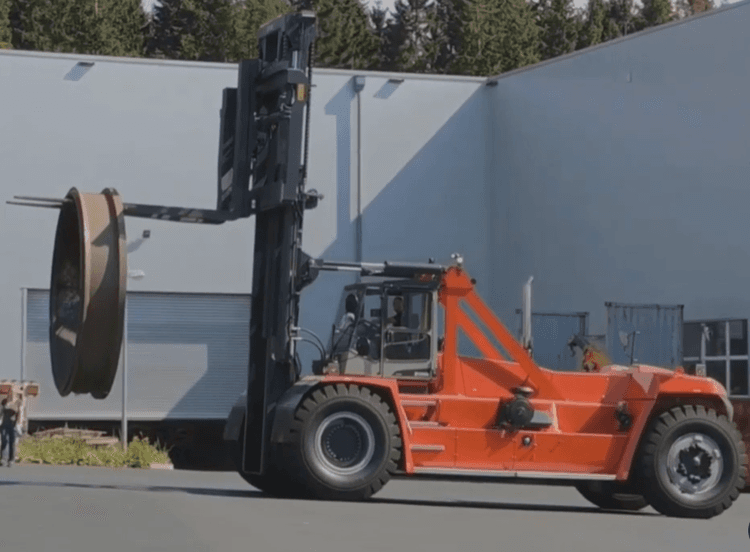
High-capacity counterbalance forklifts with internal combustion engines are a popular choice for material handling solutions in warehouses and other industrial settings, as they can lift and move heavy loads quickly and efficiently.


Artículos relacionados
Más en Forklifts