Top 5 Electric Drills for Home Improvement Projects
9 Lectura mínima


junio 11, 2023
Whether you're assembling furniture, installing shelves, building a deck, or tackling a larger renovation, a reliable electric drill is one of the most useful tools you can have.
The best electric drill for your project isn't necessarily the most powerful model available. Instead, look for the combination of power, speed, torque, size, battery life, ergonomics, and versatility that matches the work you actually plan to do.
Cordless drill technology has also evolved significantly. Modern brushless motors, lithium-ion batteries, compact designs, and expanding battery platforms give homeowners and DIYers more flexibility than older corded models.
This guide covers five popular electric drill options worth considering in 2026, along with what to look for before buying and how to choose the right drill for your projects.
What Is an Electric Drill?
 An electric drill is a power tool that rotates a drill bit or driver bit to drill holes or drive fasteners. Depending on the model and attachment, a drill can work with materials such as wood, plastic, metal, and, in some cases, masonry.
Equipo relacionado
Examinar todas las Otro


Most homeowners will encounter three common categories:
Drill/driver: The most versatile choice for drilling holes and driving screws.
Hammer drill: Adds a hammering action for drilling into masonry and other harder materials.
Corded drill: Provides continuous power without relying on batteries but requires access to an electrical outlet.
For general home improvement, a cordless drill/driver is often the most convenient option because it combines portability with enough power for a wide range of everyday tasks.
What Should You Look for in an Electric Drill?
Before choosing a drill, consider the type of work you'll perform most often.
1. Voltage and Power
Cordless drills commonly use battery platforms in the 12V or 18V/20V class. A higher-voltage platform generally provides more capability, but more power isn't automatically better for every homeowner.
A compact 12V drill may be easier to handle for furniture assembly and light-duty work, while an 18V or 20V-class drill provides more versatility for larger projects.
2. Brushless vs. Brushed Motors
Brushless motors are increasingly common in modern cordless drills. They are designed to operate efficiently while reducing some of the mechanical wear associated with traditional brushed motors.
If you regularly use your drill, a brushless model can be worth considering for its combination of efficiency, performance, and long-term durability.
3. Battery Platform
The battery ecosystem can be just as important as the drill itself.
If you already own cordless tools, staying within the same battery platform can allow you to share batteries and chargers across compatible equipment. This can reduce the number of batteries you need to purchase and keep charged.
4. Chuck Size
A 1/2-inch chuck provides flexibility for a broad range of drill bits and accessories. Smaller chucks can help keep compact drills lightweight.
For general-purpose home improvement, a 1/2-inch chuck is a practical choice if you expect to work with larger bits.
5. Speed and Torque
Variable-speed controls give you better control over different materials and applications. Adjustable clutch settings are particularly useful when driving screws because they can help prevent overdriving fasteners.
Don't assume that maximum torque alone determines how useful a drill will be. Balance power with control, weight, size, and the type of work you actually perform.
Top 5 Electric Drills for Home Improvement Projects

Rather than choosing one drill as the universal "best," the following five models represent different priorities that homeowners and DIYers may have.

1. DeWalt DCD801B 20V MAX XR
The DeWalt DCD801B is a compact brushless drill/driver designed for users who want a balance between portability and capability.
Its 20V MAX platform makes it suitable for everything from installing cabinets and shelving to drilling holes in lumber and handling general repair work.
One advantage of choosing a well-established battery platform is the ability to expand your cordless tool collection without starting over with a new battery system.
Best for: Homeowners who want a versatile drill that can grow with their tool collection.
2. Milwaukee M18 FUEL 2903-20
The Milwaukee M18 FUEL platform is aimed at users who want substantial performance from a cordless drill. The M18 ecosystem also gives contractors and serious DIYers access to a large selection of compatible tools.
For demanding renovation work, framing-related tasks, or frequent use, a higher-performance drill can make sense.
For someone who only occasionally hangs pictures or assembles furniture, however, its capabilities may be more than necessary.
Best for: Serious DIYers and users who expect to put their drill to work frequently.
3. Makita DDF487Z 18V LXT
The Makita DDF487Z is a compact brushless drill/driver built around the company's 18V LXT battery platform.
Its sub-compact design makes it particularly appealing when working in tight spaces or when reducing hand and arm fatigue is a priority.
A smaller drill can be easier to maneuver inside cabinets, around framing, or in other restricted areas.
Best for: Users who prioritize compact size and maneuverability.
Equipo relacionado
Examinar todas las Otro


4. Bosch GSR 185-LI
The Bosch GSR 185-LI is another 18V cordless drill/driver designed for users who want a versatile tool for household and workshop applications.
Its professional-oriented design makes it suitable for tasks ranging from drilling and fastening to general repair and renovation projects.
Before buying, check whether the battery and charger are included. Tool-only packages can look less expensive initially but require an existing compatible battery system.
Best for: DIYers looking for a versatile 18V drill/driver platform.
5. Ryobi ONE+ 18V Drill/Driver
Ryobi's ONE+ platform is popular with homeowners because it offers a wide range of compatible cordless tools.
That makes the drill particularly interesting for someone building a home workshop. Instead of purchasing a separate battery system for every tool, compatible ONE+ products can share the same platform.
For occasional home improvement projects, this ecosystem approach can be more important than having the highest possible drill specifications.
Best for: Budget-conscious homeowners building a larger collection of cordless tools.
Electric Drill vs. Impact Driver: What's the Difference?
An electric drill and an impact driver may look similar, but they serve different purposes.
A drill/driver provides smooth rotational power and adjustable clutch settings, making it the more versatile choice for drilling holes and driving screws.
An impact driver uses a rapid impact mechanism to deliver high rotational force. It's particularly useful for driving long screws and other fasteners where additional torque is needed.
For most homeowners buying their first power tool, a drill/driver is the more flexible starting point. If you later take on larger construction or decking projects, adding an impact driver can complement it.
When Do You Need a Hammer Drill?
If your project involves brick, block, concrete, or other masonry, a standard drill may not be the right tool.
A hammer drill combines rotation with a forward hammering action, helping the bit work through masonry more effectively.
For occasional light masonry work, a hammer drill can provide useful versatility. For extensive concrete drilling, however, a dedicated rotary hammer may be a better choice.
Matching the tool to the material is important. Using an ordinary drill for applications it wasn't designed to handle can reduce productivity and potentially damage the tool or bit.
Electric Drill Safety Tips
Even a small power tool deserves careful handling.
Before drilling:
Wear appropriate eye protection.
Inspect the drill, battery, cord, and accessories for damage.
Use a bit designed for the material you're drilling.
Secure the workpiece whenever possible.
Keep hands away from rotating components.
Check for hidden electrical wiring or plumbing before drilling into walls.
Use the correct speed and clutch setting for the task.
Allow the drill and bit to cool when working continuously.
Follow the manufacturer's operating and battery-safety instructions.
For masonry, metal, or other demanding materials, use the appropriate bit and protective equipment rather than forcing a general-purpose bit through the material.
How to Choose the Right Electric Drill for Your Project
Start with the work rather than the brand.
For furniture assembly, shelves, hardware, and light repairs, a compact cordless drill may provide all the capability you need.
For remodeling, woodworking, decking, and frequent drilling, consider an 18V or 20V-class brushless model with a larger chuck and multiple speed settings.
If you're already invested in a battery ecosystem, staying with that platform can also make sense because batteries and chargers may work across several compatible tools.
The goal isn't to buy the most powerful drill. It's to buy a drill that provides enough capability without adding unnecessary weight, cost, or complexity.
From DIY Projects to Heavy Equipment
A good electric drill can handle plenty of jobs around the house, but larger construction and commercial projects require an entirely different class of equipment.
When a home improvement project turns into excavation, grading, material handling, lifting, or site preparation, contractors need equipment designed for those demands.
That's where Boom & Bucket can help.
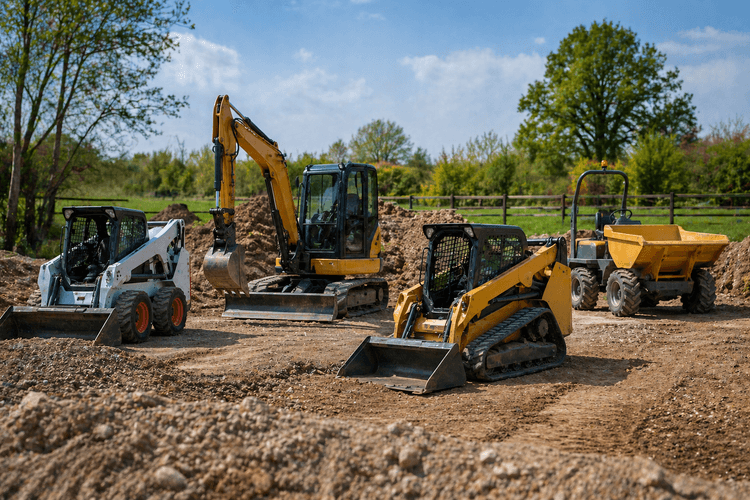
Browse used excavators, skid steers, loaders, lifts, cranes, telehandlers, trucks, generators, and other heavy equipment to find machines suited to professional construction and jobsite applications.
Ready to move beyond hand tools?
1. Browse equipment: Explore used heavy equipment by category, application, make, or model.
2. Compare machines: Review hours, condition, specifications, and available equipment to narrow your options.
3. Explore financing: When purchasing equipment represents a larger investment, review available financing options for your operation.
4. Arrange transportation: Plan delivery so your equipment gets from the seller to your jobsite.
5. Sell equipment: Have machines sitting idle? Sell equipment you're no longer using and put that capital back into your operation.
Final Thoughts
The best electric drill for a home improvement project depends on what you're building, how often you'll use the tool, and which battery ecosystem fits your needs.
A compact drill can be ideal for everyday household work, while a more powerful 18V or 20V-class brushless model provides additional capability for demanding DIY and renovation projects.
DeWalt, Milwaukee, Makita, Bosch, and Ryobi all offer cordless platforms with different strengths. Instead of focusing only on maximum power, consider battery compatibility, ergonomics, speed control, chuck size, durability, and the materials you'll be drilling.
Choose the tool that matches the work - and when your next project grows from DIY repairs into serious construction, look to the right heavy equipment for the job.


Mike Kennedy is Boom & Bucket's Marketplace Operations Manager, where he leads shipping, warranties, and post-sale operations to create a seamless buyer experience. As one of the company's earliest team members, Mike helped build the foundation of Boom & Bucket's operations and guided its growth through acquisition by RB Global. He is passionate about scaling marketplaces, solving operational challenges, and improving efficiency to deliver industry-leading results.