Wheel Loader Benefits: Uses in Construction, Mining & More
10 Lectura mínima
&w=3840&q=75)

abril 30, 2023
Wheel loaders are versatile heavy equipment machines designed primarily to scoop, lift, carry, load, and move bulk materials. Their combination of a front-mounted bucket, high mobility, lifting capability, and attachment versatility makes them valuable in construction, mining, quarrying, agriculture, landscaping, and material-handling operations.
The main benefits of wheel loaders are high productivity, mobility, versatility, large material-handling capacity, and the ability to perform multiple jobs with different attachments.
However, the best wheel loader for one application may be the wrong choice for another. Machine size, bucket capacity, material density, jobsite conditions, travel distance, and required production all affect which configuration makes sense.
This guide explains the most common wheel loader uses and benefits, how wheel loaders are used in construction and mining, which attachments expand their capabilities, and what to consider when buying a used wheel loader.
What Is a Wheel Loader?
%3Aformat(webp)&w=1920&q=75)

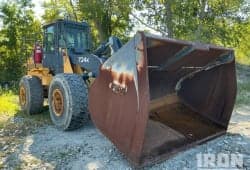
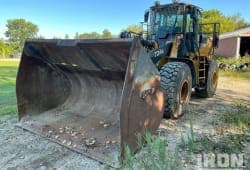
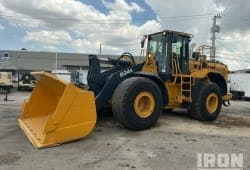
A wheel loader is a mobile heavy equipment machine with a front-mounted lift arm and bucket used primarily to scoop, lift, carry, stockpile, and load bulk materials.
Unlike tracked equipment, wheel loaders use tires, giving them strong mobility on firm surfaces and allowing them to travel efficiently between work areas.
Depending on their size and configuration, wheel loaders can handle materials such as:
Dirt
Sand
Gravel
Aggregate
Rock
Snow
Construction debris
Wood chips
Agricultural materials
Their versatility comes from the combination of a powerful loader linkage, front attachment, and mobile chassis.
That makes a wheel loader particularly useful when a job requires repeated material movement rather than deep excavation.
7 Major Benefits of Wheel Loaders
1. High Productivity
One of the biggest advantages of wheel loaders is their ability to move significant quantities of material through repeated loading cycles.
A wheel loader can scoop material, lift the bucket, travel a short distance, and load a truck or stockpile. This makes it especially useful when an operation needs continuous material movement.
Productivity depends on factors such as:
Bucket capacity
Material density
Loading height
Travel distance
Cycle time
Machine power
Operator technique
Jobsite layout
Choosing the largest available bucket isn't automatically the best strategy. Bucket size should be matched to the machine and material being handled. Caterpillar's current guidance recommends sizing the bucket around the material, machine size, and material density.
The goal is productive payload—not simply maximum bucket volume.
2. Excellent Material-Handling Capability
Wheel loaders are particularly effective at moving loose or bulk materials.
Common applications include:
Loading dump trucks
Feeding crushers
Moving aggregate
Managing stockpiles
Loading processing equipment
Moving soil
Handling construction debris
This makes them valuable in operations where material must continuously move from one location to another.
For example, a quarry may use a wheel loader to move crushed stone from a stockpile into trucks, while a construction contractor may use one to load aggregate into a truck or redistribute fill around a jobsite.
3. Mobility Between Work Areas
Wheel loaders provide an important advantage when material must be moved repeatedly across a jobsite.
Because they're wheeled machines, they can travel efficiently between work areas on suitable surfaces without the same mobility limitations associated with some tracked equipment.
This can be particularly useful for:
Large construction sites
Quarries
Recycling operations
Municipal work
Snow removal
Agricultural operations
However, mobility doesn't mean every wheel loader is appropriate for every surface or terrain. Ground conditions, tire selection, machine size, and site layout should all be considered.
4. Versatility With Attachments
A wheel loader doesn't have to perform every job with a standard bucket.
Depending on the machine and coupler system, attachments can include:
General-purpose buckets
Light-material buckets
Rock buckets
High-dump buckets
Pallet forks
Grapples
Snow attachments
Specialized material-handling tools
The correct attachment can significantly change what a wheel loader is capable of doing.
For mining applications, for example, bucket selection can range from general-purpose and material-handling buckets to rock and heavy-duty rock buckets. Specialized options can include coal, grapple, high-dump, multipurpose, side-dump, and slag buckets.
This attachment flexibility is one reason a wheel loader can support several different phases of a project.
5. Strong Lifting and Loading Performance
%3Aformat(webp)&w=1920&q=75)
Wheel loaders combine a front-mounted lift arm with hydraulic power to raise and position material.
That makes them useful for:
Truck loading
Stockpile management
Material transfer
Pallet handling with forks
Loading hoppers
Site cleanup
However, lifting capability isn't unlimited.
Operators and fleet managers need to consider the machine's rated operating capacity, attachment weight, load characteristics, lift height, and stability.
The right machine should be selected around the actual load requirements rather than simply choosing a larger machine.
6. Multiple Machine Sizes
Wheel loaders aren't one-size-fits-all equipment.
Compact wheel loaders can be useful on smaller construction, landscaping, agricultural, and municipal jobs where maneuverability matters.
Larger wheel loaders are designed for higher-production material handling and applications such as quarrying, aggregate processing, and mining.
This distinction is important because the current Boom & Bucket article describes wheel loaders broadly as being suitable for tight spaces. In reality, compact wheel loaders are the better fit when confined-space maneuverability is a priority, while large mining loaders are built around production and material-handling capacity.
7. Potentially Lower Cost Per Unit of Material Moved
A wheel loader's value isn't simply its purchase price.
For commercial operations, the more useful question is:
How much material can this machine move for the total cost of operating it?
Costs can include:
Purchase price
Fuel
Tires
Maintenance
Attachments
Operator labor
Downtime
Repairs
A highly productive wheel loader can potentially reduce the cost of moving material by completing more work per cycle.
But fuel economy and operating cost shouldn't be assumed solely from the machine type. Actual results depend on machine configuration, workload, operator behavior, material, and site conditions.
Wheel Loader Applications at a Glance
%3Aformat(webp)&w=1920&q=75)
How Are Wheel Loaders Used in Construction?
Construction is one of the most common applications for wheel loaders.
Contractors may use them to:
Load dump trucks
Wheel loaders can quickly load dirt, sand, gravel, aggregate, and other bulk materials into trucks.
Move material around the jobsite
They can transport material between stockpiles, work areas, processing equipment, and loading zones.
Manage stockpiles
A loader can create, maintain, and reclaim material stockpiles.
Perform cleanup
Buckets and specialized attachments can help remove construction debris and maintain work areas.
Handle packaged materials
With the correct fork attachment, a wheel loader can handle pallets and other packaged loads.
The machine is particularly valuable when the job requires frequent material movement over relatively short distances.
How Are Wheel Loaders Used in Mining and Quarrying?
Wheel loaders are also widely used in mining, quarrying, and aggregate operations.
Typical applications include:
Loading haul trucks
Moving blasted material
Rehandling stockpiles
Loading processing plants
Moving crushed aggregate
Handling ore
Cleaning work areas
In mining, attachment selection becomes particularly important.
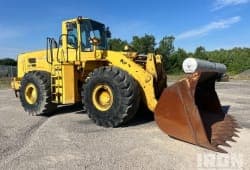

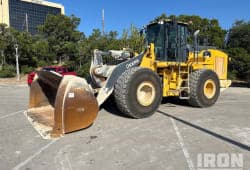

Rock and heavy-duty rock buckets are designed for demanding applications, while material-handling buckets can be better suited to stockpiled aggregates and easier-to-load materials.
However, a wheel loader isn't automatically the best loading machine for every mine.
Mine layout, material characteristics, haul distance, ground conditions, production requirements, and loading strategy all affect equipment selection.
Wheel Loader vs. Excavator: Which Is Better?
Neither machine is universally better.
The right choice depends on what you need the machine to accomplish.
Wheel loaders are generally better suited to:
Loading
Carrying
Stockpiling
Material handling
Short-distance material movement
Excavators are generally better suited to:
Digging
Deep excavation
Working below grade
Precision excavation
The two machines often work together on construction sites.
For example, an excavator might dig and load material while a wheel loader manages stockpiles, cleans the site, or handles aggregate.
This is also why the original article's broad claim that wheel loaders are designed for “excavation” should be tightened.
What Attachments Can a Wheel Loader Use?
%3Aformat(webp)&w=1920&q=75)
Attachments can transform a wheel loader from a material-loading machine into a much more versatile piece of equipment.
Buckets
General-purpose buckets are useful for common bulk materials, while light-material and rock buckets are designed around different material characteristics.
Pallet forks
Forks allow a properly configured wheel loader to handle palletized construction, landscaping, agricultural, or industrial materials.
Grapples
Grapples can help handle logs, brush, demolition debris, and other irregular materials.
Snow attachments
Snow pushers, blades, and other snow tools can expand a wheel loader's usefulness during winter operations.
Specialized buckets
High-dump, multipurpose, side-dump, coal, and other specialized buckets can be selected for specific applications.
The attachment should always be matched to the machine's capacity, hydraulic system, coupler, and intended application.
Are Wheel Loaders Safe?
Wheel loader safety depends on the machine, operator, attachment, worksite, and operating procedures.
Important considerations include:
Visibility
Blind spots
Pedestrian traffic
Load stability
Rated capacity
Ground conditions
Travel routes
Attachment compatibility
Operator training
Preventive maintenance
Modern machines may include cameras, backup alarms, visibility systems, and other safety technologies, but equipment features don't replace proper training and jobsite procedures.
What to Check When Buying a Used Wheel Loader
If you're considering a used wheel loader, don't evaluate it based solely on the asking price or hour meter.
Inspect:
Engine
Transmission
Axles
Tires
Articulation joint
Hydraulic system
Hydraulic cylinders
Hoses
Bucket
Loader linkage
Cutting edge
Cab
Controls
Cooling system
Service history
Pay particular attention to the articulation joint, hydraulics, tires, and loader linkage.
Also consider how the machine was previously used.
A wheel loader that spent years moving abrasive rock may have a very different wear profile from one used for lighter landscaping or agricultural applications.
Hours aren't the whole story
A machine with higher hours and strong maintenance records may be a better purchase than a lower-hour machine with an unknown service history.
When comparing used wheel loaders, consider:
Hours + maintenance history + condition + application + price
rather than hours alone.
Is a Wheel Loader Right for Your Operation?
%3Aformat(webp)&w=1920&q=75)
A wheel loader can be an excellent choice if your operation regularly needs to:
Move large quantities of bulk material
Load trucks
Manage stockpiles
Handle aggregate
Transport materials around a jobsite
Perform multiple material-handling tasks
Use different attachments
But the right machine depends on the work.
Before buying, determine:
What material will you handle?
How much material must you move?
How far will it travel?
What bucket or attachment will you use?
What lift height is required?
What ground conditions will it encounter?
How frequently will it operate?
What maintenance and ownership costs can you support?
Those answers will help narrow the right machine size and configuration.
Frequently Asked Questions
What are the main benefits of a wheel loader?
The primary benefits of wheel loaders are high productivity, mobility, material-handling capacity, lifting capability, and attachment versatility. They are particularly effective for loading, carrying, stockpiling, and moving bulk materials.
What are wheel loaders used for?
Wheel loaders are commonly used to load trucks, move dirt and aggregate, manage stockpiles, handle construction debris, load processing equipment, clear snow, and move materials with buckets, forks, grapples, and other attachments.
Why are wheel loaders used in mining?
Wheel loaders can provide high-production loading and material-rehandling capability while maintaining mobility around suitable mine and quarry surfaces. The best application depends on material, site layout, production requirements, and machine configuration.
Are wheel loaders good for construction?
Yes. Wheel loaders are commonly used in construction for loading trucks, moving aggregate, stockpiling materials, cleanup, site preparation, and material handling.
What is the difference between a wheel loader and an excavator?
Wheel loaders are generally optimized for loading, carrying, and material handling, while excavators are generally better suited to digging, trenching, and deep excavation.
What attachments can a wheel loader use?
Depending on the machine and coupler, wheel loaders can use buckets, pallet forks, grapples, snow tools, and specialized buckets. Attachment selection should account for machine capacity and the intended material and application.
Get More From Your Wheel Loader
A wheel loader can be one of the most versatile machines in a construction, mining, quarry, agricultural, or material-handling fleet.
But productivity doesn't come from simply buying the biggest machine.
The best wheel loader is the one that's properly matched to your material, application, attachment, production requirements, and jobsite.
For construction, that may mean a maneuverable machine that can load trucks and move aggregate efficiently. For quarrying or mining, production capacity, bucket configuration, durability, and material characteristics may become much more important.
And when buying used equipment, condition and maintenance history can matter just as much as machine hours.
Find the Right Wheel Loader With Boom & Bucket
1. Learn
Not sure which wheel loader is right for your application?
Explore Boom & Bucket's equipment resources to learn about wheel loader types, applications, attachments, inspections, and ownership.
→ Explore Wheel Loader Resources
2. Evaluate
Already know what type of machine you need?
Compare used wheel loaders based on hours, condition, attachments, configuration, price, and intended application.
→ Learn How to Inspect a Used Wheel Loader
3. Shop
Find Your Next Used Wheel Loader
Ready to put a wheel loader to work?
Browse Boom & Bucket's selection of used wheel loaders and find equipment that matches your application and budget.
Looking for additional equipment? Explore used excavators, dozers, skid steers, backhoes, articulated trucks, and other heavy equipment.


Samir Shah is the Co-Founder and Chief Product Officer of Boom & Bucket, where he leads the development of innovative solutions for buying and selling heavy equipment. With a background in engineering, product development, and business strategy, Samir has a track record of taking companies from concept to market success. Previously, he was the Head of Cat Digital Labs at Caterpillar, overseeing digital initiatives and product launches. He holds degrees from MIT Sloan and Carnegie Mellon, and he is passionate about tackling big challenges in underserved industries.