Caterpillar and Komatsu Bulldozer Equivalents
9 Lectura mínima
&w=3840&q=75)

julio 24, 2024
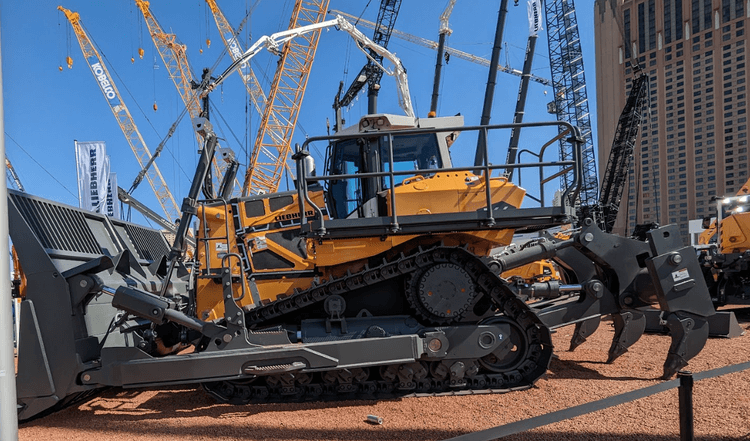
When it comes to bulldozers, two names dominate the conversation: Caterpillar (CAT) and Komatsu. Both are giants in the heavy equipment industry, offering reliable and robust machines that can handle tough conditions on any construction site. But how do the equivalent models from these two brands stack up against each other?
Is CAT Better Than Komatsu?
Neither CAT nor Komatsu is universally better. The best bulldozer depends on the application, specifications, condition, technology, dealer support, and total ownership cost.


What Is the Komatsu Equivalent of a CAT D6?
The Komatsu D65 family is commonly compared with the Caterpillar D6 class, but exact equivalency depends on model year and configuration.
What Is the Komatsu Equivalent of a CAT D7?
The Komatsu D85 class is commonly compared with the Caterpillar D7 based on machine size and application, but specifications vary by model and configuration.
What Is the Komatsu Equivalent of a CAT D8?
The Komatsu D155 class can be compared with larger Caterpillar construction dozers, but buyers should verify exact specifications and applications.
Which Is Better for Used Bulldozers, CAT or Komatsu?
Neither brand is automatically better for used equipment. Compare operating hours, maintenance history, undercarriage condition, specifications, price, and local service support.
What Should I Compare When Choosing CAT vs. Komatsu?
Compare horsepower, operating weight, blade capacity, undercarriage, technology, fuel consumption, maintenance, parts support, machine condition, and total ownership cost.
How We Evaluated CAT and Komatsu Bulldozers
We evaluated CAT and Komatsu bulldozers using machine class, operating weight, horsepower, blade configuration, application, undercarriage, technology, fuel efficiency, maintenance requirements, parts support, used-market availability, and total ownership cost.
Because specifications can change between generations, comparisons should be based on the specific model year and configuration, rather than assuming that every machine carrying the same model name has identical specifications.
Let's check out some comparable models from CAT and Komatsu, highlighting the ones most often used in construction and earthmoving.%3Aformat(webp)&w=1920&q=75) Both CAT and Komatsu offer outstanding bulldozers that are respected across the construction industry. The choice between them is often based on specific needs and brand loyalty. Whether you lean towards CAT for its advanced features and global support or Komatsu for its reliability and straightforward operation, either choice will provide a machine built to perform in the toughest environments. If you’re in the market for a bulldozer and still unsure which model suits your needs, Boom & Bucket can help you compare used options, find financing solutions, and guide you towards the best investment for your operations. Check out our inventory of CAT and Komatsu bulldozers here.
Both CAT and Komatsu offer outstanding bulldozers that are respected across the construction industry. The choice between them is often based on specific needs and brand loyalty. Whether you lean towards CAT for its advanced features and global support or Komatsu for its reliability and straightforward operation, either choice will provide a machine built to perform in the toughest environments. If you’re in the market for a bulldozer and still unsure which model suits your needs, Boom & Bucket can help you compare used options, find financing solutions, and guide you towards the best investment for your operations. Check out our inventory of CAT and Komatsu bulldozers here.
CAT D3 vs. Komatsu D39
The CAT D3 and Komatsu D39 represent the smaller end of the crawler-dozer market and can suit site preparation, landscaping, utility work, and light grading.
When comparing them, look at:
Operating weight
Horsepower
Blade capacity
Track configuration
Ground pressure
Transport dimensions
Used-machine availability
Best choice: Select the machine that provides sufficient power and traction without adding unnecessary operating or transportation costs.
CAT D4 vs. Komatsu D51
The CAT D4 and Komatsu D51 are better suited to buyers looking for a small-to-medium bulldozer for construction and earthmoving.
Compare:
Horsepower
Operating weight
Blade size
Ground pressure
Grade-control options
Fuel consumption
Operator comfort
Dealer support
For used equipment, machine condition and maintenance history can outweigh small specification differences.
CAT D5 vs. Komatsu D61
The CAT D5 and Komatsu D61 occupy a popular size class for site preparation, grading, roadwork, utilities, and general construction.
Key comparison points include:
Operating weight
Net horsepower
Blade configuration
Track width
Ground pressure
Fuel efficiency
Machine-control technology
Boom & Bucket already has a dedicated article comparing the Komatsu D61PX-15 and CAT D6T, so this page should link to that deeper comparison rather than duplicate it.
CAT D6 vs. Komatsu D65
The CAT D6 and Komatsu D65 are commonly compared in the medium-duty crawler dozer category.
They can be suitable for:
Site development
Road construction
Grading
Utility work
Land clearing
General earthmoving
When comparing these machines, prioritize horsepower, operating weight, blade capacity, undercarriage configuration, grade control, fuel consumption, and local service support.
The exact model year matters. For example, older D6 and D65 generations can have significantly different specifications from newer versions.
CAT D7 vs. Komatsu D85
The CAT D7 and Komatsu D85 represent a larger machine class designed for more demanding earthmoving.
Compare:
Horsepower
Operating weight
Blade capacity
Drawbar pull
Ground pressure
Fuel consumption
Production rate
Transport requirements
These machines make more sense when higher production and pushing capacity justify their larger size and operating costs.
CAT D8 vs. Komatsu D155
The CAT D8 and Komatsu D155 class are aimed at heavy-duty construction, major earthmoving, mining, and large-scale site preparation.
At this level, buyers should evaluate more than horsepower.
Consider:
Production capacity → Blade configuration → Fuel consumption → Undercarriage → Serviceability → Transportation → Technology
For high-utilization operations, even small differences in productivity or downtime can significantly affect total ownership cost.
CAT vs. Komatsu: Horsepower and Weight
Horsepower and operating weight should always be evaluated together.
Horsepower indicates engine output, while operating weight affects traction, ground pressure, stability, and pushing performance.
Also compare:
Blade capacity
Drawbar pull
Ground pressure
Hydraulic performance
Track configuration
More horsepower does not automatically mean a better bulldozer. The ideal machine provides enough power and weight for the material, terrain, and workload.
Blade Configurations
Blade configuration can have a major impact on productivity.
Common options include:
Straight Blade
Useful for grading, spreading, and precision work.
Universal Blade
Designed to carry larger quantities of material.
Semi-U Blade
Provides a balance between material capacity and control.
Angle Blade
Allows material to be pushed to one side and can be useful for ditching and roadwork.
When comparing CAT and Komatsu, compare machines with similar blade configurations. A specification comparison can be misleading if one machine is equipped with a substantially different blade.
Undercarriage Comparison
The undercarriage is one of the most important areas to evaluate on a crawler bulldozer.
Inspect:
Track chains
Track shoes
Rollers
Idlers
Sprockets
Bushings
Track tension
For used machines, undercarriage wear can significantly affect repair costs.
A lower-priced bulldozer with a severely worn undercarriage may ultimately cost more than a higher-priced machine in better condition.


Technology and Grade Control
Modern bulldozers can include technologies designed to improve grading accuracy, productivity, operator awareness, and fleet management.
Compare:
GPS/GNSS systems
Automated blade control
Grade-control systems
Telematics
Machine displays
Operator-assist features
CAT and Komatsu both offer machine-control technologies, but availability varies by model, generation, configuration, and optional equipment.
Don't pay for technology you won't use. A contractor performing rough site preparation may have different requirements from one performing precision grading.
Fuel Efficiency
Fuel consumption depends on much more than brand.
Key factors include:
Machine size
Engine generation
Material
Terrain
Operator technique
Idle time
Work cycle
Maintenance
Blade load
Instead of claiming that CAT or Komatsu is universally more fuel-efficient, compare equivalent machines performing the same type of work under similar conditions.
For high-hour fleets, even modest fuel differences can have a meaningful effect on annual operating costs.
Maintenance, Parts, and Dealer Support
A bulldozer's ownership experience depends heavily on access to parts, technicians, and service support.
Compare:
Dealer proximity
Parts availability
Routine service requirements
Technician availability
Repair costs
Warranty support
Service documentation
For used equipment, local support can be particularly important.
The better brand for your operation may be the one with stronger parts and service availability in your area.
Used CAT vs. Used Komatsu Bulldozers
When comparing used CAT and Komatsu machines, condition should take priority over brand.
Inspect:
Operating hours
Maintenance records
Engine
Hydraulics
Transmission
Undercarriage
Blade
Ripper
Final drives
Structural condition
Also investigate how the machine was previously used. A bulldozer that spent years performing heavy ripping or mining work may have experienced substantially different wear than one used primarily for light grading.
Price and Total Ownership Cost
Purchase price is only one part of bulldozer ownership.
Consider:
Purchase price + fuel + maintenance + repairs + undercarriage wear + transportation + depreciation
Used-equipment prices can vary substantially based on:
Model
Year
Hours
Condition
Blade
Undercarriage
Technology
Location
Which Is Better: CAT or Komatsu?
Neither CAT nor Komatsu is universally better.
Choose based on:
Application
Machine size
Horsepower
Operating weight
Blade configuration
Technology
Fuel consumption
Maintenance
Dealer support
Used condition
Total ownership cost
CAT may be attractive to buyers who value its broad equipment ecosystem and technology offerings, while Komatsu may appeal to buyers prioritizing efficiency, machine control, and operator-focused features.
Ultimately, the specific machine matters more than the badge on the hood.
How to Choose Between CAT and Komatsu
Use this simple process:
1. Define the application
Determine whether you need the machine for grading, roadwork, land clearing, mining, or general earthmoving.
2. Select the machine class
Choose the appropriate size based on workload and terrain.
3. Compare equivalent models
Compare machines with similar operating weight and blade configurations.
4. Check specifications
Review horsepower, blade capacity, ground pressure, and fuel consumption.
5. Evaluate technology
Pay only for features that provide value for your application.
6. Check local support
Compare dealers, parts availability, and service.
7. Inspect used machines
Prioritize undercarriage, engine, hydraulics, and maintenance history.
8. Calculate total ownership cost
Don't base the decision on purchase price alone.
Frequently Asked Questions
Is CAT better than Komatsu?
Neither brand is universally better. Compare equivalent machines based on application, specifications, condition, support, and total ownership cost.
What is the Komatsu equivalent of a CAT D6?
The Komatsu D65 family is commonly compared with the CAT D6 class, although exact equivalency depends on model year and configuration.
What is the Komatsu equivalent of a CAT D7?
The Komatsu D85 class is a common comparison point for the CAT D7, but specifications should be checked for the specific machines.
What is the Komatsu equivalent of a CAT D8?
The Komatsu D155 class represents a comparable heavy-duty machine category, although the exact specifications and intended applications should be verified.
Which is more reliable, CAT or Komatsu?
Both manufacturers produce established heavy-equipment lines. Reliability depends on the specific model, maintenance, operating conditions, hours, and machine history.
Which is better for buying used?
The better used bulldozer is the one with the best combination of condition, maintenance history, undercarriage health, hours, price, and local support.
Are CAT and Komatsu parts interchangeable?
No. Similar machine classes do not mean components are interchangeable. Always verify part compatibility using the specific machine and part number.
Choosing Between CAT and Komatsu Bulldozers
Choosing between CAT and Komatsu bulldozers comes down to more than brand preference. Compare the machine class, horsepower, operating weight, blade configuration, technology, fuel efficiency, maintenance needs, dealer support, and-especially for used equipment-the machine's overall condition.
For the best value, match the bulldozer to your application first, then compare equivalent CAT and Komatsu models based on total ownership cost.
Ready to Find the Right Bulldozer?
Define your job → Compare CAT and Komatsu models → Check specifications Inspect condition → Compare total costs →Find the right machine.
Browse available CAT and Komatsu bulldozers to compare models, hours, specifications, and pricing, then choose the equipment that fits your project and budget.
Your next step: Compare available bulldozers and find the machine built for your job.


Mike Kennedy is Boom & Bucket's Marketplace Operations Manager, where he leads shipping, warranties, and post-sale operations to create a seamless buyer experience. As one of the company's earliest team members, Mike helped build the foundation of Boom & Bucket's operations and guided its growth through acquisition by RB Global. He is passionate about scaling marketplaces, solving operational challenges, and improving efficiency to deliver industry-leading results.