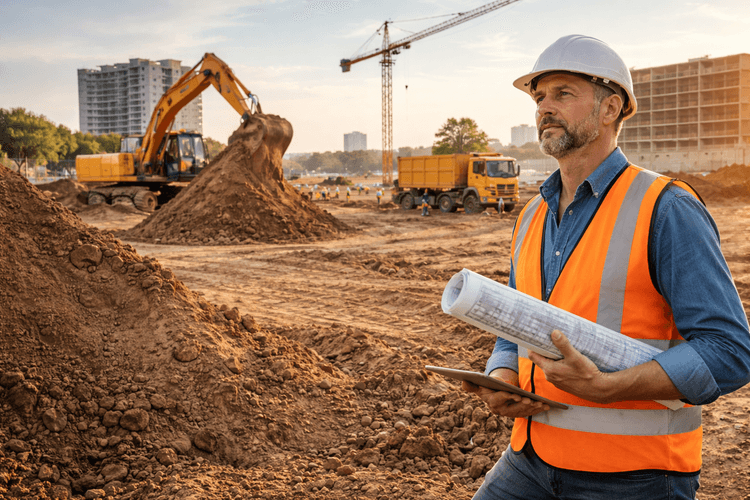
Excavator Sizes: The Complete Guide to Choosing the Right Excavator
9 Lectura mínima
&w=3840&q=75)

mayo 11, 2023
Choosing the right excavator size can have a major impact on productivity, operating costs, transportation, and jobsite safety. A machine that is too small may struggle to reach the required digging depth or move enough material, while an oversized excavator can increase fuel, hauling, and operating costs.
Excavators range from compact mini excavators designed for residential and utility work to massive machines built for mining and large-scale earthmoving.
So, what size excavator do you need?
The answer depends on your project's digging depth, material, site conditions, available working space, required lifting capacity, attachments, transportation requirements, and production goals.
This excavator size guide explains the major equipment classes and the specifications you should compare before buying or renting.
What Determines Excavator Size?
%3Aformat(webp)&w=1920&q=75)


Excavator size is commonly associated with operating weight, but weight alone doesn't tell you whether a machine is right for a particular job.
When comparing excavators, look at:
Operating weight
Horsepower
Maximum reach
Bucket capacity
Lift capacity
Hydraulic flow
Overall width and height
Tail-swing configuration
Ground pressure
Transportation requirements
Two excavators with similar operating weights can have significantly different capabilities depending on their boom configuration, hydraulics, bucket, counterweight, and manufacturer specifications.
For that reason, don't choose an excavator based solely on its weight class.
Excavator Size Chart
The following categories provide a practical starting point for matching excavator size to common applications. Exact specifications vary by manufacturer and model, so always check the manufacturer's specifications for the machine you're considering.
%3Aformat(webp)&w=1920&q=75)
These ranges aren't universal industry standards. Manufacturers use different classifications, and specialized excavators can fall outside them. Caterpillar, for example, separates its lineup into mini, small, medium, and large categories with substantial differences in operating weight and intended applications.
Mini Excavators: Best for Tight Jobsites
%3Aformat(webp)&w=1920&q=75)
Mini excavators are generally the smallest excavators and are designed for projects where maneuverability is more important than maximum production.
They're commonly used for:
Landscaping
Residential construction
Utility trenching
Drainage
Irrigation
Fence installation
Stump removal
Small demolition projects
Backyard excavation
Their compact footprint allows them to work in locations where larger excavators may not fit.
Some mini excavators also use zero- or reduced-tail-swing designs, making them particularly useful when working near buildings, fences, roads, or other obstacles.
For contractors who frequently move equipment between smaller residential or commercial jobs, transportation is another major advantage. Smaller machines can often be hauled more easily than larger excavators.
Best choice when: access, maneuverability, and transportation are major priorities.
Midi and Small Excavators: The Versatility Sweet Spot
Midi excavators generally bridge the gap between compact equipment and full-size construction excavators.
Machines in roughly the 6- to 10-ton range can provide considerably more digging and lifting capability than smaller mini excavators while remaining relatively maneuverable.
They're commonly used for:
Utility installation
Road maintenance
Residential construction
Commercial site preparation
Drainage projects
General excavation
Light demolition
A midi excavator can be a particularly good choice for contractors who need one machine capable of handling a variety of projects without moving into the cost and transportation requirements of a full-size excavator.
Best choice when: you need more power than a mini excavator but still value maneuverability.
Medium Excavators: Built for General Construction
Medium excavators are some of the most versatile machines on construction sites.
Depending on the model, these machines can provide substantial digging depth, reach, bucket capacity, hydraulic power, and lifting capability without reaching the extreme size of mining excavators.
Typical applications include:
Foundation excavation
Road construction
Pipeline work
Large utility projects
Site development
Material handling
Demolition
Mass excavation
A medium excavator is often a strong option for contractors who need production capacity but still have to consider transportation and jobsite access.
Best choice when: you're handling regular commercial or infrastructure excavation and need a balance between production and mobility.
Large Excavators: Maximum Digging and Production
Large excavators are designed for demanding projects where production capacity is the priority.
They're commonly used for:
Major infrastructure
Large-scale earthmoving
Highway construction
Quarrying
Heavy demolition
Mining
Mass excavation
Their larger operating weight, engines, hydraulic systems, and buckets allow them to move significantly more material per cycle.
However, bigger isn't always better.
Large excavators typically require more transportation planning, more fuel, larger working areas, and higher operating budgets.
Best choice when: production volume and digging power outweigh maneuverability and transportation simplicity.
How to Choose the Right Excavator Size
%3Aformat(webp)&w=1920&q=75)
1. Start With Your Required Digging Depth
Digging depth is one of the first specifications you should check.
If your project requires a trench 12 feet deep, for example, an excavator with a maximum digging depth close to that number may leave little practical operating margin.
Consider:
Required trench depth
Foundation depth
Working reach
Soil conditions
Boom and arm configuration
Bucket type
Don't confuse maximum digging depth with maximum reach. You need both specifications to understand how effectively the excavator can work from its operating position.
2. Measure Your Jobsite Access
Before choosing a machine, measure the actual path the excavator will take to reach the work area.
Check:
Gate widths
Road widths
Door openings
Overhead clearance
Working radius
Obstacles
Turning space
A machine that technically fits through an entrance may still be impractical if it cannot safely maneuver once inside.
For restricted jobsites, width and tail swing can be just as important as operating weight.
3. Consider the Material You're Digging
Soil conditions can dramatically affect excavator performance.
Loose soil is generally easier to excavate than compacted clay, rock, frozen ground, or heavily packed material.
If your projects regularly involve difficult material, prioritize:
Hydraulic power
Breakout force
Bucket configuration
Machine stability
Hydraulic attachments
For rock or concrete, you may also need a hydraulic breaker, which makes auxiliary hydraulic flow an important purchasing consideration.
4. Match the Excavator to Your Attachments
One of the biggest advantages of excavators is attachment versatility.
Depending on the machine, you may use:
General-purpose buckets
Trenching buckets
Hydraulic thumbs
Breakers
Augers
Grapples
Rakes
Compaction wheels
Tilt buckets
Brush cutters
Before buying, confirm that the excavator can provide the hydraulic flow, pressure, lifting capacity, and coupler compatibility required by your attachments.


The right excavator can become a multi-purpose production machine rather than a one-task piece of equipment.
5. Don't Ignore Lift Capacity
Excavators aren't only digging machines.
Contractors often use them to lift and position:
Pipes
Concrete products
Rocks
Structural materials
Trees
Heavy attachments
But an excavator's lifting capacity changes depending on factors such as load radius, boom position, machine configuration, ground conditions, and attachment.
Always use the manufacturer's lift chart for the specific machine rather than assuming its maximum rated capacity applies at every reach.
6. Think About Transportation
Transportation can have a significant impact on the real cost of owning an excavator.
Before purchasing, determine:
Machine operating weight
Attachment weight
Trailer capacity
Towing vehicle capacity
Overall machine dimensions
How frequently you'll move the excavator
A smaller machine may have lower production capacity but substantially lower transportation costs.
If the excavator will move between jobs every few days, transportability becomes an especially important part of the buying decision.
7. Consider Total Cost of Ownership
The purchase price is only one part of excavator ownership.
Budget for:
Fuel
Routine maintenance
Hydraulic repairs
Undercarriage wear
Transportation
Insurance
Storage
Attachments
Financing
Operator costs
A larger excavator may complete a job faster, but the additional fuel and transportation costs may not make sense for smaller projects.
Likewise, buying the cheapest machine available can backfire if frequent repairs reduce uptime.
The goal is to find the lowest total cost per productive hour, not simply the lowest purchase price.
New vs. Used Excavators: Which Is Better?
The right choice depends on your workload, budget, and equipment strategy.
A new excavator can provide the latest technology, warranty coverage, and predictable initial maintenance requirements.
A used excavator can provide a lower acquisition cost and access to a much wider range of machines and configurations.
When evaluating used equipment, focus on condition rather than age alone.
Inspect:
Engine performance
Hydraulic system
Cylinders and hoses
Tracks and undercarriage
Pins and bushings
Swing bearing
Boom and arm
Bucket and attachments
Hour meter
Maintenance records
A well-maintained used excavator with documented service history can be a better investment than a newer machine that has experienced heavy abuse.
Common Excavator Sizing Mistakes
Buying Too Small
An undersized machine may struggle with digging depth, lifting requirements, difficult material, or production targets.
The result can be longer cycle times, increased wear, and project delays.
Buying Too Large
Oversized equipment can create its own problems.
You may encounter:
Higher fuel consumption
Higher transportation costs
Limited jobsite access
Greater ground disturbance
Higher purchase costs
Choosing by Horsepower Alone
Horsepower matters, but it doesn't tell the complete story.
Hydraulic performance, breakout force, operating weight, bucket capacity, reach, and machine configuration all affect productivity.
Ignoring the Attachments
A machine that cannot properly power your required attachments may be unsuitable even if its size looks perfect on paper.
Forgetting Future Work
If you expect your business to expand into larger projects, consider whether the excavator will still meet your needs next year or two years from now.
What Size Excavator Is Best for Your Job?
%3Aformat(webp)&w=1920&q=75)
There isn't a single best excavator size.
The right machine is the one that provides enough digging depth, reach, lifting capacity, hydraulic performance, and production without creating unnecessary transportation or operating costs.
As a quick rule:
Tight residential jobs: Mini excavator
Utility and light commercial work: Mini or midi excavator
General construction: Medium excavator
Large earthmoving: Large excavator
Mining and mass excavation: Heavy-duty mining excavator
Your actual job requirements should determine the final choice.
Frequently Asked Questions
What is the best excavator size for general construction?
A medium excavator is often a versatile choice for general construction because it balances digging power, reach, lifting capability, and transportation requirements.
What size excavator is best for residential work?
Mini excavators are often ideal for residential projects because they can maneuver through restricted spaces and handle trenching, landscaping, drainage, and light demolition.
How are excavator sizes measured?
Excavator size is commonly described by operating weight, but buyers should also compare digging depth, reach, bucket capacity, hydraulic performance, dimensions, and lift capacity.
Is a bigger excavator always better?
No. A larger excavator can provide greater production and digging power, but it may also cost more to purchase, transport, fuel, and maintain. The best size depends on the work.
What should I consider when buying a used excavator?
Evaluate the machine's operating hours, maintenance history, hydraulic system, engine, undercarriage, pins and bushings, attachments, and overall condition. Compare those factors with the machine's price and expected workload.
Find the Right Excavator for Your Work
Choosing excavator size is ultimately a productivity and cost decision.
Start by defining the job. Determine how deep you need to dig, how much material you need to move, how much space you have, what attachments you'll use, and how often the machine must be transported.
Then compare excavator classes and individual machines based on their actual specifications.
If you're ready to move from research to equipment selection, Boom & Bucket makes it easier to compare used excavators based on machine type, specifications, hours, condition, and price.
Take Away
1. Define the Job
Determine your required digging depth, reach, capacity, access, and attachments.
2. Compare Excavators
Browse used excavators that fit your size and performance requirements.
3. Evaluate Machine Condition
Review hours, specifications, machine details, and available inspection information.
4. Explore Financing
Look at financing options that fit your equipment budget and cash-flow strategy.
5. Arrange Transportation
Plan delivery and transportation so your machine gets to the jobsite efficiently.
6. Put Your Excavator to Work
Choose the machine that delivers the right combination of productivity, versatility, and value.
Ready to find your next excavator? Explore used excavators at Boom & Bucket and compare machines built for the work ahead


Rex Walz is Boom & Bucket's Manager of Supplier Relations, bringing over a decade of experience in B2B sales and heavy equipment solutions. With a background spanning government, construction, industrial, and commercial sectors, he has a proven track record of driving growth and building trusted customer relationships. At Boom & Bucket, Rex is passionate about helping partners succeed while advancing the company's mission to create the most trusted marketplace for heavy equipment.