Delving Into Skid Steer Varieties: Wheels, Tracks, and More
11 Lectura mínima
&w=3840&q=75)

marzo 4, 2024
Skid steers are highly versatile pieces of equipment widely utilized across various industries for their ability to perform numerous tasks efficiently. From construction and agriculture to landscaping and snow removal, skid steers have become indispensable. This article aims to delve deep into the realm of skid steers, covering their history, types, components, uses, advantages, buying considerations, maintenance tips, and future trends.
What is a Skid Steer?
A skid steer, also known as a skid loader, is a compact, rigid-framed machine equipped with lift arms to which various attachments can be affixed. What sets skid steers apart is their unique ability to perform zero-radius turns, enabling them to maneuver in tight spaces with ease.


History of Skid Steers
%3Aformat(webp)&w=1920&q=75)
The history of skid steers is a testament to human ingenuity and innovation in the realm of heavy machinery. The journey of these versatile loaders began in the 1950s when Cyril and Louis Keller, two enterprising brothers from Minnesota, embarked on a quest to revolutionize the agricultural industry.
In the rural heartlands of America, the Kellers witnessed firsthand the challenges faced by farmers in efficiently cleaning out their turkey barns. Traditional methods were labor-intensive and time-consuming, prompting the brothers to conceive a novel solution. Drawing inspiration from the concept of crawler tractors, they envisioned a compact, maneuverable machine that could tackle the task with ease.
With relentless determination and a spirit of experimentation, Cyril and Louis set to work in their small workshop, piecing together the components of what would become the world's first skid steer loader. Their design incorporated a rigid frame equipped with lift arms capable of attaching various tools and attachments. The defining feature, however, was the ability of the machine to perform skid steering-a technique where the wheels on one side of the vehicle are powered while the wheels on the opposite side remain stationary, enabling the machine to pivot within its footprint.
In 1957, the Keller brothers unveiled their groundbreaking invention-the Melroe Self-Propelled Loader-a compact, agile machine that would forever change the landscape of agricultural and construction operations. The machine's compact size, versatility, and ease of operation quickly captured the attention of farmers and contractors alike, paving the way for widespread adoption across industries.
As word of the innovative loader spread, demand soared, prompting the formation of Melroe Manufacturing Company to mass-produce the skid steer. Over the decades, advancements in technology and engineering have led to significant improvements in skid steer design, performance, and functionality. Today, skid steers are indispensable tools in a wide range of applications, from construction and landscaping to material handling and snow removal.
The journey of the skid steer from humble beginnings in a Minnesota workshop to global prominence is a testament to human creativity, resourcefulness, and the relentless pursuit of efficiency. Cyril and Louis Keller's pioneering spirit continues to inspire generations of engineers, innovators, and entrepreneurs to push the boundaries of what is possible in the world of heavy machinery.
Types of Skid Steers
Skid steers come in various configurations, each designed to suit specific applications and operating conditions. Understanding the different types of skid steers can help users make informed decisions based on their requirements.
Wheeled Skid Steers
Wheeled skid steers are equipped with rubber tires, making them well-suited for traversing smooth and flat surfaces such as concrete or asphalt. They offer excellent maneuverability and speed, making them ideal for tasks that require frequent relocation or travel over short distances. Wheeled skid steers are commonly used in construction sites, landscaping projects, and agricultural operations where mobility and versatility are paramount. Additionally, their ability to navigate urban environments and confined spaces makes them a preferred choice for indoor applications like warehouse operations and facility maintenance.
Tracked Skid Steers
Tracked skid steers feature rubber or steel tracks instead of wheels, providing superior traction and stability, especially on rough or uneven terrain. These tracks distribute the machine's weight more evenly, reducing ground pressure and minimizing surface damage, making them suitable for use in sensitive environments such as landscaped areas or soft soil conditions. Tracked skid steers excel in demanding applications such as excavation, grading, and forestry work where traction and flotation are critical. Their ability to traverse steep slopes and muddy terrain makes them invaluable for outdoor projects in challenging landscapes. Moreover, tracked skid steers offer enhanced stability when lifting heavy loads, increasing operator confidence and safety.
Mini Skid Steers
Mini skid steers, also known as compact skid loaders or mini loaders, are smaller versions of traditional skid steers designed for light-duty tasks and confined spaces. These compact machines offer maneuverability and versatility similar to their larger counterparts but with reduced dimensions, allowing them to access tight areas and navigate through narrow passages with ease. Mini skid steers are commonly used in residential construction, landscaping, and utility projects where space limitations or weight restrictions necessitate a compact footprint. Despite their smaller size, mini skid steers can accommodate a variety of attachments, enabling operators to tackle a wide range of tasks efficiently.
Vertical Lift Skid Steers
Vertical lift skid steers feature a lift mechanism that provides vertical lift to the lift arms, allowing for increased reach and lifting height compared to radial-lift models. These skid steers are well-suited for applications that require extended reach or the ability to load materials into high-sided trucks or containers. Vertical lift skid steers excel in tasks such as material handling, palletizing, and loading/unloading, where increased lift capacity and reach are essential for optimal performance. Additionally, the vertical lift design enhances visibility for the operator, improving safety and precision during operation.
Radial Lift Skid Steers
Radial lift skid steers employ a lift mechanism that follows an arc-shaped path, providing a combination of lift height and reach ideal for digging and grading tasks. These skid steers offer excellent digging power and breakout force, making them well-suited for earthmoving, excavation, and site preparation applications. Radial lift skid steers are popular choices for construction projects, roadwork, and landscaping tasks that require efficient material handling and precise control. Moreover, their robust construction and durable components ensure reliable performance in demanding environments, enhancing productivity and uptime for operators.
Each type of skid steer offers distinct advantages and capabilities, allowing users to select the most suitable option based on their specific requirements, terrain conditions, and intended applications. Whether it's maneuverability, traction, lifting capacity, or reach, there's a skid steer configuration available to meet the diverse needs of users across various industries.
Components of a Skid Steer
Skid steers consist of several essential components, including the engine, hydraulic system, lift arms, and bucket or attachment. The engine powers the hydraulic system, which in turn controls the movement of the lift arms and attachments, enabling diverse functionalities.
Uses of Skid Steers
Skid steers find application across a spectrum of industries, including but not limited to construction, landscaping, agriculture, and snow removal. Their versatility makes them invaluable for tasks such as digging, lifting, grading, and material handling in diverse environments.
Advantages of Using Skid Steers
The compact size and maneuverability of skid steers offer significant advantages, allowing operators to navigate confined spaces and work in areas inaccessible to larger machinery. Additionally, the availability of a wide range of attachments enhances their versatility and utility.
Factors to Consider When Buying a Skid Steer
%3Aformat(webp)&w=1920&q=75)
When contemplating the purchase of a skid steer, several factors merit consideration, including size and power, operating capacity, available attachments, and maintenance costs. Choosing the right machine tailored to specific requirements can optimize productivity and efficiency.
Popular Skid Steer Brands
Numerous manufacturers produce skid steers, each offering an array of models with varying features and capabilities. Among the well-known brands in the market are Caterpillar, Bobcat, John Deere, Kubota, and New Holland, renowned for their quality and reliability.
Tips for Operating a Skid Steer Safely
Safe operation of a skid steer necessitates adequate training, adherence to safety protocols, and vigilant attention to operational guidelines. Operators should prioritize personal protective equipment (PPE), conduct pre-operation inspections, and exercise caution during use.
Maintenance Tips for Skid Steers


Regular maintenance is paramount to preserving the optimal performance and longevity of a skid steer. Tasks such as monitoring fluid levels, inspecting tires or tracks, greasing moving parts, and adhering to scheduled service intervals are essential for prolonging the machine's lifespan.
Future Trends in Skid Steer Technology
The evolution of skid steer technology continues to shape the industry, with future trends poised to revolutionize operations. Innovations such as electric-powered models, autonomous functionality, and enhanced connectivity hold promise for streamlining workflow and boosting efficiency.
Radial vs. Vertical Lift Skid Steers
The main difference between radial- and vertical-lift skid steers is how the lift arms move. Your choice should depend on whether you spend more time digging at ground level or lifting and placing materials at height.
Radial-lift skid steers follow a curved lift path and are well suited to digging, grading, and other ground-level applications.
Vertical-lift skid steers follow a more vertical path and provide greater reach at higher elevations. They are particularly useful for loading trucks, placing materials, and pallet handling.
%3Aformat(webp)&w=1920&q=75) Quick tip: Choose radial lift for digging and ground-level work; choose vertical lift for loading, stacking, and reaching higher.
Quick tip: Choose radial lift for digging and ground-level work; choose vertical lift for loading, stacking, and reaching higher.
Used Skid Steer Inspection Checklist
When buying a used skid steer, don't judge the machine by age or operating hours alone. Overall condition, maintenance history, and previous use are equally important.
Before purchasing, inspect:
Engine: Check for leaks, unusual smoke, difficult starting, or abnormal noises.
Hydraulics: Look for leaks, damaged hoses, worn cylinders, and poor hydraulic performance.
Lift arms: Check for cracks, excessive wear, and damage around pins and bushings.
Tires or tracks: Inspect tread, cuts, uneven wear, and overall condition.
Undercarriage: On tracked machines, inspect rollers, sprockets, idlers, and track condition.
Controls: Test steering, travel, lifting, lowering, and attachment functions.
Structure: Look for cracks, significant weld repairs, or signs of collision damage.
Maintenance records: Review service history, repairs, and replaced components.
Attachments: Confirm that attachments are compatible with the machine's capacity and hydraulic system.
Buying tip: Compare the machine's condition and service history with similar listings before deciding whether the asking price represents good value.
Skid Steer Specifications Explained
Skid steer specifications help you determine whether a machine can safely and efficiently handle your work. The most important specifications include:
Rated Operating Capacity (ROC): The manufacturer's rated lifting capacity under specified conditions.
Tipping Load: The load at which the machine reaches its tipping limit under specified test conditions.
Operating Weight: The machine's weight in its configured operating condition.
Horsepower: Indicates engine power, but should be considered alongside hydraulic performance and capacity.
Hydraulic Flow: Determines which hydraulic attachments the machine can operate. High-flow attachments require a compatible high-flow hydraulic system.
Lift Height: Indicates how high the machine can raise an attachment and is especially important for truck loading.
Breakout Force: The force available to help penetrate, lift, or move material.
Quick tip: Match specifications to the attachment and application rather than choosing a machine based on horsepower alone.
Skid Steer Attachments
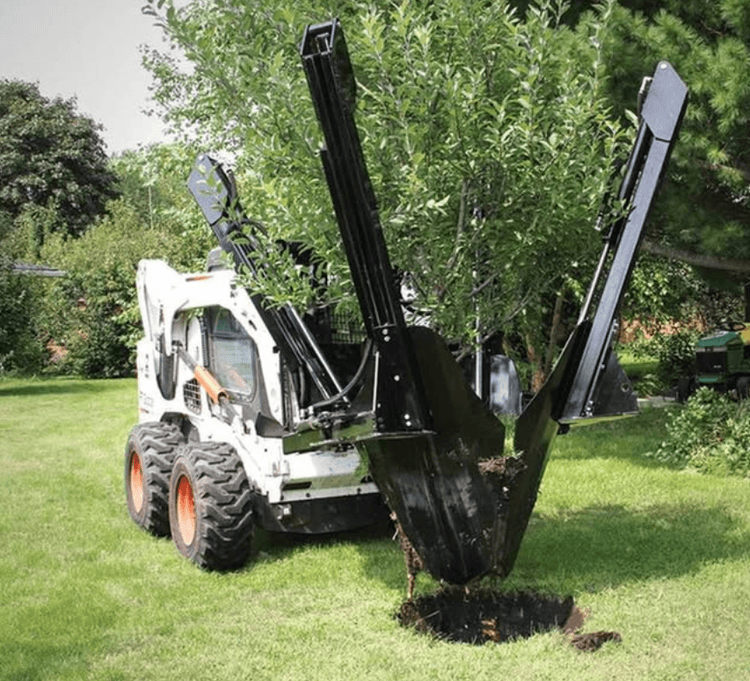
One of the biggest advantages of a skid steer is its ability to use interchangeable attachments. Common options include:
Buckets: Digging, loading, grading, and material handling
Pallet forks: Moving pallets and other materials
Grapples: Handling logs, brush, debris, and bulky materials
Augers: Drilling holes for posts and foundations
Trenchers: Creating narrow trenches for utilities
Hydraulic breakers: Breaking concrete and other hard materials
Brush cutters: Clearing vegetation
Snow attachments: Removing and moving snow
Before choosing an attachment, check the skid steer's rated operating capacity, hydraulic flow, hydraulic pressure, attachment weight, and coupler compatibility.
How Many Hours Is Too Many on a Skid Steer?
There is no single operating-hour number that automatically makes a used skid steer a bad purchase. A well-maintained machine with higher hours can be a better value than a lower-hour machine with poor maintenance or heavy abuse.
When evaluating hours, also consider:
Machine age
Maintenance records
Previous application
Engine condition
Hydraulic performance
Tire or track condition
Undercarriage wear
Repairs and replacement parts
Overall operating condition
Buying tip: Use operating hours as one part of your evaluation rather than the deciding factor. Compare hours, condition, service history, and price together.
Frequently Asked Questions
What are the main types of skid steers?
The main configurations include wheeled skid steers, tracked machines (compact track loaders), radial-lift, and vertical-lift models.
Are wheeled or tracked skid steers better?
Wheeled skid steers are generally better for firm surfaces, while tracked machines provide better traction and lower ground pressure on soft or uneven terrain.
What is the difference between radial and vertical lift?
Radial lift is well suited for digging and ground-level work, while vertical lift provides greater reach for loading trucks and placing materials at height.
What size skid steer should I choose?
Choose a size based on your required lifting capacity, work area, attachment needs, hydraulic requirements, and transportation limitations.
What should I check when buying a used skid steer?
Inspect the engine, hydraulics, tires or tracks, lift arms, pins, structure, controls, attachments, operating hours, and maintenance records.
How many hours is too many on a skid steer?
There is no universal limit. Evaluate operating hours together with the machine's age, maintenance history, condition, previous use, and price.
Conclusion
Skid steers epitomize versatility and efficiency, serving as indispensable assets across diverse industries. Understanding their history, types, components, uses, and maintenance requirements empowers users to harness their full potential and drive productivity.


Aaron Kline is the Co-Founder and COO of Boom & Bucket, where he leverages his extensive leadership experience to revolutionize the heavy equipment industry. With a background in building scalable processes and teams from his time as a Naval officer and executive roles in tech, Aaron focuses on introducing cutting-edge technology to construction and agriculture markets. Before Boom & Bucket, he held leadership positions at Skylo and Yard Club (acquired by Caterpillar), and he’s passionate about fostering innovation and driving efficiency in under-digitized industries.